
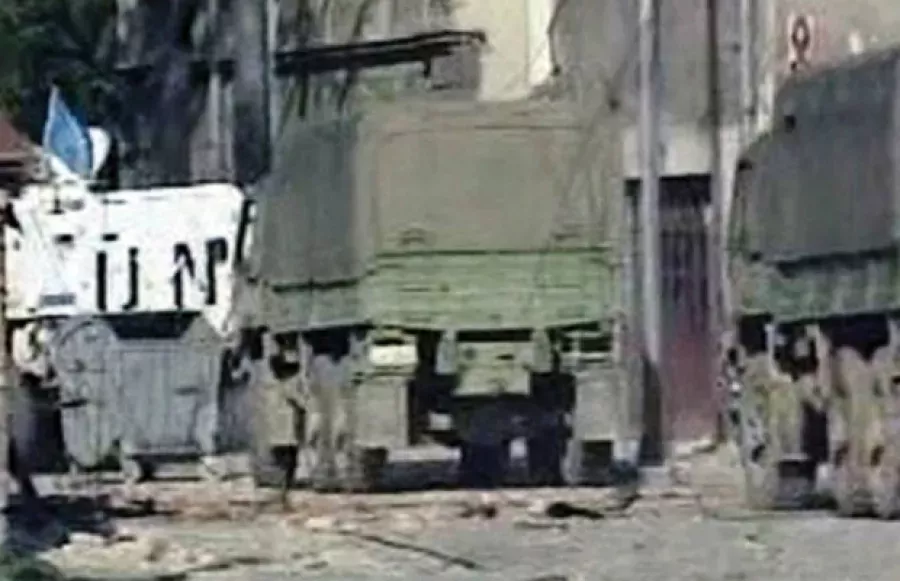
(Patria) - Today marks the 33rd anniversary of the events in the former Dobrovoljačka Street.
On May 3, 1992, during the withdrawal of JNA members from the barracks in Bistrik, an armed clash occurred between the Territorial Defense of BiH and the Yugoslav People's Army (JNA).
The exit of the JNA column from Sarajevo had been previously agreed upon in exchange for the release of the then-kidnapped and captured president of the Presidency of the Republic of BiH, Alija Izetbegović, at Sarajevo Airport the day before.
On that day, according to the testimony of General Milutin Kukanjac, then commander of the JNA's Second Military District in the "Dobrovoljačka" case, six JNA members were killed, while the convoy consisted of a total of 261 JNA members. An investigation by the BiH Prosecutor's Office determined that seven people were killed and 14 were wounded during the attack, after they were incapacitated for combat.
Rade Radovanović wrote about the lies that have surrounded the events in Dobrovoljačka for years in the newspaper Danas a few years ago.
- And the lie is that, this year as in previous years, the media in Serbia, as well as those in RS, publish all sorts of things about the Dobrovoljačka case, about the crime in Sarajevo on May 3, 1992, when it is persistently claimed – 42 people were killed in the attacked JNA column. The Banja Luka Republican Center for War Crimes Research even provides a breakdown of victims: 10 officers, 28 soldiers, and four civilians were killed. The truth, however, looks different. During the attack on the column of vehicles carrying JNA members, on May 3, 1992, in Dobrovoljačka Street in Sarajevo, according to the court version, seven people were killed, and according to the testimony of JNA General Milutin Kukanjac, who was himself in the mentioned column and lists the victims by name – six people, writes Radovanović.
To understand this case, one must know what happened – not on May 3, but on May 2, 1992, in wartime Sarajevo.
- During April 1992, 225 people were killed in Sarajevo, but May 2, 1992, will be remembered in history as the last failed attempt by the still formally existing JNA to capture the city center, divide it, and bring it under its control. The attack began in the early morning hours with shelling from already established positions on the hills around Sarajevo. For an hour and a half, Mladić's and Karadžić's artillerymen would fire from all tanks, cannons, and other weapons at the Presidency, the Assembly, the National Theatre, the Trade Union Hall… at the very city center, at the Old Town municipality, and also at New Sarajevo. This was the beginning of the realization of a monstrous plan – later designated as the longest siege of a city in recent history – 1,395 days! – which would cost the lives of 14,011 citizens of Sarajevo, including more than 1,600 children…, writes Radovanović and continues:
- On the mentioned May 2, 1992, after the cannonade from the hills, an attack on the city center followed, using tanks, armored personnel carriers, and infantry weapons. With this surprise operation, the JNA attempted to capture the Presidency building and other state institutions. The strategists of the breakup of former Yugoslavia thus wanted to show that the legally elected government, then of the internationally recognized and independent BiH, a member of the United Nations, did not rule even in Sarajevo. However, in response to the attempt to break through and the firing from tanks and armored personnel carriers, in the Skenderija area, around the Presidency, and from the streets of the city center – groups of Sarajevo territorials responded with projectiles from Zolja, Osa, hand-held launchers, automatic weapons… After all-day clashes on May 2, several armored personnel carriers and tanks were hit and destroyed, and JNA soldiers and officers died in them… How many of them – on May 2, 1992? Thirty-five (35!) – that is, exactly the difference between the claimed 42 dead and the 7 (seven) – who were determined to have actually died in Dobrovoljačka Street on May 3, 1992.
The BiH Prosecutor's Office determined in 2012 that former member of the BiH Presidency Ejup Ganić, Army of RBiH generals Jovan Divjak, Hasan Efendić, and others connected to the attack on the JNA column were not responsible for war crimes against JNA members in the column attacked in Dobrovoljačka Street on May 3, 1992.
The Hague Tribunal also gave its opinion on the "Dobrovoljačka" case, establishing that the JNA column in Dobrovoljačka Street was a legitimate military target.
Komentari (0)
Prijavite se za komentiranje
PrijavaJos nema komentara. Budite prvi!
Minuta
Sve →Iz drugih kategorija

High Representative Not Elected: Germans, French and British Sabotaged Americans, New Attempt at End of June

ČOVIĆ WITHOUT MERCY: How Those Who Brought Ademović to Office Created a Political Hell for Him



Sunny Saturday, quite warm



Tragedy in Albanian resort: Two minors drown












