
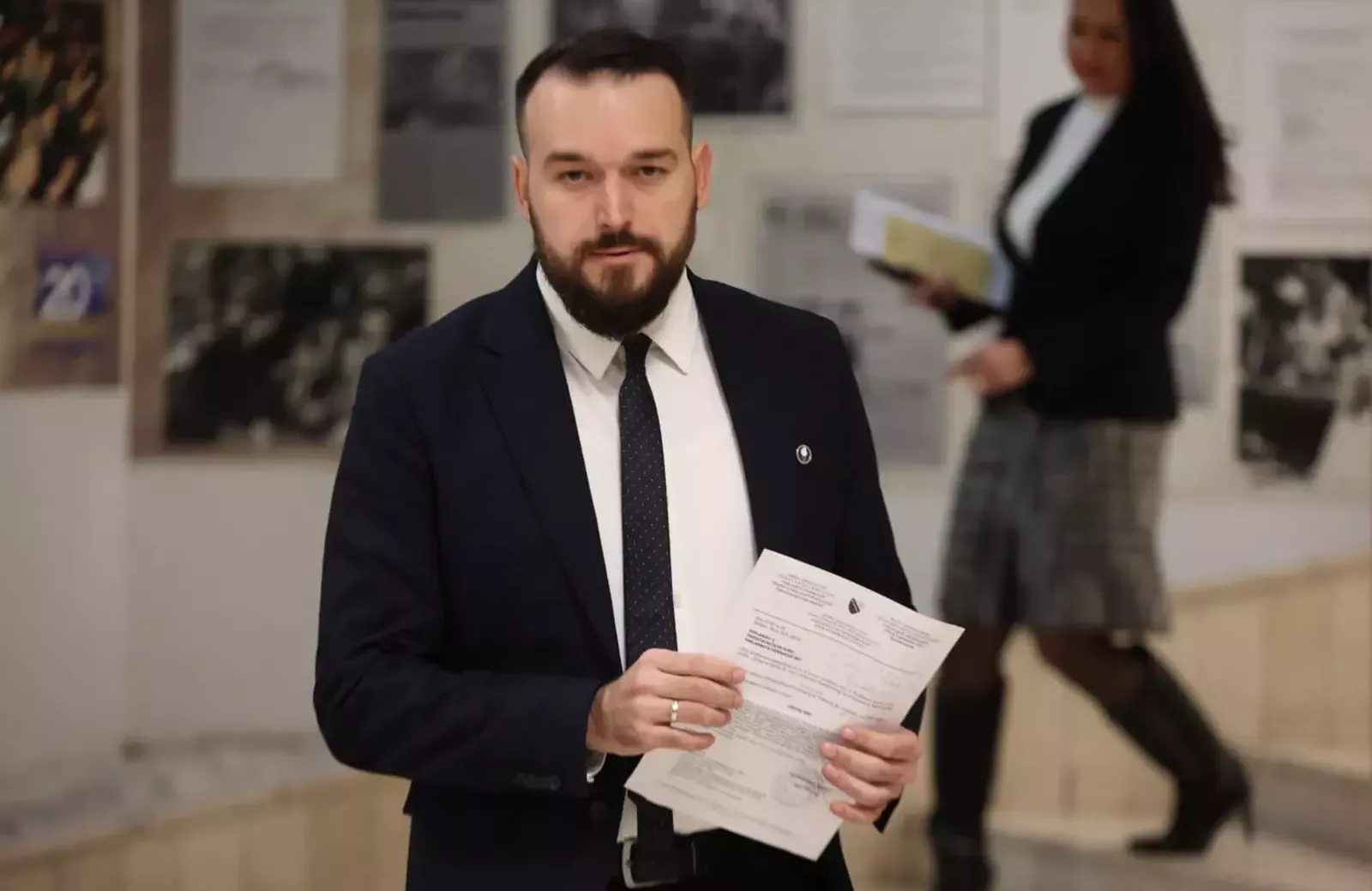
Written by: Admir Čavalić/Istraga.ba
For a gross salary of 1,023 euros in Croatia for an employee under 30, the employer pays the employee 838.36 euros net, while in FBiH they pay 590 euros. Thus, an employee with the same gross salary receives almost 250 euros less than an employee in Croatia. If the employee is over 30 years old, this difference is slightly smaller – around 165 euros. This is a consequence of the fiscal burden on labor of 41.5% in FBiH, or the fact that we have no fiscal reforms. Even the entity of RS managed to implement some reforms and reduce the total contribution rate to 31% (which is why the minimum wage is 900 KM).
It was precisely on the wings of fiscal reforms that in the last few years there was talk of a minimum wage of 1,000 KM net. That wage would be the third step, or the result of reducing the fiscal burden on labor in FBiH (amendments to two laws, on contributions and income tax). This did not happen, but a decree stipulating a minimum wage of 1,000 KM net did. It somehow slipped through under the item "miscellaneous" at the session of the Economic and Social Council, and by outvoting the representatives of employers.
I know this will sound like a fairy tale, but economics is a complex science, and economic reality, especially the Bosnian and Herzegovinian one, is even more complex. What to expect if you take the last step without the first two? Probably a fall. Primarily a fall in employment. Estimates are that 20,000 to 30,000 employees in FBiH are initially at risk. Either they will work for 1,000 KM net per month, or they will not work (I know it's easy to say for those who are detached from our reality). But that's just the beginning. Those employees who survive this decree will likely become acquainted with the terrible practice called "envelope," i.e., returning part of their salary to the employer. It is true that this practice exists even now – to the shame of the employers who use it – but it will certainly intensify because you cannot simply regulate wage levels by decree.
If the increase were 5-10%, it would be understandable, but for almost 400 KM, plus all associated costs of fiscal levies (bringing it to 600 KM or more), this is not. Especially not for almost a third of the federal economy which is operating at a loss. How can you expect loss-making companies to increase labor costs by at least 600 KM per month? Closing the company (as in Prijedor last year), "envelope," layoffs, or something else?
Finally, we have effects on the budgets of various levels of government. Several laws are directly linked to the minimum wage, and indirectly, the salaries of all employees in the public sector are now anticipating significant salary increases. This will create exceptional pressure on the federal, and especially on the cantonal budgets. How to obtain these funds? Apart from debt, there is no alternative, as 2025 does not promise high economic growth rates.
To summarize – the FBiH Government has not offered fiscal reforms. It has not offered analyses of the effects of this measure either. It only offered a decree two days before New Year's. Plus a few sentences in the media from which it can be read that the FBiH Government (probably the Ministry of Entrepreneurship and Crafts) will finance contributions for some companies. Perhaps the rabbit is hidden in this bush for this whole story. Plus a few good headlines in the media for the Government. The problem is that everyone else is at a loss. Especially the workers to whom this economic populism is being marketed.
Let's conclude why it's populism? Simply – if this were an acceptable way of making decisions, then the FBiH Government, like some African governments, could simply set the minimum wage at 2,000 KM, 3,000 KM, and push the average to 10,000 KM. The only problem is that only a few workers in FBiH would work for those wages. Real reforms are like those in Croatia, everything else is a lie and a deception.
(The author is a representative of the Party of Democratic Action in the House of Representatives of FBiH. He is an economic analyst, lecturer, and researcher. He is an assistant professor at the Faculty of Economics in Tuzla)
Komentari (0)
Prijavite se za komentiranje
PrijavaJos nema komentara. Budite prvi!
Minuta
Sve →Iz drugih kategorija

High Representative Not Elected: Germans, French and British Sabotaged Americans, New Attempt at End of June

ČOVIĆ WITHOUT MERCY: How Those Who Brought Ademović to Office Created a Political Hell for Him



Sunny Saturday, quite warm



Tragedy in Albanian resort: Two minors drown












