
Written for NAP by: Sifet Kukuruz, legal expert
An economy functioning on market principles cannot develop successfully through intensive state interventionism, especially not through poor state interventionism. The BiH Constitution stipulates that a market economy is a constitutional category, and any responsible government, in the context of this fact, must seriously consider its interventionist measures affecting the economy, given that economic flows largely determine all other social processes.
In any country where a market economy is established, market laws, not political voluntarism, are the main regulators of social processes. Due to their significant impact on the entirety of social flows, state interventionist measures in the economy should be well thought out beforehand.
However, by adopting the decision on the minimum wage for 2025, the Government of the Federation of BiH grossly ignored this fundamental principle, firstly – by regulating constitutional and legal matters with its own decision and, instead of the will of Parliament as the legislative body, postulating its political will, as the executive branch of government, as the ultimate regulator of the most important social processes – economic flows. In this way, the executive branch, instead of executing laws, has placed itself in the function of a legislator.
The second oversight regarding the adoption of the controversial decision is its non-transparent procedure, as it is not the result of a previously conducted public debate, which did not happen at all. The third weakness is that the adopted decision imposes extremely significant financial burdens on economic entities in a very short period, which they did not have the opportunity to factor into their future operations.
In this regard, this decision represents a kind of extraordinary event or shock for the business operations of economic entities, because just as the state plans the budget for the next year based on the execution of the current year's budget, economic entities also plan their own operations for the next year based on the results of the current year's operations.
The aforementioned facts are sufficient argument to declare the adoption of the minimum wage decision a harmful act, given that the very manner of its adoption has undermined the fundamental principle of trust and security, which is a necessary prerequisite for the successful unfolding of social processes, especially in the economy. The Federal Government made the decision on the minimum wage as if its application concerned the regulation of some internal, administrative process within the FBiH Government, and not the entire economy in the FBiH.
State Interventionism
If a country's economy is based on market principles, then state interventionist measures must not be unpredictable and non-transparent, and they must not cause sudden market disruptions or jeopardize market logic and the fundamental purpose of economic entities. The FBiH Government's decision on the minimum wage achieves precisely this effect. It is paradoxical that the government leaves economic entities at the mercy of market principles, while at the same time demanding that they do not behave according to market principles.
The essence of the minimum wage story is not whether employers are sincere in their concern for the status of workers, but whether, and to what extent, the activity of economic entities has economic justification after the introduction of protectionist measures.
The intention to introduce mechanisms that prevent the exploitation or abuse of workers, regardless of the extent to which it is socially justified, should not turn into the exploitation of economic entities by the government.
Economic relations are interest-based relations, and their nature cannot be forcibly changed by political decisions without serious consequences for the entire society, including the economy. State authorities cannot protect the status of workers by jeopardizing the status of economic entities, which, after the introduction of interventionist measures, will not be economically motivated, nor capable of continuing their economic activities at the same capacity.
Spending more while earning less is a principle unknown to a market economy. However, what the government, in its alleged concern for the status of workers, neglects or consciously ignores is the fact that jeopardizing the activities of economic entities necessarily jeopardizes the security of the workers' status itself. There is no economy without economic entities, just as there are no workers without economic entities.
A government that truly wants to protect workers, for whom the dignity of workers is a value in itself, can improve the status of workers through a number of other measures. One such measure could be a decision to introduce a ban on the import of cheap and unskilled labor from third countries, in the absence of a workforce, which is the situation in BiH.
In this way, economic entities will be forced, in their search for workers, to voluntarily offer better working conditions, and thus higher wages. This creates a competition among economic entities for labor, and in that competition, based on supply and demand, workers are in a position to dictate terms.
(Lack of) Care for Workers
However, what is suspicious about the current government's alleged concern for the status of workers is its general attitude towards economic entities. It is not possible to care for workers without caring for economic entities, because only a successful economic entity is capable of providing a higher wage to a worker. And there is no stable and successful economic entity in conditions of a destroyed and devastated economic infrastructure.
Imposing an obligation on economic entities to increase workers' wages, while at the same time the current government's pronounced inability to ensure an economically stimulating environment, represents a direct attack not only on economic entities but also on the economy as a whole, and thus on workers. Thus, the government's alleged care for workers actually turns out to be neglect.
Economic relations differ greatly from the sphere of political action; economic flows have their own laws. A political decision in a market economy that does not respect market logic negates economic principles of business. Making such political decisions is an attempt to turn economic entities, whose existence is based on market logic, into humanitarian and charitable organizations.
Invoice for Failure
In this way, the disenfranchisement of workers, which is primarily a consequence of bad policy and the incompetence of the government itself, is being perfidiously invoiced to economic entities. Profit drives the economy; some may like it or not.
Expecting a successful economy to be based on social and humanitarian grounds is like claiming that more people can be fed with the same or less flour. It is illusory to expect in a market economy that citizens' living standards will be raised by economic entities at their own expense. That is the task and obligation of the government.
There is no economically justified measure by which the government can force economic entities to increase workers' wages at the expense of their own profits, without simultaneously reducing their obligations to the state or providing them with new, previously non-existent, business opportunities that will enable them to achieve additional profit or earnings.
The government cannot ask economic entities to do its job; social policy is conducted by the state, not by economic entities. Such an approach by the government constitutes violence against the laws of a market economy.
The state can increase workers' wages through its decisions only when it earns and pays them, or only when it provides economic entities with the conditions to improve their business and increase their own earnings.
A government that jeopardizes the business of economic entities through its inaction and simultaneously imposes new obligations on them jeopardizes not only economic entities but also workers, and the economy as a whole.
Making a decision that creates additional costs for economic entities, while at the same time not improving or enhancing the business environment and opening up new business opportunities for economic entities, represents political racketeering.
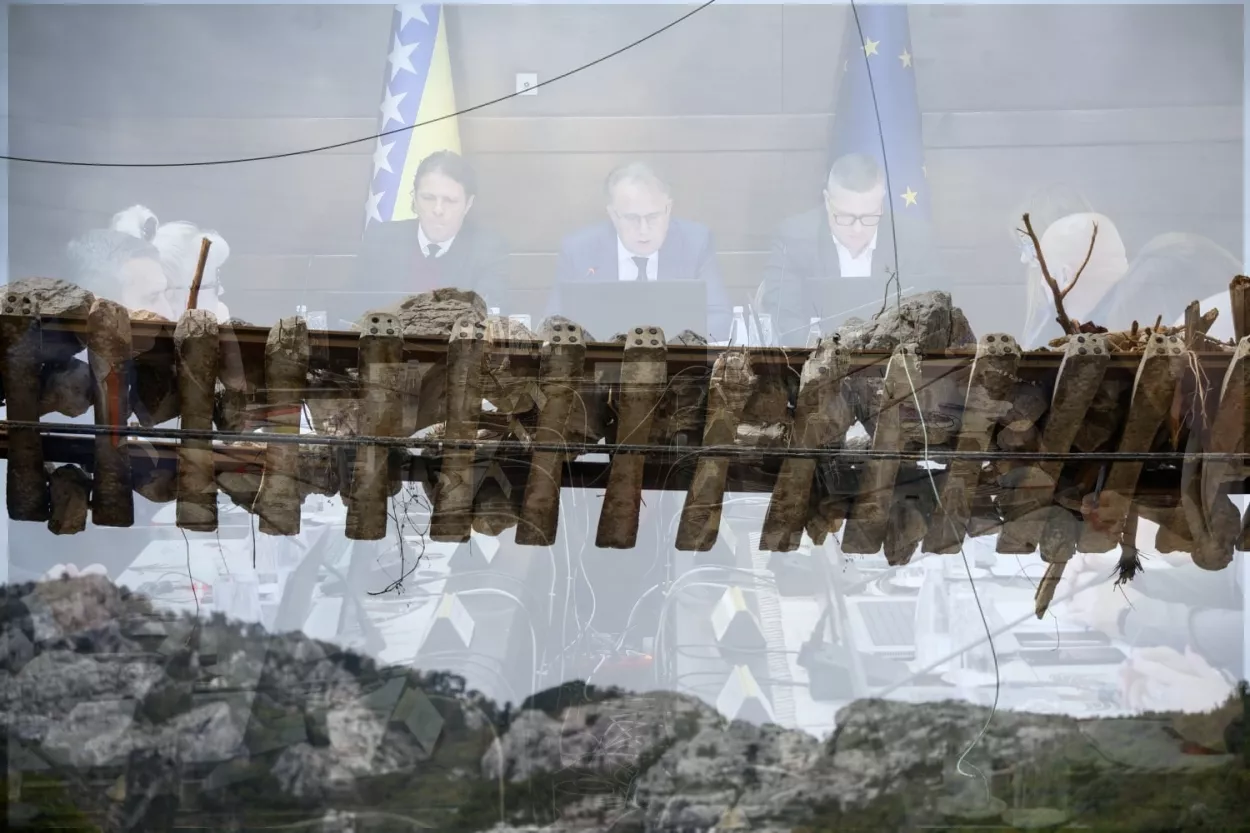
The example of the destroyed railway line in Jablanica, which the government is incapable of repairing, shows that the government does not care about the economy at all, and therefore not about workers either. If the current government truly cared about workers, the first thing it would do is ensure conditions for the unimpeded functioning of economic entities, provide them with new business opportunities, and enable them to improve their own operations.
However, the government has done nothing to improve the business environment; instead, it has left economic entities to fend for themselves, left them to suffer the consequences of the collapse of the economic infrastructure, and then additionally burdened them with the obligation to increase the minimum wage.
What's more, the government provides economic entities with no guarantees regarding future business conditions; it leaves them entirely at the mercy of market principles, while at the same time demanding that they do not behave according to market principles.
The government has given economic entities no guarantees that tomorrow, in the event of a new, more serious disruption in social, and especially economic, flows, it will implement effective economic policy measures and successfully remedy the harmful consequences of such a disruption.
Someone Else's Responsibility
Through its approach to the destroyed railway line in Jablanica, the government has shown that economic entities, and therefore workers, are not important to it at all. Such a government is only concerned with covering up its own irresponsibility, incompetence, and inaction with a decision to increase the minimum wage and to shift dissatisfaction due to the extremely poor overall social and political-economic situation away from itself and onto economic entities.
By insisting on the term employer, rather than economic entity, the government wants to present its decision to increase the minimum wage not as an economic issue that affects the entire economy, but as something that is an internal matter between the employer and the employee, or as something that is the employer's willingness and good intention.
In this way, the government channels citizens' dissatisfaction with the overall socio-political situation towards economic entities, as if economic entities, not the government, are to blame for the overall state of society.
With its actions, the government perceives economic entities and presents them to the public as solely responsible for the current socio-political and economic situation, treating them as loan sharks and thereby leading workers to express their justified dissatisfaction towards economic entities instead of towards the current government.
However, the government forgets that the conflict and intolerance it generates between workers and employers is the first prerequisite for social unrest, which the government will ultimately have to face. Of all areas of social life, the economy presents the bill most quickly and mercilessly; it has no mercy or understanding for human stupidity.
Every economic entity registers to make a profit, just as political parties are formed to participate in exercising power, thereby expressing a clear intention to maximize their hold on power.
Therefore, the true test for the correctness of the minimum wage decision for the policy behind it would be its willingness to exist politically but not participate in exercising power. Just as such a decision is illogical for policy, so is the policy's decision on the minimum wage illogical from the perspective of the economic interests of economic entities.
Komentari (0)
Prijavite se za komentiranje
PrijavaJos nema komentara. Budite prvi!
Minuta
Sve →Iz drugih kategorija

High Representative Not Elected: Germans, French and British Sabotaged Americans, New Attempt at End of June

ČOVIĆ WITHOUT MERCY: How Those Who Brought Ademović to Office Created a Political Hell for Him



Sunny Saturday, quite warm



Tragedy in Albanian resort: Two minors drown












