
By Istraga.ba
The case initiated before the European Court of Human Rights (ECtHR) in Strasbourg by Slaven Kovačević, complaining that his active right to vote is threatened, has turned into a significant political match inside and outside the borders of Bosnia and Herzegovina, in which all factors shaping the political reality in our country, including the Office of the High Representative, have shown their true colors.
Before the Court ruled in favor of Kovačević in August, almost no one attached too much importance to this case. After becoming acquainted with the Court's conclusions stating that the constituent peoples in BiH are privileged and that citizens live in an "ethocracy," an offensive by Zagreb, HDZ BiH, and the OHR, or rather the US Embassy in Sarajevo, began with the aim of overturning the "Kovačević" case.
Such a reaction did not stem from the fear that confirming the "Kovačević" judgment would lead to a reform of the state Constitution in the direction of reducing the elements that enable ethnic policies to be conducted more easily than civic policies in BiH, but rather from the fear that the judgment would prevent a change in the way members of the Presidency of BiH are elected in the way Dragan Čović demands, towards further strengthening of ethnic policies.
In this regard, everyone took on tasks: HDZ to overturn the judgment through the mechanisms of state institutions, and Zagreb and the OHR (with the support of the US Embassy) directly in Strasbourg.
The first and most important task in this regard, which the Chairperson of the Council of Ministers Borjana Krišto took upon herself, was for Bosnia and Herzegovina to file an appeal with the Court, because without it, all other steps would have been meaningless.
To achieve this, it was necessary to prove that the agents of BiH before the ECtHR, Monika Mijić, Jelena Cvijetić, and Harisa Bavčić, had the legitimacy to file an appeal. The real obstacle was that they were acting deputy agents at the time, and their mandate had been extended more times than permitted by the Law on Administrative Procedure of BiH (Article 55a).
On October 31, the Court asked the Council of Ministers to clarify whether acting agents Mijić and Bavčić had legal and legitimate accreditation. Although the Council of Ministers did not respond, Chairperson Krišto unilaterally sent a letter to the Court stating that the agents had legal accreditation.
In response to such a move, the Deputy Chairperson of the Council of Ministers and Minister of Defense Zukan Helez sent a letter with the opposite stance, stating that the Council of Ministers as a collective body had not made any decision regarding the status of the agents.
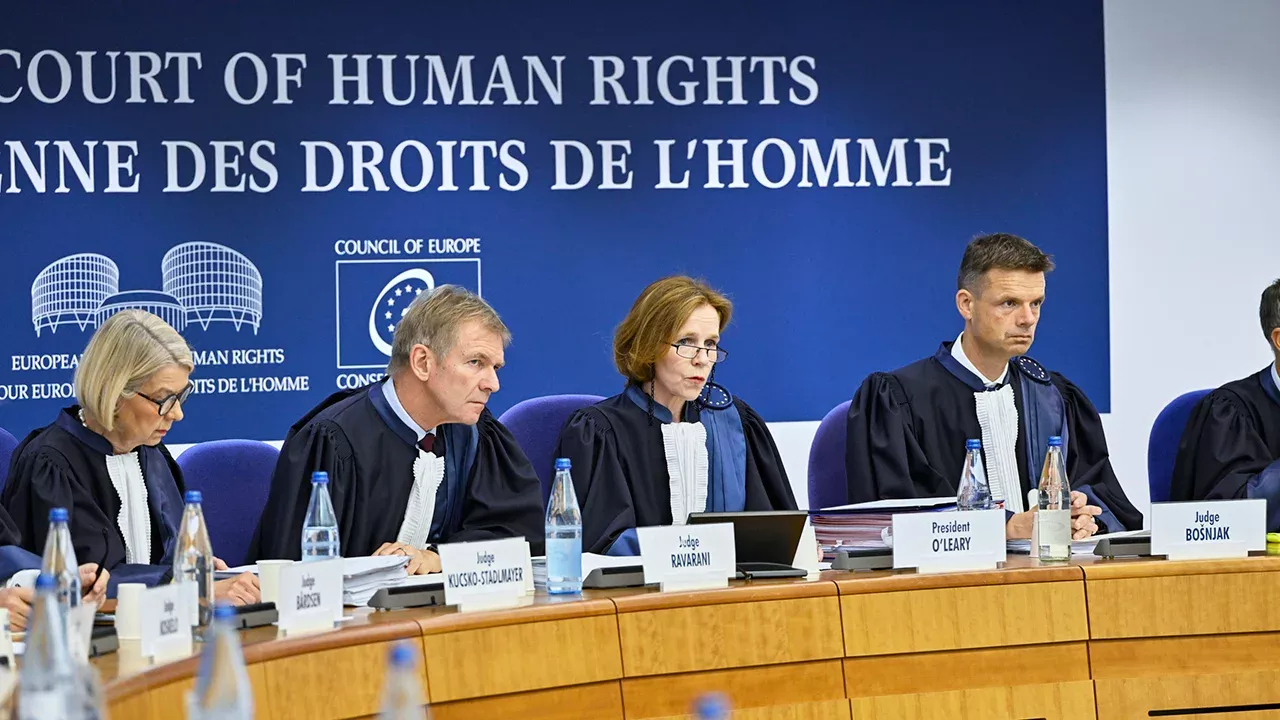
Despite this, the Court decided on December 14 to forward the case to the Grand Chamber, likely with significant lobbying from Croatia.
The opposition in Sarajevo took on an active role in preventing the overturning of the "Kovačević" judgment, while the parties of the Trojka largely stayed on the sidelines for fear of angering their partners at the state and federal levels. Apart from Zukan's letter to the ECtHR, there were no more significant moves.
Thus, in March, the Council of Ministers re-appointed Monika Mijić as acting agent, even though the law explicitly states that an acting official can only be appointed twice in a row for a period of three months. The Trojka could have complicated Mijić's position at least until the process was concluded, but they decided otherwise.
The aggressive approach taken by official Zagreb was reflected in Prime Minister Andrej Plenković publicly challenging all previous judgments of the Court in Strasbourg that were made against BiH, calling them "fabricated," which sent a more than clear message that Croatian policy was not so confident about the outcome.
For this reason, and with the aim of overturning the "Kovačević" judgment, and in a hitherto unprecedented manner of OHR action, the High Representative Christian Schmidt also got involved through lawyers in London. He addressed the judges of the Grand Chamber with a request to participate in the court proceedings as a "third party," which was ultimately approved. At the same time, he lied to the public that he had been invited by the Court and that he would act impartially.
Ultimately, the content of the letter sent to the Court regarding the merits of the judgment shocked even Schmidt's biggest critics. The High Representative stated that confirming the judgment could lead to destabilization and that Slaven Kovačević indirectly undermines the Constitutional Court of Bosnia and Herzegovina. His statement was so scandalous that even representatives of the Trojka criticized him.
In the end, the "Kovačević" case forced all actors in Bosnia and Herzegovina to reveal their cards, proved that Zagreb spends all its foreign policy capacities on BiH, that ECtHR judgments are valid only if they can be interpreted in favor of HDZ, and confirmed that the US Embassy pursues a hypocritical policy towards Bosnia and Herzegovina.
Komentari (0)
Prijavite se za komentiranje
PrijavaJos nema komentara. Budite prvi!
Minuta
Sve →Iz drugih kategorija

High Representative Not Elected: Germans, French and British Sabotaged Americans, New Attempt at End of June

ČOVIĆ WITHOUT MERCY: How Those Who Brought Ademović to Office Created a Political Hell for Him



Sunny Saturday, quite warm



Tragedy in Albanian resort: Two minors drown












