
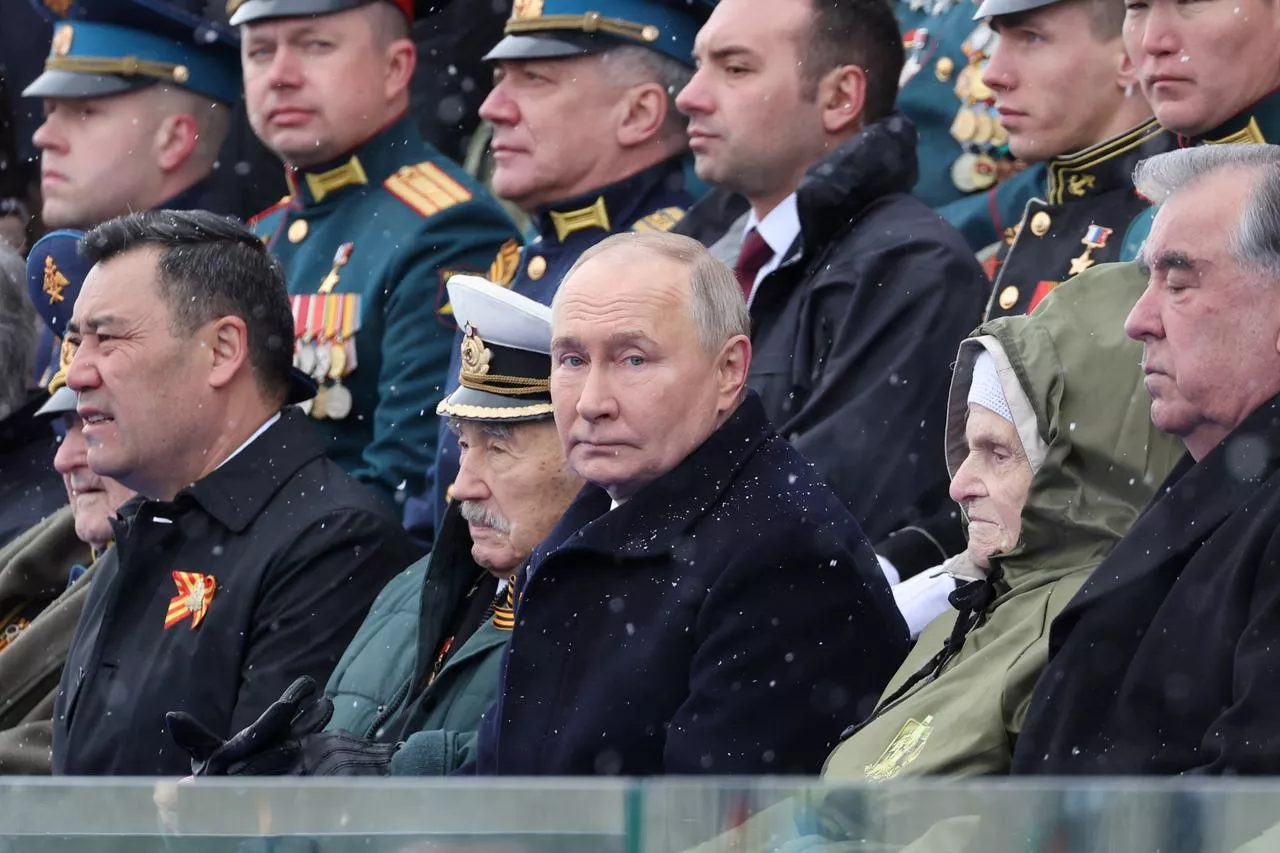
By NAP: Hamza Memišević, PhD candidate at the Faculty of Political Science, UNSA
During 1917, a revolution broke out in Russia, which resulted in significant changes. The Bolsheviks came to power, whose actions were determined by the ideology of communism. It is important to emphasize that Tsarist Russia was against the creation of a common state of Yugoslavia, fearing a scenario in which the Orthodox element would be weakened, given the ethnic and religious diversity in such a state.
Polish historian Jerzy Holzer stated that communism had three phases: the first phase as a movement, then as a system, and the last phase as an empire. The Soviet Union definitely represented an empire. The territory of the Soviet Union coincided with Halford Mackinder's concepts.
Relations between the Kingdom of Yugoslavia and the USSR were at a low level; only in 1940 did relations between the two states gradually begin to be established. The end of World War II brought fundamental changes to Yugoslavia, reflected in ideological, social, and political changes. A communist regime, inspired by the Soviet model of governance, was established in Yugoslavia. The conflict between Stalin and Tito in 1948 interrupted the close cooperation, and the previous level of relations was never restored. The West skillfully exploited the rift in the communist bloc, winning Yugoslavia over. During the Cold War, Yugoslavia took on the role of a bulwark against the USSR and became a paradigm of socialism independent of Moscow, supported by the West.
With the breakup of Yugoslavia, Bosnia and Herzegovina, as an independent state, came under the attention of Russian policy and science. From the breakup of Yugoslavia to the present day, Russian policy towards the Balkans and Bosnia and Herzegovina itself should be viewed through four phases. The first phase involved capitulation to the West. The second phase included close cooperation with the West regarding the Balkans. The third phase moved towards distancing from Western policy, i.e., creating conditions for the last phase, which is aimed at Russia's independent action in resolving geopolitical issues in the Balkans.
Following the collapse of the USSR, Russia found itself in a subordinate position, economically exhausted and deprived of real power. The bipolar order transformed into a unipolar order dominated by the United States. Obedience and adherence to Western dictates were rewarded with loans for the recovery of the Russian economy and society. An indicator of Russia's subordination to the West is the fact that Russia supported the independence of Bosnia and Herzegovina and Security Council Resolution 757, which designated the Federal Republic of Yugoslavia as an aggressor.
The Russian Federation supported the establishment of the International Criminal Tribunal for the former Yugoslavia. The thoughts of British author Brendan Simms are interesting, who states that France and Great Britain used Russia as an alibi not to act in favor of Bosnia and Herzegovina. Konstantin Nikiforov belonged to the circle of people close to President Yeltsin. He claims that President Yeltsin did not pay attention to the Serbs. Loyalty to the United States was the most important thing for Russia during that period. During meetings with the Serbian delegation, the head of Russian diplomacy, Andrei Kozyrev, always spoke in English, even though the members of the Serbian delegation spoke Russian.
The direction for a new Russian political paradigm was established by Foreign Minister Primakov. He believed that Russia should not insist on the rigid anti-Westernism of the Soviet era as a guiding principle, but it must force the West to respect Russia. The message of that doctrine was that Russia must never again be harmless and devoid of ideology as it was in the post-Cold War period.
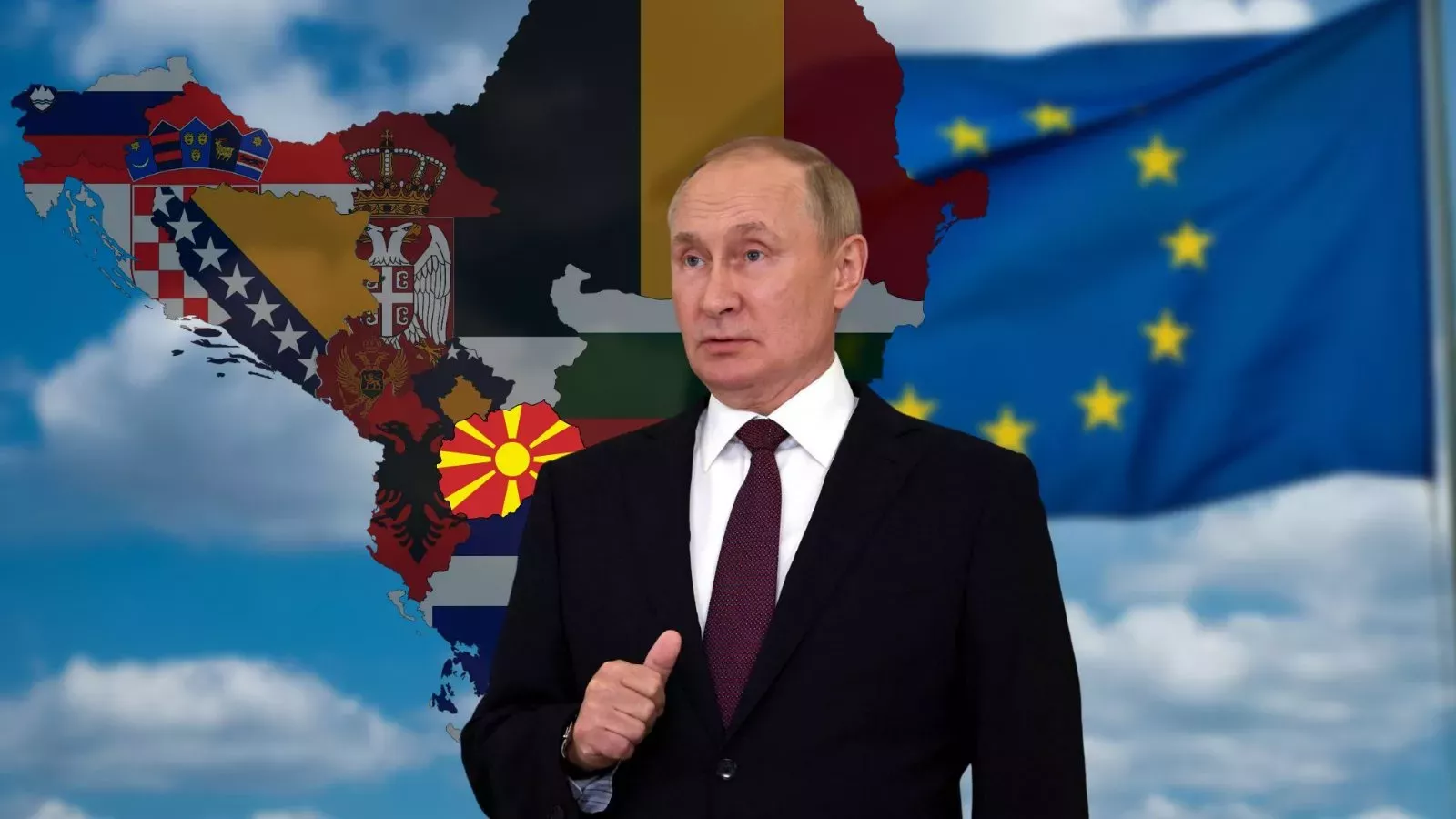
During the Yugoslav wars, including the aggression against the Republic of Bosnia and Herzegovina, Russia did not act independently. Faced with its own problems, it lacked the capacity and space to interfere in other matters. In those years, the American Ambassador to the United Nations, and later US Secretary of State, Madeleine Albright, proposed dividing Russia into three zones: Asian, European, and Siberian.
The actions of Russian volunteers during the aggression against the Republics of Bosnia and Herzegovina should be viewed in the context of nurturing Orthodox and Slavic ties. The voice of Serbs and Serbia in Moscow was the Russian Orthodox Church. This church, along with the Greek Orthodox Church, represents a key platform for the fight against the Western alliance and globalism.
After the end of the aggression and the signing of the Dayton Agreement, a high degree of Russian cooperation with the West regarding Bosnia and Herzegovina continued. One year after the war ended, Russia sent 1,400 soldiers to join the international forces in BiH. The 2003 report of the BiH Defense Reform Commission received the support of the Russian Federation. The Russian Ambassador to BiH supported the report, which stated that the future of BiH lay in Partnership for Peace, NATO, and the EU.
Putin's rise to power was a clear message that the chapter of a weak Russia was closed. The collapse of the Soviet Union was the most tragic moment of the 20th century for Putin. From the very beginning of his rise to power, he was determined and firm in his intention to return Russia to the grand stage. Putin's Russia is focused on undermining the dominant American system in international relations and creating a multipolar atmosphere in world politics. The intervention in Georgia was a harbinger of Russia breaking away from Western tracks and returning to the centuries-old aspirations and goals of Russia and the Russian people.
The analysis of the Balkans for Russian policy is carried out by the Institute of Slavic Studies, as well as specialized departments within the Ministry of Foreign Affairs. Russian historiography and policy, when describing events from the period 1992-1995 in the territory of Bosnia and Herzegovina, use the term "civil war." It is worth mentioning authors Jelena Guskova, Nikita Bondarev, Petr Iskenderov, Dugin, and others who touch upon Bosnia and political processes related to the Balkans in their analyses.
Therefore, Russia in 1992 clearly supported Resolution 757, and later, over time, official policy avoided using the precise term to describe the war. Russian policy and historiography consider post-Dayton Bosnia and Herzegovina a country of frozen conflict. They support this stance with arguments that Bosnia and Herzegovina has not resolved any relevant issues, primarily national and territorial ones, which led to what they call a "civil war." Russian historians who sympathize with Serbian positions call Bosnia and Herzegovina an experiment of the international community.
Official Russian policy treats the entity of Republika Srpska within the framework of overall relations with Serbia and Serbs. The same applies to Croats in BiH, who are treated through the prism of relations with Croatia, which, according to Russian geopolitical strategists, is influenced by Central Europe (Germany and the Vatican). Regarding Bosniaks, Russia advocates for their right to statehood. Such a stance implies the right of Bosniaks to a state, but denies them the possibility of sovereign leadership of processes within the state based on demographic majority.
Aleksandr Dugin emphasizes that demographically dominant Muslim countries should articulate their policies through Iran. He states that Iran is the only independent and sovereign Muslim country. Participation in the Peace Implementation Council (PIC) and a seat in the UN Security Council make Russia an indispensable factor in the Bosnian issue. Current talk from Moscow about preserving the Dayton Agreement, but without the High Representative, would mean Russia's victory in this region.
Komentari (0)
Prijavite se za komentiranje
PrijavaJos nema komentara. Budite prvi!
Minuta
Sve →Iz drugih kategorija

High Representative Not Elected: Germans, French and British Sabotaged Americans, New Attempt at End of June

ČOVIĆ WITHOUT MERCY: How Those Who Brought Ademović to Office Created a Political Hell for Him



Sunny Saturday, quite warm



Tragedy in Albanian resort: Two minors drown












