
By: Legal Expert Sifet Kukuruz
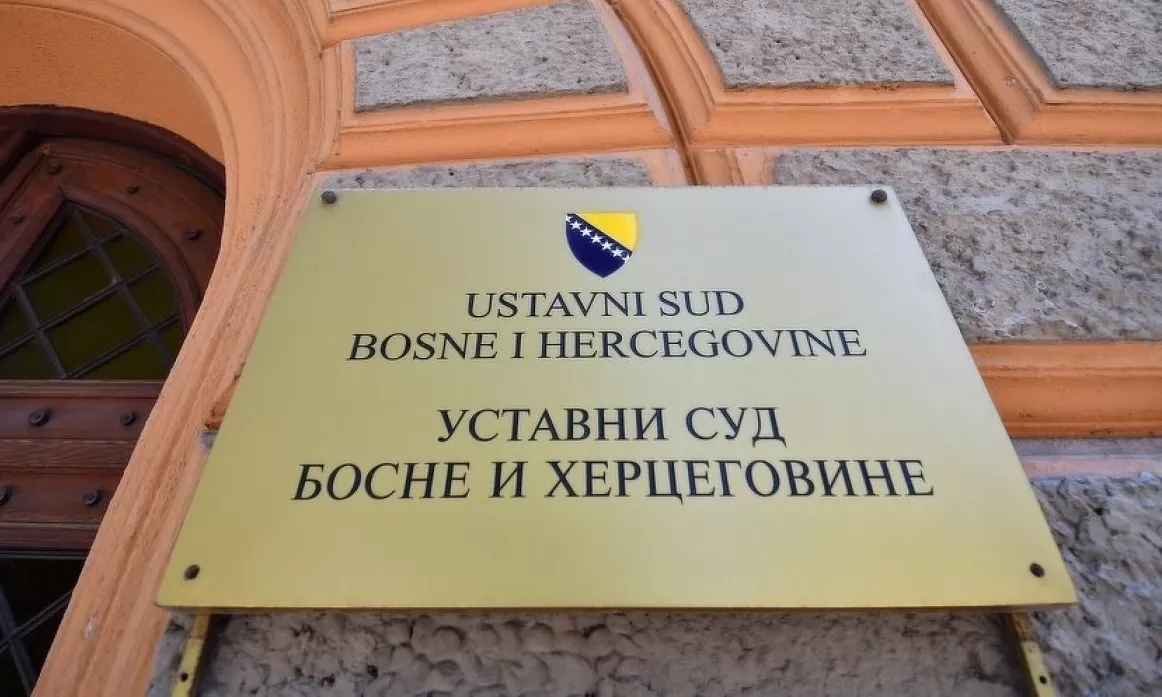
Even if Mirjana Marinković-Lepić managed to convene a session of the House of Representatives of the Parliament of the Federation of BiH in accordance with the Rules of Procedure and if Mladen Bošković managed to secure the necessary majority in the Election and Appointment Committee and make a falsified report on the (non)held session of this committee, using David Copperfield's skills, legally valid, which he cannot, the election of Marin Vukoja to the Constitutional Court of Bosnia and Herzegovina would necessarily be unconstitutional.
The election of any other of the 10 candidates based on the Public Call from 2022 would also be unconstitutional.
Why?
Because irregularities were committed in the procedure itself that prevent the election of a judge to the Constitutional Court of BiH from being carried out in accordance with the Rules of Procedure of the House of Representatives of the Parliament of the Federation of BiH, and thus in a constitutional manner.
Therefore, convening a session of the House of Representatives in accordance with the provisions of the Rules of Procedure, which has already become an impossible mission for Mirjana Marinković-Lepić, as well as filling the Election and Appointment Committee with suitable members, cannot ensure the constitutionality of the election of a judge to the Constitutional Court of BiH, whether it be Marin Vukoja or any of the total 10 candidates from the submitted ranking list.
Let's go in order.
The public advertisement was not published in accordance with the Decision of the House of Representatives on the procedure for electing judges to the Constitutional Court of BiH elected by the House of Representatives of the Parliament of the Federation of Bosnia and Herzegovina, No.: 01-02-1010/04 dated 17.01.2005. Namely, point V of the aforementioned decision stipulates that the public advertisement shall be published in the Official Gazette of the Federation of BiH and the Official Gazette of Republika Srpska and at least two daily newspapers with the largest circulation in Bosnia and Herzegovina.
Since the public advertisement, in addition to the aforementioned official gazettes of the entities, was published in the daily newspapers "Dnevni avaz" and "Večernji list", it is clear that the aforementioned binding provision of the decision of the Parliament of the Federation of BiH on publication in the two most widely circulated newspapers was not respected in this manner, which in itself is sufficient to challenge the legal validity of the conducted competition procedure.
Given the fact that according to Article VI/1 a) of the Constitution of BiH, four members of the Constitutional Court of BiH are elected by the House of Representatives of the Parliament of the Federation of BiH, whereby the ethnic affiliation or place of residence of the candidate for judge is completely legally irrelevant, it is clear that the publication of the public advertisement in the two most widely circulated daily newspapers throughout the territory of BiH has a pronounced legal significance.
The violation of this element of the decision of the House of Representatives of the Parliament of the Federation of BiH seriously jeopardizes the principle of publicity and transparency of the election procedure for a judge of the Constitutional Court of BiH. Directing the publication of the public advertisement to a daily newspaper that is not the second most widely circulated daily newspaper in the entire territory of BiH, or publishing the public advertisement in a daily newspaper distributed in a part of the state territory where the population of one ethnic community is predominantly represented, seriously undermines the constitutional principle of equality of all citizens of BiH.
This constitutional principle is further seriously called into question by the fact that, contrary to the Rules of Procedure of the House of Representatives, free access to the sessions of the Election and Appointment Committee and the sessions of the Working Group for conducting the procedure for electing a judge to the Constitutional Court of BiH elected by the House of Representatives of the Federation of BiH was also jeopardized. The practical negation of this constitutional principle, as well as the violation of the Rules of Procedure of the House of Representatives, occurred in the case of denying the right to a member of the academic community from the Faculty of Law of the University of Sarajevo, senior assistant Harun Išerić, to attend the session of the Working Group where the interviewed candidates were interviewed, which the appointee addressed in a separate paper titled "Omissions in the Procedure for Electing a New Judge to the Constitutional Court of BiH from the Federation of BiH". This paper is publicly available and can be easily found by searching the internet.
Another omission committed is the adoption of the decision on appointing the Working Group for conducting the procedure for electing a judge to the Constitutional Court of BiH elected by the House of Representatives of the Federation of BiH, No.: 01-02-990/22-1 dated 06.06.2022 (with subsequent amendments dated 26.01.2023), contrary to the Rules of Procedure of the House of Representatives.
The Rules of Procedure of the House of Representatives, which represent a constitutional category and as such are binding on the House of Representatives of the Parliament of the Federation of BiH, stipulate the possibility for the House of Representatives to appoint exclusively permanent and ad hoc working bodies, but not working groups. The Rules of Procedure explicitly stipulate that a permanent or ad hoc working body, for the purpose of studying specific issues within its scope, preparing reports, and drafting laws or other general acts, may establish a working group.
In the specific case, contrary to the Rules of Procedure, the Working Group was appointed by a decision of the House of Representatives, not the Election and Appointment Committee as a permanent working body of the House of Representatives. According to the provisions of the Rules of Procedure, the House of Representatives does not have the authority to appoint a working group for the needs of a permanent or ad hoc working body. The fact that the Rules of Procedure of the House of Representatives explicitly stipulate the possibility of appointing permanent working bodies exclusively by a decision of the House of Representatives or their establishment directly by the Rules of Procedure, while ad hoc working bodies can only be appointed by a conclusion, is also significant. In the specific case, the Working Group, although it does not fall under either permanent or ad hoc working bodies, was appointed by a decision of the House of Representatives, contrary to the Rules of Procedure.
The third omission is the fact that point III of the Decision of the House of Representatives of the Parliament of the Federation of BiH on the procedure for electing judges to the Constitutional Court of BiH elected by the House of Representatives of the Parliament of the Federation of Bosnia and Herzegovina, No.: 01-02-1010/04 dated 17.01.2005, explicitly stipulates: "For the implementation of the prescribed procedure, the Election and Appointment Committee of the House of Representatives of the Parliament of the Federation of Bosnia and Herzegovina shall form a special Working Group". However, contrary to this decision of the House of Representatives and contrary to the Rules of Procedure, the House of Representatives itself, by its decision No.: 01-02-990/22-1 dated 06.06.2022, with subsequent amendments dated 26.01.2023, appointed the Working Group for conducting the competition procedure.
The fourth omission consists in the violation of the Rules of Procedure of the House of Representatives in the part which stipulates that working bodies appointed by the House of Representatives "give opinions, submit proposals and report to the House of Representatives on matters within their scope". This means that the Working Group appointed by the House of Representatives, provided that it does not violate the Rules of Procedure (and it does), would be obliged to submit a report on its work and its proposal for election directly to the House of Representatives, not to the Election and Appointment Committee. However, the Working Group prepared and submitted the report to the Election and Appointment Committee, not to the House of Representatives as stipulated by the Rules of Procedure.
The fifth omission is contained in the fact that the Working Group exceeded its competences in its actions, i.e., it carried out actions that were not assigned to it. Namely, point IV of the Decision of the House of Representatives of the Parliament of the Federation of BiH on the procedure for electing judges to the Constitutional Court of BiH elected by the House of Representatives of the Parliament of the Federation of Bosnia and Herzegovina, No.: 01-02-1010/04 dated 17.01.2005, precisely defines the task of the Working Group, which includes "determining the text of the public call, reviewing the received candidacies and determining whether they meet the formal conditions, interviewing each candidate, preparing a ranking list based on their abilities".
Such a clear and precise definition of the task does not include the right of the Working Group to publish the text of the Public Call for the election of one judge of the Constitutional Court of BiH in the official gazettes of the entities and the two most widely circulated daily newspapers in BiH, and it is precisely in the preamble of the text of the Public Call that it is indicated that the Public Call is published by the Working Group, not by the House of Representatives of the Parliament of the Federation of BiH or the Election and Appointment Committee. Of course, there is a significant legal difference between determining the text of the public call and its publication, and for the undertaking of each of these actions, there must be an explicit authorization or legal basis.
After the aforementioned omissions in the procedure, it is clear that the election of Marin Vukoja as a judge of the Constitutional Court of BiH, as well as any other of the 10 candidates on the ranking list, would be unconstitutional. In the context of the omissions already committed in the earlier stages of the procedure, the issue of convening a session of the House of Representatives of the Parliament of the Federation of BiH and the issue of the composition of the Election and Appointment Committee become legally irrelevant, i.e., such actions acquire secondary significance. Of course, this would have special legal importance if one of the 10 candidates from the prepared ranking list were to be elected and if a procedure for assessing the constitutionality of such an election were initiated.
Komentari (0)
Prijavite se za komentiranje
PrijavaJos nema komentara. Budite prvi!
Minuta
Sve →Iz drugih kategorija

High Representative Not Elected: Germans, French and British Sabotaged Americans, New Attempt at End of June

ČOVIĆ WITHOUT MERCY: How Those Who Brought Ademović to Office Created a Political Hell for Him



Sunny Saturday, quite warm



Tragedy in Albanian resort: Two minors drown












