By: Rasim Belko @rasimbelko
Life in a space of harsh and fast geopolitical winds has not taught Bosniaks to remember yesterday, understand today, and see what tomorrow brings. This is a consequence of centuries of serving various rulers and systems, but also of some hard-to-explain symptom of short memory and even shorter foresight.
Therefore, in the past two centuries, Bosniaks have continuously been victims of harsh movements in the Balkan windstorm and criminal campaigns of hegemonic policies and fascist movements, mainly from Serbia and parts of BiH.
Even today, when they have the freedom to study the past to better understand the present, Bosniaks irrationally continue to accept everything offered to them without even trying to rationally explain what is being offered, what the offer contains, and what might be hidden behind that offer.
The policy of the victim's tear has long been outdated, because the victim and her tear mean absolutely nothing in a time when it is explicit disturbing content and when politics is based on the power of the stronger. However, Bosniaks have not grasped this. They have not learned the lesson that they survived only where they organized and where the strong and courageous Army of the Republic of Bosnia and Herzegovina emerged.
Today, instead of organizing in the fight for the state of Bosnia and Herzegovina and the Bosniak people, we are witnessing the need to fight for the butcher to admit he is a butcher, because perhaps that would make it easier for the victim.
The amount of energy invested by these Bosniaks in the fight for the former High Representative Valentin Inzko to impose amendments to the Criminal Code of BiH and ban the denial of genocide is completely disproportionate to the effects of that energy. Inzko imposed it, came out looking good after a bad mandate, and Bosniaks thought they had a lasso to catch anyone who denies genocide. No one has yet been held accountable for denying genocide under Inzko's decision.
Before I write what Bosniaks lost after Inzko's decision, and what those who deny genocide gained, I will recall a text from 2020, when I wrote the text “Srebrenica has fallen again”. At that time, as expected, Bosniaks, especially those from Srebrenica, crucified me. They said they lived in Srebrenica, that I resembled Mladić's men, and so on. Today, four years later, Srebrenica is under the absolute power of Serb-Chetniks, and by renaming streets named after Tito and Reuf Selmanagić Crni, they show that they are on the same path that Ratko Mladić followed in his genocidal campaign. Where are the Bosniaks in Srebrenica, let those who criticized me answer!
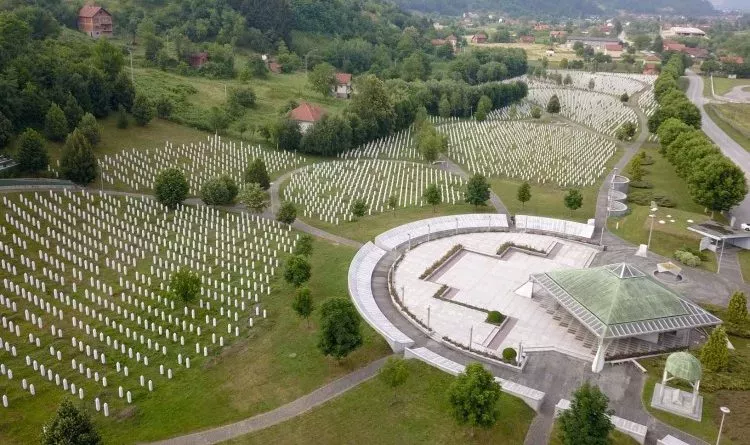
And they will criticize me again, because I believe that the Resolution on Genocide in Srebrenica, which the UN General Assembly intends to adopt, will yield the same results as Inzko's ban on denying genocide.
After Inzko's decision, the glorification of crimes and criminals in Srebrenica gained additional momentum, and provocations on July 11th even increased, with the latest provocation orchestrated by the authorities through changing street names. After Inzko's decision, Bosniaks, as the most numerous nation, became victims of their own demands, so in the past four years we have witnessed continuous attacks on returnees in the RS with the aim of expelling them in peace, as a continuation of the wartime strategy.
On the political level, after Inzko's decision, Bosniaks were expelled from the Constitution of the FBiH for 24 hours during which the government in the FBiH was elected, and those who approved Inzko's decision-making eliminated the majority political will of Bosniaks so that cadres ready to fulfill the demands of SNSD and HDZ would be in state government.
Everything indicates that the consequences of the UN Resolution on Genocide in Srebrenica will be more devastating for Bosnia and Bosniaks. Because, the Resolution is nothing more than a cleansing of the dirty conscience of world politics, which could have prevented genocide but did not. The fact that it is a non-binding document, which does not even mention those whom the Hague Tribunal convicted of genocide and its non-prevention, further fuels the suspicion that Bosniaks are being packaged for new concessions to criminal and hegemonic policies through a document that, as before, will allow them to tell the world “we are a people upon whom genocide was committed”. The fact that genocide in Srebrenica can be studied somewhere in the world means as much to Bosniaks as the study of their tragic fate means to Native Americans, who still exist only in traces.
Everything stated in the draft resolution are civilizational values, but shouldn't the world have acted in accordance with these values before and after the resolutions? That is where every reasonable need to analyze the proposed Resolution begins and ends.
Because, every word of the Hague verdicts is more important than the UN resolution. In those verdicts, the intent and act were clearly proven and judged, but that was not enough for world politics, so it allowed criminal policy to primarily gain 49 percent of the territory of Bosnia and Herzegovina, and in the period after, in order to “win over” and “calm down” the followers of criminal policies, they were given almost everything they asked for.
When, after the UN resolution on genocide, an attack begins on resolving the state property of Bosnia and Herzegovina in a way that suits Belgrade and Banja Luka, Bosniaks will realize that they have once again voluntarily played a game with the policy of a dirty conscience. In the end, Bosniaks will be able to wave the genocide resolution paper in a country whose territory belongs to those who are responsible for or complicit in the commission of genocide. Territory was fought for, because without territory there is no state or people. If only someone would explain to Bosniak politics that the victim's tear is not what realpolitik of survival requires.
Because, the path that Bosniak politics is taking will end with the genocide in Srebrenica being studied somewhere in law and humanities departments, and in a footnote it will be written: “Bosniaks became extinct after Bosnia and Herzegovina was divided between Serbia and Croatia”. We just need to understand.
Komentari (0)
Prijavite se za komentiranje
PrijavaJos nema komentara. Budite prvi!
Minuta
Sve →Iz drugih kategorija

High Representative Not Elected: Germans, French and British Sabotaged Americans, New Attempt at End of June

ČOVIĆ WITHOUT MERCY: How Those Who Brought Ademović to Office Created a Political Hell for Him



Sunny Saturday, quite warm



Tragedy in Albanian resort: Two minors drown












