
Written for NAP by: Sifet Kukuruz, legal expert
The news that editor Enisa Hajdarević-Šojko of BH Radio 1 was sanctioned for playing the song "Defenders of Sarajevo" on her show did not cause any particular attention in those political circles that self-identify as pro-Bosnian and pro-state.
Regarding the decision to sanction Enisa Hajdarević-Šojko, the Board of the aforementioned Bosnian-Herzegovinian radio stated that "all program content must be adapted to the socio-political context so that no broadcast content causes disturbing reactions among residents in all parts of BiH, and care must be taken to ensure that the BHRT1 program is an integrative medium that unites, not divides."
Based on this explanation of the decision, it can be concluded that the criterion for acceptability of program content on the public radio-television service becomes the socio-political context and the feelings of all residents of the state of BiH, which in itself would not pose any problem if BiH were not marked by policies that openly destroy Bosnian-Herzegovinian society, deny the state of BiH, and openly express disintegrative aspirations towards everything that represents and symbolizes the state of BiH as a unique political-legal, cultural, economic, and every other space.
It is important to emphasize that policies expressing a nihilistic approach to everything state-related did not emerge only after the war, which, according to international court rulings, constituted an international armed conflict, but rather these are policies that led to the war and whose primary goal was the disappearance of the state of BiH and the destruction of every form of integral Bosnian-Herzegovinian society.
And it is precisely such policies and their sympathizers who today become the measure of acceptability of content that can or cannot be broadcast on a radio station that, nominally, self-identifies as state-owned.
If the ultimate goal of all public institutions should be the preservation and promotion of the interests of the state of BiH, multilateralism, and the plurality of Bosnian-Herzegovinian society, and the Board of BH Radio 1 wants to convince the domestic public of this with its decision, then the question must be asked: does the song "Defenders of Sarajevo" undermine the interests of the state of BiH and harm Bosnian-Herzegovinian society, and if so, how? To this, one can certainly add the question: how does the Board of BH Radio 1 perceive the state of BiH, its past, and its future?
Answers to these questions would make it possible to clearly and precisely determine whether the song "Defenders of Sarajevo" represents content that denies the state of BiH as an integral, sovereign state, a state of equal citizens and peoples, or whether it is content that merely disturbs policies that are anti-state in nature.
Respecting the fact that the Board of BH Radio 1 was guided by the interests of the state of BiH, the feelings of all its residents, and the need to strengthen the integration of Bosnian-Herzegovinian society, the question must also be asked: how is it possible to strengthen and develop state-building awareness if the measure of acceptability of content in the public space is set as the satisfaction of those who did not want and still do not want the existence of the state of BiH, nor any form of existence of a unified Bosnian-Herzegovinian society.
It is not possible to take into account the feelings of those who consider the state of BiH their homeland and those who not only do not consider BiH their homeland but do not even consider it a state. This is impossible to the same extent that it is impossible to put on the same level those who defended Sarajevo and those who shot at Sarajevo, because their feelings and interests, and their songs, were not the same. These are two mutually exclusive worlds.
The defense of Sarajevo was not only a moral but also an existential imperative, but the destruction of Sarajevo was neither moral nor necessary. It was a matter of choice and attitude of those who did it. Therefore, it is not possible to set the socio-political context and the disturbance of residents in all parts of BiH as a criterion for the acceptability of program content, because there were, and still are, state and anti-state policies, just as there were, and still are, patriotic and destructive feelings towards everything that is Bosnian-Herzegovinian.
The Board of BH Radio 1 first had to determine which values represent the interests of the state of BiH and all its residents, and only then, based on clearly defined benchmarks and criteria, determine whether a certain content is in line with or contrary to that interest.
Dissatisfaction or disturbance with any content by anyone cannot be a measure of social acceptability, because it is clear to everyone that in BiH there are policies and their sympathizers who are disturbed and dissatisfied with the fact that the state of BiH still exists as a state.
To avoid any politicking, there must be clear and objective criteria based on which content is assessed. And such criteria must be known in advance to everyone, both to those who experience BiH as their homeland and to those whose homeland is another state but live in BiH.
Without the existence of such transparent criteria and benchmarks, all decisions necessarily have a subjective character, which may even originate in policies contrary to the interests of BiH and its residents.
The decision of the Board of BH Radio 1 in this specific case is based on paradoxical logic, according to which, for example, from the time of the National Liberation Struggle, only those songs that do not offend the feelings and interests of the Chetniks could be sung, or, in sports terminology, at the current European football championship, it would be acceptable to allow only those matches where the fans of the defeated team will not be offended by the result that eliminates their team from further competition.
Facts, truth, not politics and the feelings of those who shot at Sarajevo, can and should be the only criterion and measure of acceptability of any content in the public space.
Appeasing the forces and policies that destroyed the state of BiH and its capital is deeply disturbing for all those who consider the state of BiH their homeland and Sarajevo its capital.
It is obvious that in this specific case, it is not about protecting the state interest, because it has not been clearly defined by those who made the decision. Also, it cannot be about musical tastes, which cannot and should not be debated, but rather about the relationship between advocates and followers of two mutually exclusive policies: one that built and defended the state of BiH, and one that denied and still denies BiH.
This truth cannot be changed by the fact that such a relationship is expressed by those who use state institutions for anti-state activities. That was the case then, and it is the case today. The only difference is that there were once defenders of Sarajevo who did not make compromises at the expense of truth and their state, and that today there are other actors on the scene who defend other values and are ready to compromise with the protagonists and bearers of those "values."
The misfortune of this state and this city is that today there are no defenders of Sarajevo who refused to compromise with policies that deny the state of BiH and kill the residents of its capital, and who, in their honorable and noble struggle, sang to their state and their city.
Unfortunately, today we have policies whose main characteristic is "compromise." And making a compromise between truth and falsehood is killing the truth. In the politics of compromise, truth always and necessarily suffers.
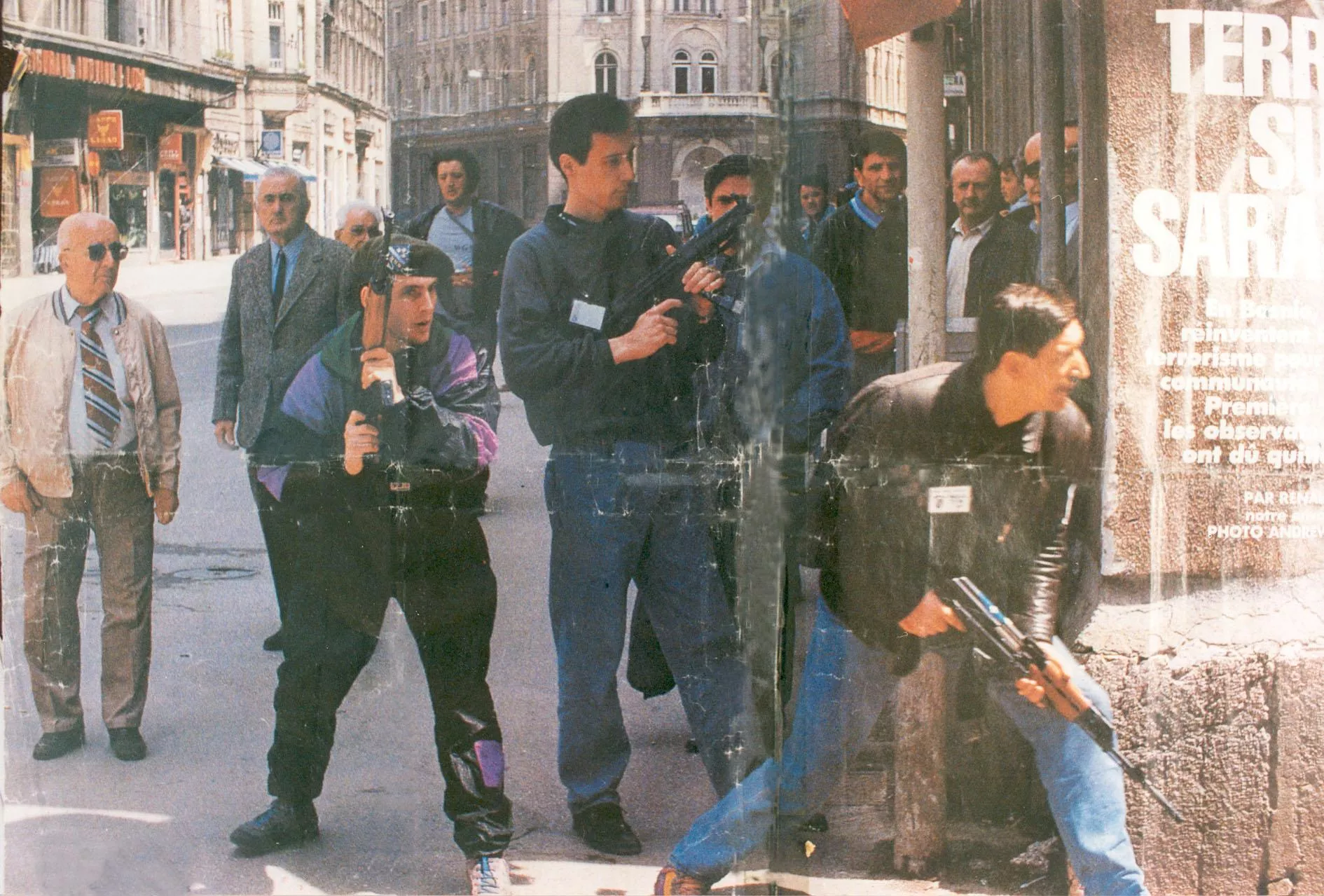
The boys in sneakers defended the state of BiH and the truth about it with their lives, while today those in patent leather shoes, placed in public office, defend their positions and interests through compromises. And these are compromises at the expense of truth. Such an attitude towards truth is not deserved by the boys in sneakers, nor by the state of BiH and its capital city of Sarajevo.
Komentari (0)
Prijavite se za komentiranje
PrijavaJos nema komentara. Budite prvi!
Minuta
Sve →Iz drugih kategorija

High Representative Not Elected: Germans, French and British Sabotaged Americans, New Attempt at End of June

ČOVIĆ WITHOUT MERCY: How Those Who Brought Ademović to Office Created a Political Hell for Him



Sunny Saturday, quite warm



Tragedy in Albanian resort: Two minors drown












