
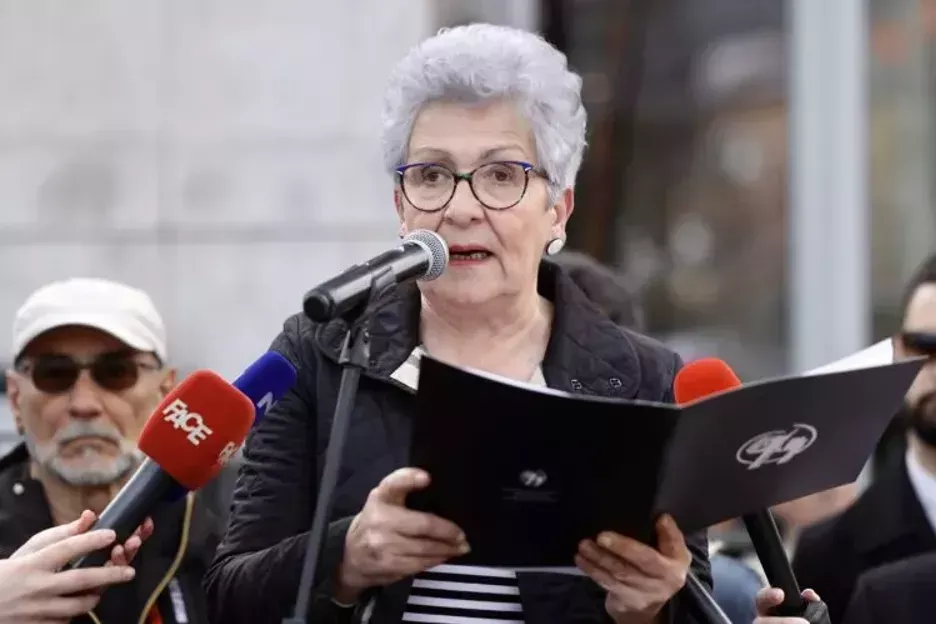
(Patria) - On the occasion of today's Conference: Reform of Electoral Legislation, held in the Parliamentary Assembly of BiH, Azra Zornić, on behalf of Circle 99, prepared and presented two documents.
The Analysis of the Conclusions of the European Court of Human Rights (ECHR) in the context of democracy in Bosnia and Herzegovina raises a number of important questions about legal and political implications.
Key elements often highlighted as potentially inadmissible in the work of the ECHR include: selective justice, ethnic quotas and discrimination, impact on sovereignty, critical approach towards the Court, neglect of local contexts, individual rights versus collective rights, and impact on democratic institutions.
These points indicate the complexity of the relationship between ECHR practices and democratic standards in Bosnia and Herzegovina, emphasising the need for further research and reflection on the rights and responsibilities of all actors in this process:
1. The issue of impartiality and fairness of the Court's proceedings In his presentation during the delivery of the Conclusions of the European Court of Human Rights, the President of the Court repeatedly used the phrase that this is a "big, big, big exception due to the sensitivity of the case and the broader public interest", which indicates that this is not a normal or usual procedure but a staged process. "Big, big, big exception": this phrase indicates that this is an extraordinary procedure that does not adhere to standard rules, which may raise concerns about the impartiality and fairness of the Court's proceedings.
2. Challenging the nature of indirect elections
Paragraph 1 of these Conclusions states that the applicant Kovačević "challenged the nature of indirect elections for the House of Peoples of Bosnia and Herzegovina as established by the Election Law and the imposed provisions of the High Representative from October 2022", despite the fact that applicant Kovačević could not even use the imposition of the High Representative from October 2022 as an argument, because his application was submitted to the European Court of Human Rights much earlier. It is noticeable that the Court presented fabricated arguments that were not part of the original application, therefore the question rightly arises as to whether all aspects of the case were properly taken into account.
3. Constitutional provisions
In his application, Kovačević challenged the provisions of the Constitution of Bosnia and Herzegovina (Articles 4.1 and 5), which prevent the exercise of active voting rights in elections for the Presidency of Bosnia and Herzegovina and the House of Peoples of Bosnia and Herzegovina. This was also confirmed in the first-instance judgment from August 2023. Additionally, Kovačević problematised certain provisions of the Constitution of Bosnia and Herzegovina in terms of their discriminatory impact, which is supported by higher instance judgments. This emphasises the importance of domestic legal remedies that may have been ignored by the Court, especially regarding the exhaustion of effective domestic legal remedies, which the applicant certainly used, citing, among others, the case law of the European Court of Human Rights from the "Zornić" case.
4. Imposition of a legal situation
The European Court of Human Rights cannot justify the fabrication of a new legal situation by the Court, which is not the subject of the claim in Kovačević's application, with some "big, big, big exception"; on the contrary, at the level of perception, it can be concluded that there was an intention to produce such a legal situation that would enable the denial of "Victim Status" and, in the same sense, the alleged non-use of domestic legal remedies. The imposition of a new legal framework without an appropriate basis could have far-reaching consequences for the legal system and human rights in Bosnia and Herzegovina. It should be noted that applicant Kovačević also used the case law from the "Sejdić-Finci" and "Zornić" cases, as well as other cases of the European Court of Human Rights, so his "Victim Status" was duly proven, but due to the fabrication of a new legal situation, which does not correspond to the claim of applicant Kovačević himself, an artificial legal situation was obviously deliberately created to challenge his "Victim Status" in unclear, unsubstantiated and legally unfounded legal circumstances.
5. Interest of HDZ and neighbouring Croatia
Given that the European Court of Human Rights reached conclusions that have no basis in Kovačević's claim, it can be clearly stated that there was an intention to overturn the case in favour of HDZ, neighbouring Croatia and obviously the High Representative himself. Reasonable suspicion of political motivation behind the Court's decisions may be key to understanding international relations in the region and their impact on domestic politics.
6. The right to democracy
Depriving the right to self-determination and democracy violates fundamental principles of international law and human rights. This situation creates an ambivalent relationship between internal and external factors, thereby undermining the sovereignty and ability of the state to make decisions autonomously. There is a need to strengthen civil society, return to dialogue and implement reforms to improve the democratic environment and ensure that all citizens of Bosnia and Herzegovina have an equal opportunity to participate in politics and decision-making affecting their lives. Maintaining stability and promoting the right to self-determination are key to building a sustainable and fair democracy.
7. (Non)corruptibility of the Court
The controversial approach of the European Court of Human Rights, which received a donation of 100,000 Euros from neighbouring Croatia, thereby allowing the High Representative and neighbouring Croatia to participate as "interveners" or "third parties", placed applicant Kovačević in an unequal position and deprived him of the right to a fair trial.
This analysis undeniably indicates the need for critical reflection on the actions of the European Court of Human Rights, especially in the context of issues of law and justice in Bosnia and Herzegovina. This situation highlights the complexity of legal proceedings and the involvement of political interests, as well as the challenge of preserving justice and democracy in the region.
It is necessary to engage on the international stage to ensure that Bosnia and Herzegovina can exercise its rights as a sovereign state.
The second document can be read HERE
Komentari (0)
Prijavite se za komentiranje
PrijavaJos nema komentara. Budite prvi!
Minuta
Sve →Iz drugih kategorija

High Representative Not Elected: Germans, French and British Sabotaged Americans, New Attempt at End of June

ČOVIĆ WITHOUT MERCY: How Those Who Brought Ademović to Office Created a Political Hell for Him



Sunny Saturday, quite warm



Tragedy in Albanian resort: Two minors drown












