
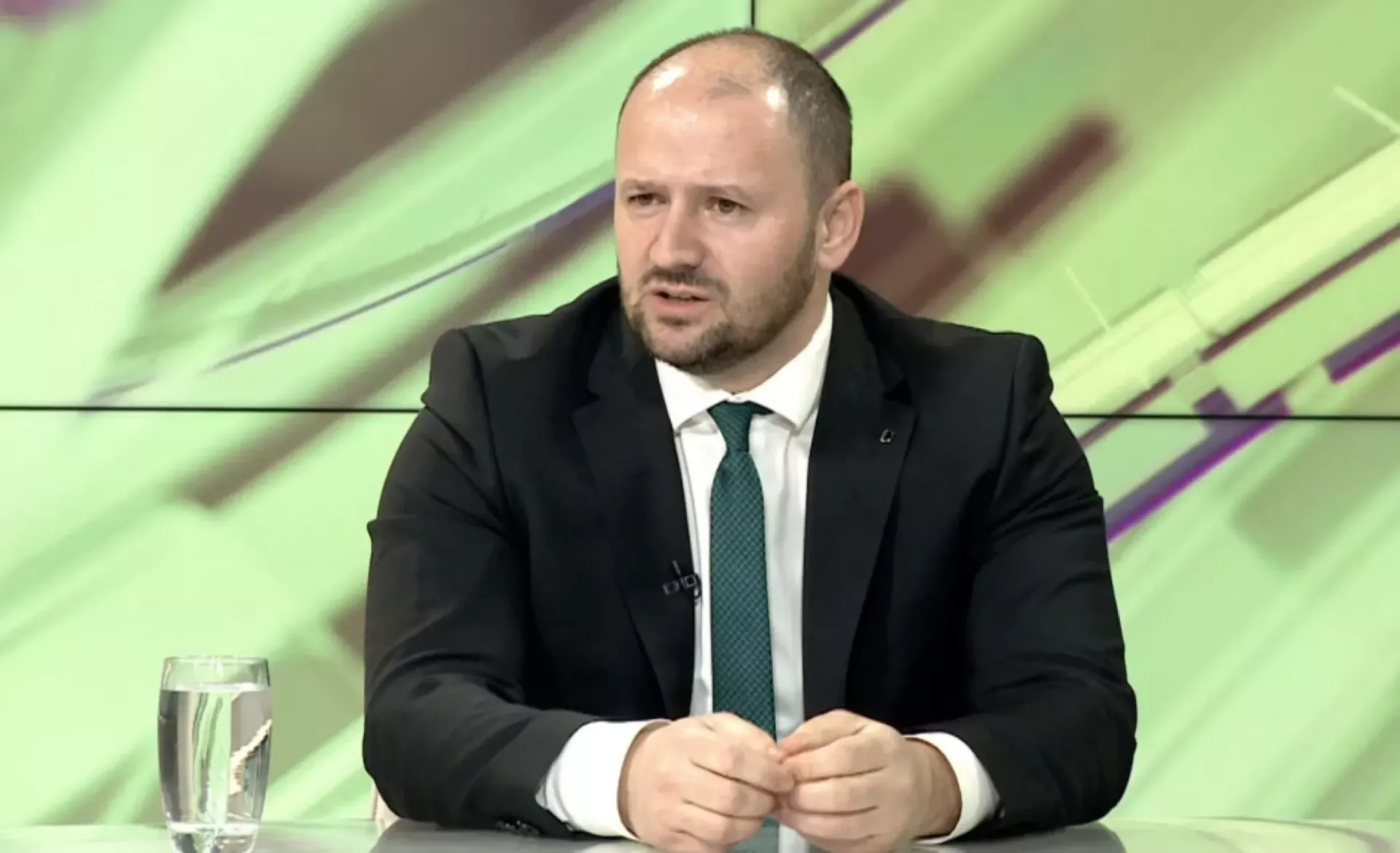
Interview by Delvin Kovač
Deputy Speaker of the SDA and delegate in the House of Peoples of the FBiH Parliament Muamer Zukić speaks in an interview with the Novinska agencija Patria about the (non)convening of the Federal Parliament, the dangerous rhetoric and policies of the leaders of Republika Srpska, Milorad Dodik, and Serbia, Aleksandar Vučić, as well as the (in)adequate actions of Bosniak and pro-Bosnian political and intellectual elites in combating the increasingly pronounced threats to the existence of the state of BiH.
Our interlocutor also shared his opinion on the Resolution on Genocide in Srebrenica, which is expected to be considered soon by the United Nations General Assembly, what he thinks about the behavior of the "Trojka" (Alliance) parties at the federal and state levels, and commented on the gathering of regional Bosniak political representatives organized a week ago in Ilidža by one of the leaders of the "Trojka" - the president of People and Justice, Elmedin Konaković.
Sessions of the House of Representatives of the FBiH Parliament are rare. And even rarer are sessions of the House of Peoples. Why is that?
Zukić: It is true that sessions of both houses of the Parliament of the Federation of Bosnia and Herzegovina are held infrequently. In the past year, only a few laws have been adopted. Of these, the most important ones, such as the set of energy laws, were prepared by the previous Government, and some laws would not have been adopted if it weren't for the votes of the opposition.
All of this indicates the pronounced dysfunctionality of the current government in the Federation, both at the level of the parliamentary majority and at the level of the policies they stand behind. The impression is that the ruling coalition is most functional when it comes to indebting the Federation, where we will clearly witness negative records this year.
There are no proposals from either the government or the opposition to convene an extraordinary session to discuss the malignant and anti-state actions of politicians from Republika Srpska, as well as from Serbia. Or to possibly appeal to the international community, embodied by the High Representative Christian Schmidt, through a conclusion to dismiss Milorad Dodik and all those who support his secessionist policy.
Zukić: Unfortunately, the current government also includes those who are part of the anti-state policies you mention. An even bigger problem is that such individuals are quite dominant in the relations between the current government partners. It is evident that Mr. Dodik is the undisputed most influential figure in the current government at the state level.
Mr. Čović is not what Dodik is, but he is also the key person when it comes to the government at the federal level. While the other government partners, primarily the "Trojka", are largely powerless in relation to the aforementioned duo. From such a position, it cannot be expected that they will effectively put a stop to anti-state policies at this moment, nor that they will respond positively to any opposition initiatives that would go in that direction.
What is your view on the announced Resolution on Genocide in Srebrenica? Do you believe it will be adopted, what outcome could it produce, and why do Dodik and Vučić constantly repeat that it is directed against the Serbian people, and that after its adoption, activities leading to the abolition of Republika Srpska will occur?
Zukić: The adoption of the Resolution on Srebrenica sends many important messages for Bosnia and Herzegovina and certainly opens the door for new chapters in our history. The commitment of the civilized world to move in this direction is extremely important for us. It is regrettable that almost the entire Serbian political establishment has so loudly opted to be on the other side of history.
I do not think this is directed against the Serbian people. But it is certainly against the system that has been directly or indirectly convicted of genocide. And those who protect such systems have reason to be concerned.
In your opinion, what is the most adequate way to combat Dodik's secessionist tendencies? Even Vučić is no longer distancing himself from his intentions; on the contrary, he says he will support Dodik in everything he does?
Zukić: Secessionist aspirations have grown so much that it is extremely difficult at this moment to find a quick, effective, and painless way to return things to normal. And here, I primarily see the responsibility of those who, through their concessions and clumsiness, allowed anti-state forces to strengthen so much.
Of course, it is not impossible to fix things. For starters, patriotic forces must unite in a front. I have spoken before about the need to form a government of national unity, which would include all parliamentary pro-Bosnian political parties. The first step in combating the united anti-state forces should be the unity of patriotic forces. After that, we could certainly act more strongly towards those who are in any way directed against Bosnia and Herzegovina.
I believe that such a broad Bosnian patriotic front would have much greater strength in institutions and would become a serious and respectable interlocutor in domestic and regional contexts.
Do you get the impression that among the Bosniak and pro-Bosnian political and intellectual elites, there is not enough awareness of the extent to which the future and survival of the state of Bosnia and Herzegovina are in danger, and the practical repetition of 1992-1995?
Zukić: Sometimes it is difficult to understand that someone with our experience from the 90s underestimates the current danger to the state in this way. Today's protagonists of Greater Serbian policies have said and announced things that those convicted of genocide did not say at the beginning and during the 90s. Furthermore, we are publicly receiving warnings from high-ranking world officials, primarily from NATO and the US, as well as others – who point to the possible endangerment of peace in Bosnia and Herzegovina.
Our elites shift the burden of responsibility from one to another. Academic elites to political ones, opposition to government, current government to previous ones, and so on. I don't think we should be afraid. But we must all be aware of our responsibility and obligation to make the state of Bosnia and Herzegovina stronger and more prepared to face all potential dangers.
What is your opinion on the actions of the "Trojka" at the state and federal levels of government? Do you get the impression that they are not even aware of the danger posed by Dodik and his proteges, as well as Vučić with the entire government in Serbia?
Zukić: I believe that everyone today sees the danger in Putin's Dodik. The only question is how much each person sees their own responsibility in it?! From a policy of dialogue and compromise, we have reached the most heated political situation since the existence of Bosnia and Herzegovina as it is organized today. And now we are buried under futile media condemnations of Dodik by "Trojka" officials, which seem to be approved by coalition bosses from SNSD and HDZ.
I think that anti-state policies are somewhat facilitated by the creation of a false image in the public, that Bosnian patriotic forces also have their seasoned political fighters who keep things under control, when in reality, they are mostly "paper tigers".
At the end of this interview, what is your view on Konaković's gathering of Bosniak leaders in Ilidža?
Zukić: In order to talk about the status of Bosniaks, we must keep in mind our current position at the state and federal levels. Namely, at this moment, in the state House of Peoples, only one Bosniak delegate participates in decision-making, and at the federal House of Peoples level, two-thirds of Bosniak delegates are outvoted. This means that the Bosniak clubs in the Houses of Peoples have been pushed into opposition and practically disempowered.
For example, the positions of the Bosniak Club in the House of Peoples of the FBiH Parliament are completely irrelevant to the current government. Bosniaks can even not attend sessions. Our voice has never been so devalued in this house in the history of the Federation!
Komentari (0)
Prijavite se za komentiranje
PrijavaJos nema komentara. Budite prvi!
Minuta
Sve →Iz drugih kategorija

High Representative Not Elected: Germans, French and British Sabotaged Americans, New Attempt at End of June

ČOVIĆ WITHOUT MERCY: How Those Who Brought Ademović to Office Created a Political Hell for Him



Sunny Saturday, quite warm



Tragedy in Albanian resort: Two minors drown












