
For NAP writes: Sifet Kukuruz, legal expert
The war against the state of BiH did not end in 1995, nor were criminal projects defeated. This claim is based on the fact that the policies of neighboring countries, which were pursued by armed means during the period 1992-1995, continued to be pursued even after the signing of the Dayton Peace Agreement. There can be no doubt that such policies are being pursued today.
The continuity of the existence and implementation of policies that were at the root of the war, which, according to the judgments of the Hague Tribunal, was an international armed conflict, represents clear evidence that the war has not stopped, nor has evil been defeated.
Another state of matter
Therefore, policies of challenging, denying, and dividing the state of BiH are not exclusively reserved for the period 1992-1995; they are a constant and have been implemented continuously, both before and after the signing of the Dayton Peace Agreement.
It is important to emphasize that to the extent that such policies led to the signing of the Dayton Peace Agreement, to that extent did that Agreement have a retroactive effect on those policies, allowing them to survive in another state of matter and to continue their activities by other means.
The fact that the policies that caused the war still exist as active policies today proves that the war against BiH was not stopped in Dayton, or rather, that it never ceased. The change of methods, instruments, and mechanisms for their realization does not and cannot mean the end of these policies. Rather, it is about their second youth and a new beginning. The substitution of armed struggle with political, diplomatic, economic, and other means represents only a more advanced, or rather, a more sophisticated and subtle phase of warfare.
Instead of establishing peace and justice, the Dayton Peace Agreement allowed the survival of Greater-state hegemonic policies, which were the cause of the war, and gave them a new chance to achieve their set goals.
The goal of the Dayton Peace Agreement was neither peace nor justice, but an opportunity for a respite and consolidation of evil policies. The behavior of the international community towards BiH after the signing of the Dayton Peace Agreement also shows this, and that relationship differs little or not at all from that of the period 1992-1995. If there is a difference, it can only be sought in form, not in the essence of the action.
The current political scene in BiH, as well as the behavior of the international community, shows that Greater-state hegemonic policies, whose driving force was the division of the state of BiH, were not buried in Dayton. What's more, such policies were monumentally honored in Dayton in the form of the General Framework Agreement for Peace in BiH.
Greater-state hegemonic policies towards BiH were not buried by the Dayton solutions, but were fed. This best proves their vitality and aggressiveness today. Therefore, the Dayton Peace Agreement only preserved the Greater-state policies of neighboring countries towards BiH, and today, almost 30 years later, we are witnessing the restoration of these projects, again under the auspices of the international community, with Christian Schmidt, the High Representative in BiH, engaged as the main subcontractor, who is openly working for the interests of neighboring countries.
Given that the Hague Tribunal ruled that the Greater-state projects of neighboring countries had a criminal character, this reduced Serbia's and Croatia's possibilities to act destructively directly, to a certain extent. That is why Croatia engaged a subcontractor for the realization of its Greater-state goals, and none other than Christian Schmidt, the High Representative in BiH.
Since his arrival in BiH, Christian Schmidt has shown that he is an advocate for the interests of the Republic of Croatia and that he has completely subordinated the function of the High Representative of the international community in BiH to the fulfillment of the war aims of the Republic of Croatia in BiH.
The concept of evil
As a fervent fan of the "Vatreni" (Fierce Ones), Schmidt passionately defends Croatia's greatest war achievement in BiH, which is the anachronistic constitutional construct of "constituent peoples." This construct is a direct consequence of the war and crimes in which Croatia participated, directly violating international law.
Thus, instead of preventing the enjoyment of any privileges or benefits achieved through crime and illegal use of force, as international law dictates, Schmidt has engaged in ensuring that crime pays off and is rewarded.
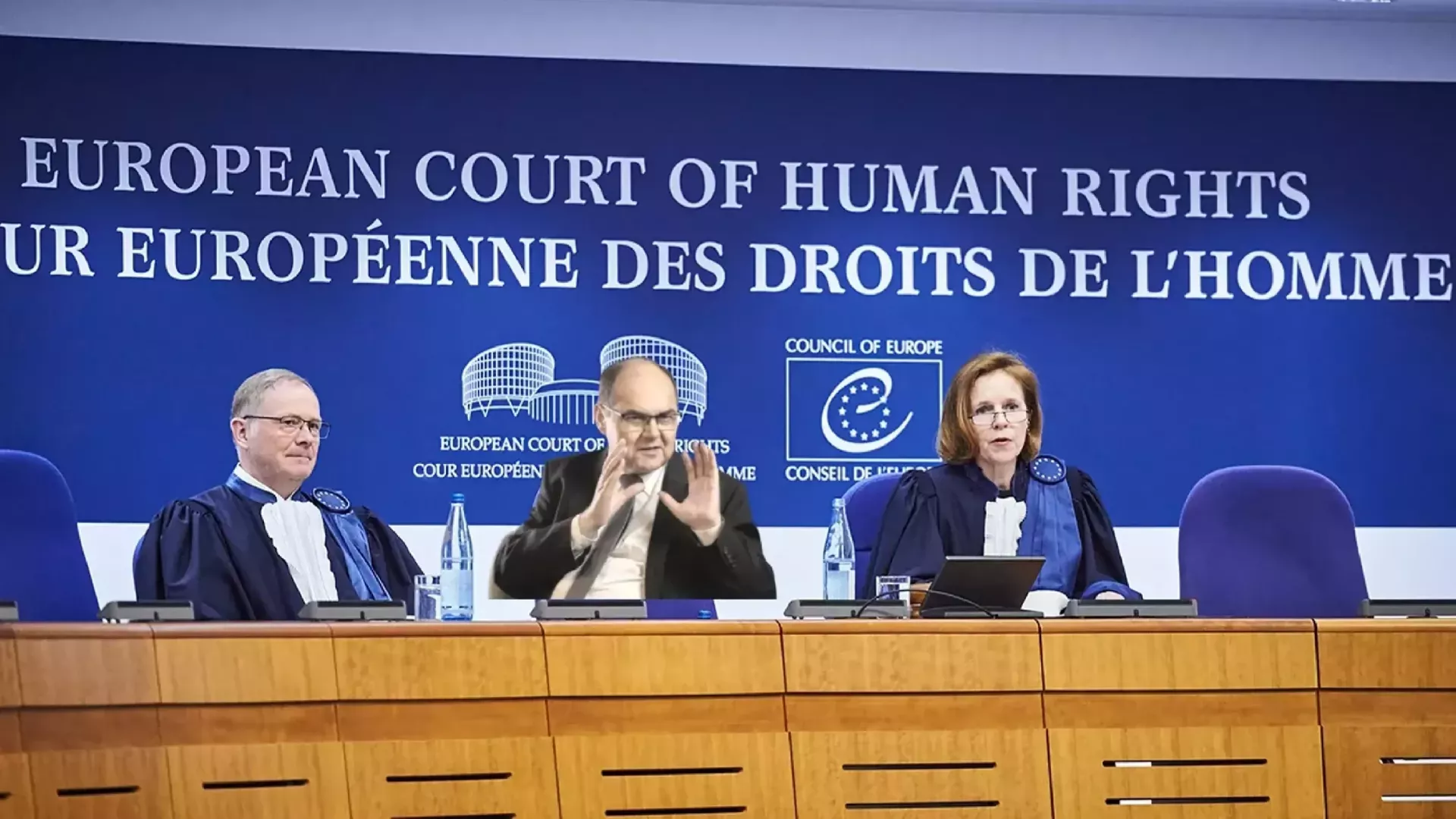
The first step in this direction was the intervention in the constitutional system of BiH in order to, in a discriminatory manner, strengthen the constitutional position of one constituent people, and when he and his mentors felt that these interventions were insufficient or could be threatened, Schmidt, on the orders of his mentors, engaged in defending and protecting the results of the crime before the European Court of Human Rights, seeking to participate in the proceedings on the lawsuit of Slaven Kovačević against BiH. Thus, Schmidt transformed from a High Representative into the devil's advocate; instead of law, he advocates for what the law prohibits and condemns.
By placing himself in the service of Croatia's interests and war aims, Christian Schmidt openly advocates for the concept of constituent peoples, which the European Court of Human Rights has already stated represented a temporary and necessary evil in the circumstances that existed in 1995. And it is precisely this concept of evil that Schmidt is trying to protect today and to transform it from a temporary and forced category into a permanent and legal category.
Some analysts have stated that the reason for Schmidt's behavior is a desire to preserve his own credibility and protect his earlier decisions. Of course, this argument carries weight; however, much indicates that what Schmidt is tasked with implementing in the coming period could be much more dangerous for the state of BiH.
If the European Court of Human Rights does not stop him in the Kovačević case, Schmidt will certainly bring the state of BiH into great danger in the coming period. Therefore, one must believe and invest all legal and diplomatic efforts to prevent Schmidt from realizing the war aims of neighboring countries.
Support for such activities should be sought and found in the fact that not only the European Court of Human Rights, but also the Hague Tribunal (ICTY) and the International Court of Justice (ICJ) have already established in their judgments that world and European policies have little or no connection with international and European law.
Therefore, it is high time for pro-state policies to demonstrate a proactive approach in protecting the sovereignty, international subjectivity, and political independence of the state of BiH, and the first step in this direction could be sending a clear official message to the European Court of Human Rights to exclude Christian Schmidt from the proceedings in the Kovačević case, as Schmidt does not represent the interests of BiH, nor European law in BiH.
Furthermore, a clear message must be sent to the citizens of BiH, as well as to the states that witnessed the Dayton Peace Agreement, that Christian Schmidt's actions or inactions in BiH so far have been destructive and harmful to the interests of the state of BiH.
The citizens of BiH have been paying for the delusion that someone else will protect the state of BiH, not those who live in it, for almost 30 years. It is high time to take our own destiny and the destiny of the state of BiH into our own hands, away from the hands of others.
Komentari (0)
Prijavite se za komentiranje
PrijavaJos nema komentara. Budite prvi!
Minuta
Sve →Iz drugih kategorija

High Representative Not Elected: Germans, French and British Against Americans, New Attempt at End of June

ČOVIĆ WITHOUT MERCY: How Those Who Brought Ademović to Office Created a Political Hell for Him



Sunny Saturday, quite warm



Tragedy in Albanian resort: Two minors drown












