
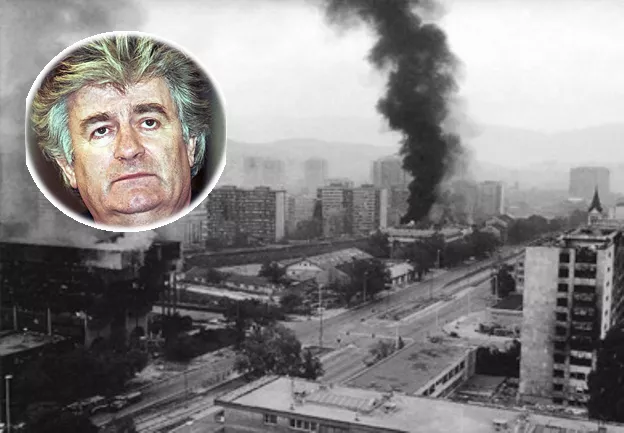
The closing arguments in the trial of the former president of Republika Srpska (RS) and one of the greatest war criminals in the former Yugoslavia, Radovan Karadžić, have concluded today at the Hague Tribunal. The prosecution accuses him of responsibility for the deaths of thousands of non-Serb civilians during the Serbian aggression against Bosnia and Herzegovina from 1992 to 1995, writes the BiH news agency Patria (NAP).
Karadžić is accused of genocide, crimes against humanity, and violations of the laws and customs of war in Bosnia and Herzegovina between 1992 and 1995.
Birth of a Criminal
Radovan Karadžić (1945) was born in the small Montenegrin village of Petnjica, about five kilometers from the municipality of Šavnik.
He became a Serbian politician, former president of Republika Srpska, a psychiatrist by profession, and also a poet.

Karadžić was born in the village of Petnjica near Šavnik in Montenegro
He moved to Sarajevo, the city he would brutally destroy and kill during the aggression against BiH, when he was only 15 years old. There, he completed secondary medical school, then medical studies, and finally specialized in psychiatry, earning his doctorate.

He completed part of his education in the USA and treated patients for depression at the Koševo hospital in Sarajevo.
First Days in Custody
Karadžić first clashed with the law in 1983, when he was detained on charges of embezzling state funds to build a weekend house in Pale. He spent 11 months in custody but was later released.
Entry into Politics
He entered politics in 1990, when the Serb Democratic Party (SDS) was founded in BiH after democratic changes and constitutional reforms, and he became its president.

In the early 1990s, Karadžić and the SDS advocated for BiH to remain in a truncated Yugoslavia. In the event of BiH declaring independence, they threatened to secede areas with a Serb majority, similar to what Serb Krajina did in Croatia, joining those areas to Serbia and Montenegro, thereby forming a "Greater Serbia".
War Crimes
As the most prominent member of the Bosnian Serb political leadership, Karadžić was considered most responsible for both the outbreak of the war and the numerous crimes committed against Bosniaks and Croats in the Bosnian Serb-controlled areas during that time.

Criminals Ratko Mladić and Radovan Karadžić, both are now answering before the Hague Tribunal
In July 1995, after the Srebrenica genocide, the Hague Tribunal indicted Karadžić for war crimes. Because of this, he was excluded from the negotiations that led to the Dayton Peace Agreement, and he was later forced to relinquish his position as president of Republika Srpska and party duties in 1996.
Post-War Years
Karadžić remained in Pale until 1997 but withdrew from political life. He participated in public life, appeared at celebrations, cultural events, and the like, and remained a shadow leader of both the SDS and the entire Republika Srpska.
During 1998 and 1999, he disappeared, and all searches for him proved unsuccessful.
Hiding and Arrest
He used false documents and the identity of Dragan Dabić, practiced alternative medicine, and thus earned money in a private practice in Belgrade.

From 1998 until his arrest, Karadžić used false documents and the identity of Dragan Dabić, and practiced alternative medicine (Photo: Telegraph.co.uk)
Neither the people he worked for nor his landlords knew who he was. The last known address where he lived was in New Belgrade. Radovan Karadžić was arrested by the Serbian security service in Belgrade on July 21, 2008. He had long gray hair and a beard.
He was extradited to the Hague Tribunal on July 30, 2008, and the trial on 11 counts of the indictment began on October 26, 2009.
The prosecution presented 195 witnesses who testified in person in the courtroom in this case, the judges themselves called one witness, while Karadžić's defense presented 238 witnesses.
The Hague Tribunal could deliver its final decision in the Karadžić case in mid or late 2015, writes Patria.

Today, he is on trial before the Hague Tribunal for crimes against humanity
Komentari (0)
Prijavite se za komentiranje
PrijavaJos nema komentara. Budite prvi!
Minuta
Sve →Iz drugih kategorija

High Representative Not Elected: Germans, French and British Sabotaged Americans, New Attempt at End of June

ČOVIĆ WITHOUT MERCY: How Those Who Brought Ademović to Office Created a Political Hell for Him



Sunny Saturday, quite warm



Tragedy in Albanian resort: Two minors drown












