
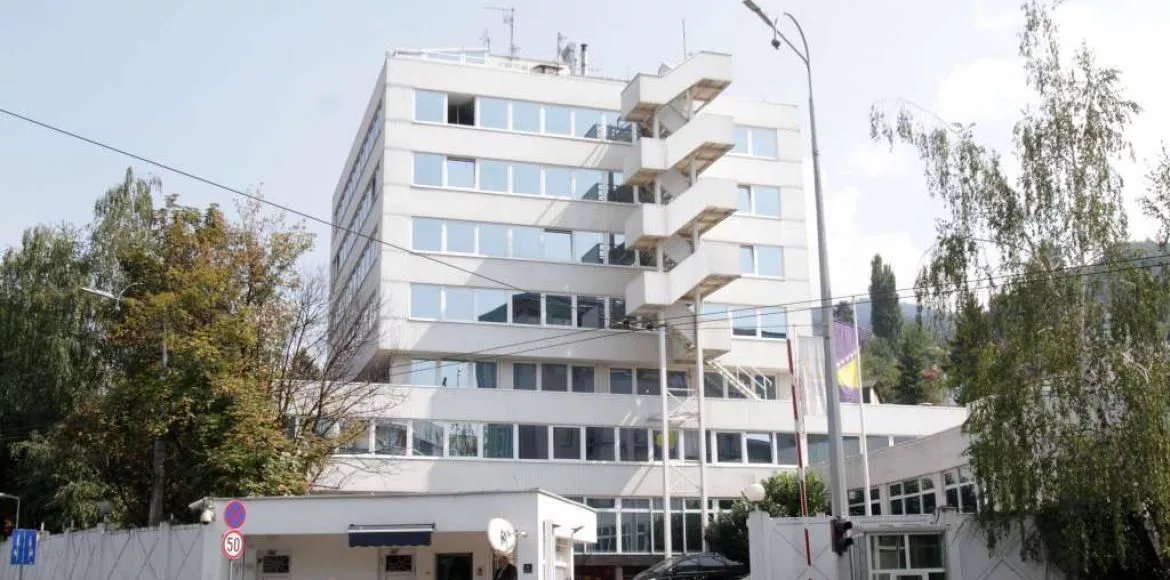
How to combine the European integration of Bosnia and Herzegovina and the presence of the OHR was the topic of discussion between representatives of Western countries and the Office of the High Representative, confirmed Christian Schmidt himself. There was discussion, but no decision was made. The mandate of the OHR is clearly defined by the 5+2 Agenda, but who has the intention to limit or abolish it? Is a rift emerging among the PIC member states? Is the role of the OHR the reason for postponing the regular session of the PIC at the beginning of the month. What are the real reasons - Europe or Schmidt's actions, i.e., the Bonn Powers.
In recent days, the potential reduction of the OHR's powers, its relocation or closure has become an increasingly relevant topic. The obligations of the authorities that should precede this step have not been met, and our path of European integration since the opening of negotiations has slowed down. The High Representative believes that the future of BiH with the OHR for several decades should not be an option, but that it is too early for that step. This is being discussed, but at whose initiative - that is not yet known.
"We discussed Dayton, the PIC, including my presence. We had a broad discussion on all topics. However, there are no decisions in this regard. We discussed how we can combine the European integration of Bosnia and Herzegovina and the presence of the OHR. I will say that I would not like to be here for another 30 years. The next 20 years should be a time of change. I will be here as long as I see an obligation to report to the UN Security Council - that things are not sustainable enough, that this country can be without the presence of the international community based on Dayton," said Schmidt.
There is no change in course regarding the OHR in the US administration. They explicitly oppose anti-Dayton and anti-constitutional actions.
"We support the High Representative and his powers and his decisions to use them when necessary. This has been our policy for the last 30 years and will be in the coming years. We consider the OHR, the High Representative, and the Bonn Powers as something that is complementary and enables what the EU is doing in BiH, to help," stated the US Ambassador to BiH Michael Murphy.
Unofficially, in conversation, the EU Delegation says that they stand by the position that the OHR is there until the 5+2 Agenda is fulfilled. The parties of the Trojka also expressed support for the High Representative, considering it indicative that the activation of the OHR's engagement comes at a time when the return of competencies to the entities is announced.
"All those who advocate for the weakening of the OHR are playing into the hands of the plans of Vladimir Putin and his satellites in power in Serbia and the RS entity. That is why it is particularly surprising if such positions are advocated by EU member states that declaratively oppose the aggression against Ukraine and Putin's regime. We call on all actors of the international order, especially the EU, the USA, and Great Britain, traditional partners and friends of BiH, to publicly articulate unambiguous messages of support for the OHR," reads the statement from SDP, NiP, and NS.
The positions within BiH regarding the OHR's engagement are divided, although there are more reasons why the country is not mature for the abolition of the OHR. The passivity of the former High Representative Valentin Inzko, in addition to undermining trust in the OHR institution, has also strengthened retrograde forces, according to Zijad Bećirović, head of the Institute for Middle East and Balkan Studies: "The international community has been complicit in creating the situation in BiH and installing suitable power structures all along. They did not miss the opportunity in the last elections, when they installed both Milorad Dodik and Dragan Čović and the Trojka, and it could have been a different coalition at least at the BiH level."
"The ruling structure in the RS believes that this should be done immediately, and a good part of the structure from the FBiH as well. However, the relevant assessment of international factors, and legal facts also indicate this, is that BiH is nowhere near functioning as a legal and democratic state," said Duško Vejnović, president of the European Defendology Center from Banja Luka.
The French Embassy in BiH denies claims that the EU administration has tasked that country with preparing materials on the status of the OHR to be submitted to the PIC members and warns that France supports the mandate of the High Representative.
"We see France's initiative, which is a consequence of serious lobbying, to abolish the OHR, i.e., its transformation. We can understand this in the context of President Emmanuel Macron, who has lost control and influence in several colonies, is losing influence on the international stage, and this is a matter of internal French policy – although, realistically, the OHR has nothing to do with France," adds Bećirović.
The unquestionable path of European integration requires strengthening state institutions, but as long as the focus of BiH authorities is on issues on which there is no agreement, the justification for the OHR's actions is covered. However, where there's smoke, there's fire - the fact that the regular session of the PIC in early June was postponed and that the public's question about the actions of Schmidt and the OHR has become topical, leaves room for doubt that there are intentions among certain structures to reduce the powers of the High Representative, under the guise that we cannot join the EU with an international factor.
(Federalna.ba)
Komentari (0)
Prijavite se za komentiranje
PrijavaJos nema komentara. Budite prvi!
Minuta
Sve →Iz drugih kategorija

High Representative Not Elected: Germans, French and British Against Americans, New Attempt at End of June

ČOVIĆ WITHOUT MERCY: How Those Who Brought Ademović to Office Created a Political Hell for Him



Sunny Saturday, quite warm



Tragedy in Albanian resort: Two minors drown












