
Interview by: Delvin Kovač
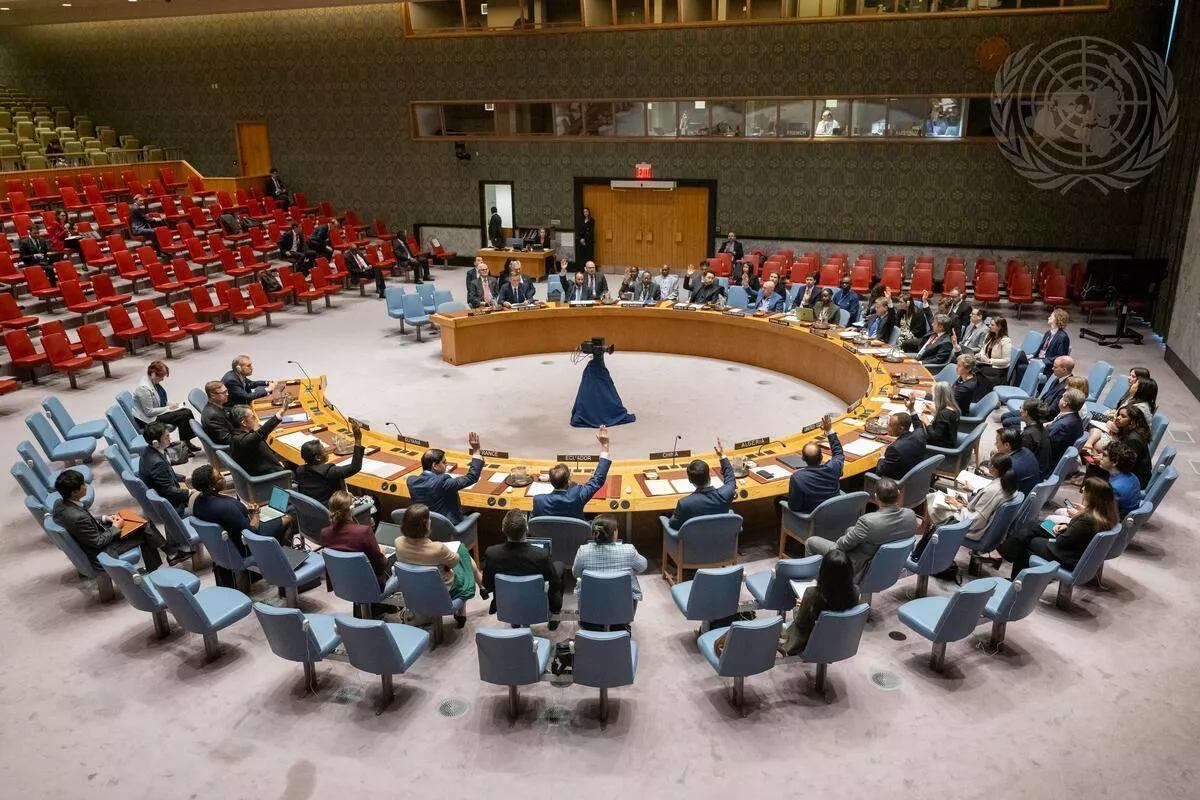
The United Nations Security Council (UN) unanimously extended the mandate of the EU military forces in BiH - EUFOR Althea until November next year.
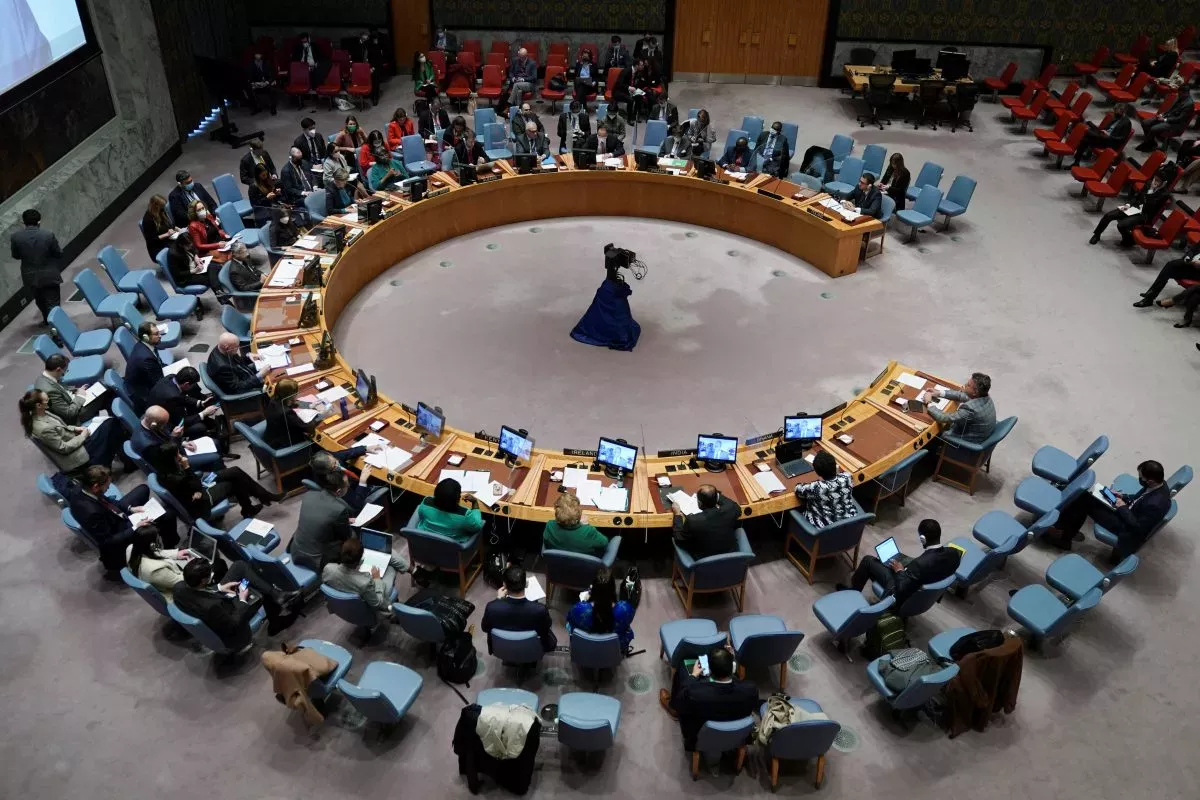
EUFOR also has a mandate to use force if the "secure and stable environment is seriously threatened, and existing security structures are at risk of disintegration".
A regular debate was also held, during which ambassadors from Western countries criticized the secessionist rhetoric of the authorities in Republika Srpska, but also gave full support to the High Representative Christian Schmidt.
As expected, China and Russia reiterated their long-standing stance that the Office of the High Representative (OHR) should be closed immediately and that the peoples of BiH should be left to decide their own destiny.
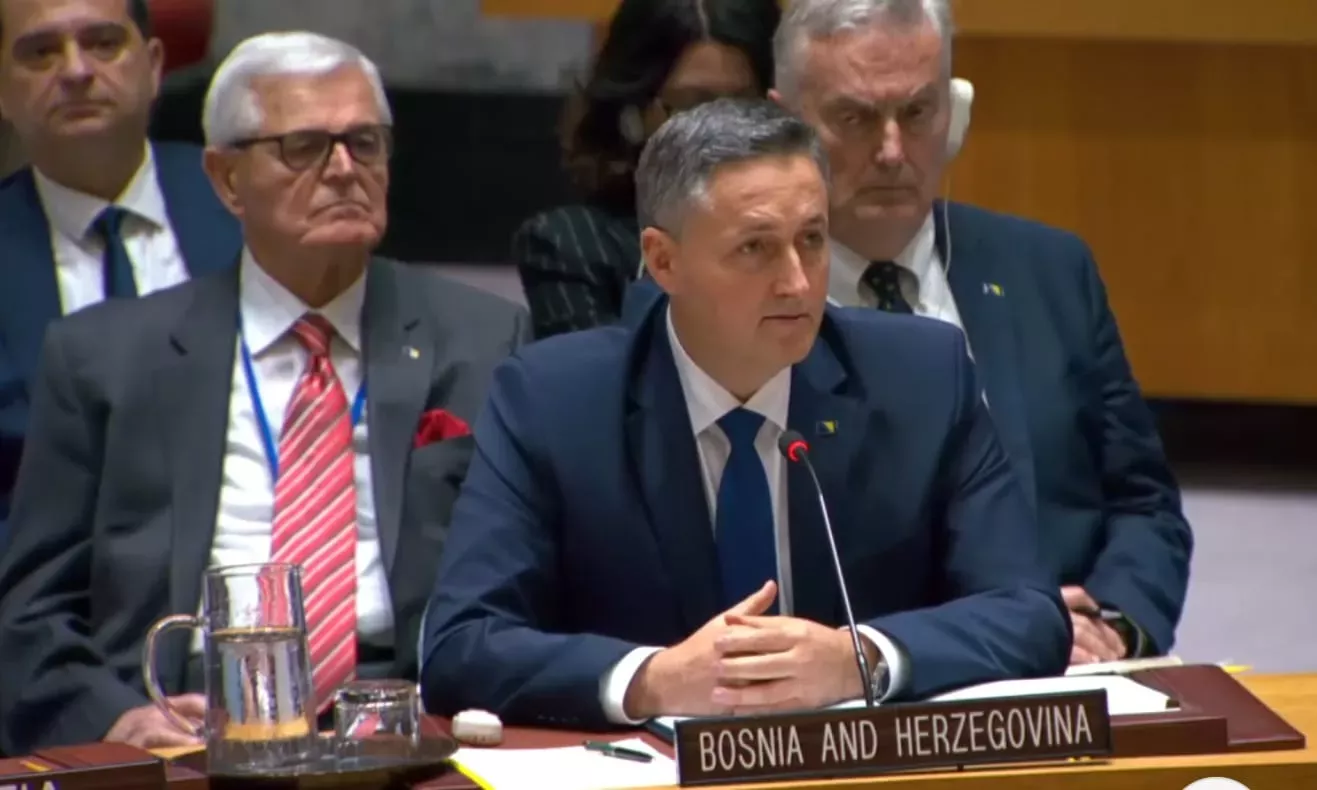
The Chairman of the Presidency of BiH, Denis Bećirović, also addressed the council, accusing, among other things, the authorities of Serbia of working towards the annexation of Republika Srpska, citing the declaration adopted at the "all-Serbian assembly" in June this year as "proof", which he called a planning document.
Furthermore, High Representative Christian Schmidt presented his regular semi-annual report.
We discussed last night's UN Security Council session, as well as the messages about Bosnia and Herzegovina that could be heard from the debaters themselves, with legal expert Sifet Kukuruz.
How do you generally comment on the messages heard last night at the UN Security Council regarding our country?
Kukuruz: Generally speaking, these are "standardized" positions that represent no change in the long-standing policy of the international community towards BiH, which has not proven particularly beneficial for BiH so far. Maintaining a political approach to "old problems" that has already proven unproductive is the best way to keep those problems alive.
An identical political approach, while expecting a different outcome, generally speaking, represents one of the key characteristics of a political, calculating mind. Perhaps this attitude of the international community towards BiH could be compared to the calculating philosophy of "holding water until the masters leave." And the international community has proven to be a master of calculation when it comes to the state of BiH.
It should be emphasized that such an approach is multiply harmful to BiH, firstly because it represents a continuation of a sterile policy that has not proven productive so far and which serves to maintain the existing state of affairs, and such a state of affairs is harmful to the state of BiH. Secondly, it indicates a lack of genuine interest or willingness to change the situation in BiH in terms of strengthening the state of BiH and improving the functionality of its institutions.
Ultimately, such an approach, in itself, raises the dilemma of whether the goal of such a policy is even to build a stable and functional state of BiH. Therefore, the messages heard at the UN Security Council session confirm the continuity of the international community's policy towards BiH, which has once again brought the state of BiH into a state of existential uncertainty.
"Standard" countries have BiH on their lips, while other "standard" countries are against BiH and show their firm support for Republika Srpska. What does that tell you?
Kukuruz: Of course, these are previously established conceptual approaches that are only slightly retouched at such UN Security Council sessions to be able to say that it is a new session, not one already held. So, the content and approach are the same, and the methods and public presentation are adapted to the moment and current geopolitical circumstances.
Politics, by its nature, is a calculation of interests, and the interests of great powers regarding the state of BiH and the region are already known. When it comes to the international community's policy towards BiH, perhaps it would be more accurate to say that it concerns the interests of great powers in the region, into which BiH must also be factored.
The international community does not have its own authentic, special policy for BiH, as best demonstrated by the events between 1992-1995, and confirmed by events from Dayton to today. One should not close their eyes to the fact that today, for example, the High Representative of the international community in BiH, Christian Schmidt, discusses the fate of BiH and the most important political-legal processes for the citizens of BiH more often, both publicly and secretly, with the leaders of neighboring countries than with politicians in BiH.
The international community exhibited such an approach during the period of aggression, which again means that we are living through circumstances and times of existential challenges for BiH. Neither then nor today have neighboring countries and the international community been truly committed to the interests of the state of BiH in a way that respects BiH's sovereignty, territorial integrity, international subjectivity, and political independence in practice.
For the sake of their own future, the citizens of BiH should stop harboring illusions regarding the international community's attitude towards BiH – it has never been, nor is it today, primarily dedicated to their interests.
We have already witnessed the failure of international policy that did not want to stop the almost four-year aggression against BiH and did not "defend" its own "never again." How much can the international community as such be trusted today?
Kukuruz: Precisely as I stated earlier, this is a hypocritical approach towards BiH. The frequent emphasis on the stance "never again," coupled with the daily demonstration of practices from the 1992-1995 period, best illustrates the insincerity and hypocrisy of such a message. The citizens of BiH should stop listening to the words and believing the promises of various bureaucrats from the international community and look at what they are actually doing, or not doing. And they have done little good and much harm for BiH.
Of course, I do not want to diminish the international community's merits for stopping the war in BiH, but at the same time, one cannot diminish the international community's responsibility for that war, which was a double aggression and which took place with the blessing of the international community. The fact that it was an aggression, and that the international community never raised the question of responsibility for that aggression, clearly shows that it is not an attitude towards BiH that is in accordance with international law.
The judgments of the International Court of Justice, numerous judgments of the Hague Tribunal for the former Yugoslavia, as well as the judgments of the European Court of Human Rights, confirm that this stance is well-founded. Can anyone today explain in a rationally acceptable way the fact that the highest world and European judicial instances ruled that world and European policy towards BiH was contrary to international law, and yet no one is held accountable for this policy, which resulted in the most horrific crimes, or that these judgments have no impact whatsoever on the political-legal order of BiH.
Therefore, the international community's attitude towards BiH is more than hypocritical, and the citizens of BiH must be aware of this, or more precisely, they must come to terms with it.
Perhaps the only thing worth mentioning from last night's session is the extension of the Althea mission in BiH...
Kukuruz: Of course, any decision that prevents any form of violence, especially armed conflict that would lead to further loss of life, is welcome. However, as with everything the international community has done and is doing in BiH, one cannot help but express a certain skepticism towards this decision as well.
One should not forget the fact that the head of the EUFOR forces is a person from a country (Hungary, author's note) whose president, as well as foreign minister, has exceptionally good, even friendly relations with the president of the smaller Bosnian-Herzegovinian entity, who openly calls for the destruction of the state of BiH.
Perhaps this decision is an egregious example of the internal inconsistency of the international community's policy towards BiH, because on one hand, measures are being taken whose alleged goal is to protect BiH's interests, while on the other hand, activities are being carried out that paralyze, and even completely neutralize, this publicly stated commitment.
While working to prevent the outbreak of armed conflict and open war, the international community is simultaneously opening a political front on which a political war and intense political struggles against the state of BiH are being waged. And on that front, individual European countries and their leaders provide significant political and other logistical support to anti-state forces.
Therefore, the Althea mission is a positive decision that is seriously relativized by the simultaneous allowance of political processes that are equally, if not more so, detrimental to the stability, survival, and future of BiH as a sovereign and functional state based on fundamental democratic values practiced in mature and stable democracies. One could say that the international community is preventing armed conflict in BiH, but it is not sincere in its alleged fight against the political war being waged against BiH.
The US announces new sanctions against those who violate Dayton. We in BiH know very well that these sanctions do not work at all in terms of implementing Dayton, and on the other hand, we also know very well that Dayton is a "straitjacket" that prevents any progress and political agreement on any issues in BiH...
Kukuruz: Again, one could say that this is a tried-and-tested "mantra" that has proven to be an effective tool for maintaining the status quo, which is the result of the use of force prohibited by international law. Therefore, it is a mantra by which the awareness among BiH citizens has been kept alive for almost 30 years that they do not have to take responsibility for the fate of BiH into their own hands, but that someone else will always show responsibility.
However, one should think carefully about what kind of message it is and what it means, in its essence, to sanction those who violate Dayton?
If the US and Europe had a consistent policy towards BiH, rooted in the values, principles, and norms of international law, then the US and the EU themselves should be the first to "violate" Dayton, because Dayton is the result of aggression and, to a certain extent, successful defense against aggression; it is a consequence of the use of force that is prohibited by international law.
Therefore, the Dayton Peace Agreement is not something that the international community can or should be proud of and promote, as it does, as a future political-legal framework for the lives of citizens and peoples in BiH. This should not happen, at least not after the rulings of the International Court of Justice, the Hague Tribunal, and the European Court of Human Rights.
It is not enough to say that Dayton is just a "straitjacket"; it is increasingly becoming a grave in which all international instruments for the protection of human rights and fundamental freedoms can be found, and these traces cannot be hidden by numerous American and European initiatives for alleged reform of the BiH Constitution, which are actually proving to be secondary and tertiary graves of court rulings by the highest world and European instances, as well as international conventions on human rights and freedoms.
Anyone who believes that Dayton represents a foundation on which progress can be made and political agreement reached must acknowledge the fact that it is a true agreement with the "devil," because Dayton is a "safe house" where policies that denied and openly destroyed BiH through the use of armed force have found refuge. Dayton has enabled such policies not only to survive but also to recover, and the events in BiH that we have witnessed from 1995 to today show that such forces have managed to recover thanks to Dayton.
Therefore, Dayton is necessarily a source of constant fears and hopes, with fears, due to the inconsistent policy of the international community, justifiably becoming ever greater and more real.
China and Russia have reiterated their long-standing stance that the OHR should be closed immediately and that the peoples of BiH should be left to decide their own destiny. What would be the fate of BiH without the OHR starting tomorrow, would the B, H, and S components be able to agree on anything?
Kukuruz: This stance could be supported in its first part, if it weren't for its second, unstated, or hidden part. Therefore, if the citizens and peoples of BiH are to decide on political-legal processes without the interference of Serbia and Croatia, then the OHR should indeed be closed. But if Serbia and Croatia are to be given open or tacit support to pursue their policies in BiH, which they pursued with armed force between 1992-1995, then the stance of Russia and China, of course, cannot be supported.
I would like to remind that in the preamble of the BiH Constitution, the citizens and peoples of BiH expressed their commitment to the "political independence" of BiH. This political independence, unfortunately, has never been achieved in practice, and the international community bears a large part of the responsibility for this.
It is clear to everyone that the policies of HDZ BiH and the policies of Milorad Dodik, in their essence, represent the policies of Croatia and Serbia in BiH, and specifically those policies that sought to destroy BiH between 1992-1995.
Such an attitude of neighboring countries towards BiH is precisely enabled by Dayton, and this must change. When the citizens and peoples of BiH are in a position to independently shape the policy of the state of BiH, without the interference of neighboring countries, then the presence of the OHR will also be unnecessary.
How do you view the appearance of High Representative Christian Schmidt at the UN Security Council?
Kukuruz: Christian Schmidt has seriously compromised the institution of the OHR. Furthermore, he is proving to be a serious obstacle to establishing BiH as a European democratic state. His appearance at the UN Security Council was aimed at keeping the international community's attention focused on old and proven policies and politicians as disruptive factors in BiH, namely Milorad Dodik and the policy he pursues.
However, his appearance simultaneously demonstrates a clear intention to hide from the eyes of the international public the destructive policy pursued in BiH by Dragan Čović, towards whom he himself, as High Representative, shows considerable inclination. By criticizing Milorad Dodik and his policy, Christian Schmidt has actually absolved Dragan Čović and the destructive policy he pursues.
By criticizing Milorad Dodik, to whom he has simultaneously ceded ownership of half of BiH through his inaction, while protecting Dragan Čović, Christian Schmidt has shown that he is not committed to the interests of BiH. At the same time, his criticism of the Constitutional Court of BiH's decision on state property in Vareš further confirms the stance that he serves interests that are not compatible with the interests of the state of BiH.
His silence on the current revision process of the judgment in the "Kovačević" case and his involvement in this process, i.e., in challenging or, more precisely, undermining the first-instance judgment, is particularly concerning. Perhaps a comment on Schmidt's appearance before the UN Security Council could be summarized by the statement that BiH still needs the OHR, but it does not need such a High Representative.
Komentari (0)
Prijavite se za komentiranje
PrijavaJos nema komentara. Budite prvi!
Minuta
Sve →Iz drugih kategorija

High Representative Not Elected: Germans, French and British Against Americans, New Attempt at End of June

ČOVIĆ WITHOUT MERCY: How Those Who Brought Ademović to Office Created a Political Hell for Him



Sunny Saturday, quite warm



Tragedy in Albanian resort: Two minors drown












