
These days, Bosnia and Herzegovina and the international community are celebrating the twentieth anniversary of the signing of the Dayton Peace Agreement, an act that stopped the war and was supposed to bring us all the much-praised democracy and prosperity. Twenty years is certainly a relevant period to analyze the state, progress, or regression of Bosnian society.
Dayton brought us peace, that is a notorious fact, but did we get anything besides peace from it?
The best parameter for considering progress is the example: "BiH twenty years after Dayton and SFR Yugoslavia twenty years after the end of World War II".
The bloodiest and most brutal conflict in history is certainly World War II, which did not bypass the Western Balkans. Millions of victims, great destruction, redrawing of borders, creation of bloc divisions, and a time full of turbulence were not obstacles for SFR Yugoslavia to fight wisely and bravely.
Without much delay, the process of industrialization began, and in a very short period, a textbook society was created. A society of workers, peasants, honest intellectuals, working youth, proud veterans, and pensioners. The media were full of reports about the labor victories of shock workers, the opening of new plants in large complexes, built bridges and roads, investments in agriculture, but also about visits by high foreign delegations.
If we look at all of the above, it is evident that it was a prospective society, highly respected in the world. Simply put, it was known who was doing what, who was talking about what, and who was engaged in what. Twenty years after World War II, SFR Yugoslavia was one of the most developed economies in Europe and the strongest economy in the socialist world. As the people say: "Everything is possible when there is a will".
Where do we stand?
Many people say: "We are not even capable of painting over what Tito built." Twenty years after Dayton, Bosnia and Herzegovina seems neither willing nor able. Politicians, the vast majority with socialist backgrounds, lie in the shade and watch the people struggle.
It is an undeniable fact that the wartime events destroyed a certain part of the infrastructure and industrial facilities, but we still have enough left to be able to follow the paths of old glory. After the war, billions of dollars arrived in the form of donations, but a large part of these funds ended up in suspicious channels. Misappropriation of donations is not the only problem. What remained of the pre-war socialist giants, companies that earned billions abroad, have been devastated by dubious privatizations. Thousands of workers were left unemployed, and their children without hope of ever getting any decent employment. So it should not surprise us that we have hundreds of millionaires in BiH.
Most political options have no political program other than the nationalist one. Unfortunately, esteemed gentlemen politicians, nationalism is only pursued by those who are unable to explain to pensioners why pensions are late, to young people why they are unemployed, to workers why they have not received wages for several months or years. And so it goes in a circle, elections come, and worn-out and recycled nationalist rhetoric remains the most effective key to winning elections. I will not talk much about the media, because most of them are sold for "a handful of macaroni", so it is not a problem for politicians to control them.
The Dayton Peace Agreement is not an obstacle for Bosnia and Herzegovina on its path to development and prosperity. Its biggest obstacle is the politicians, because they interpret only what they like and what benefits them. Where it says that their positions are protected, that is presented and praised, and no one says that all citizens are guaranteed human rights and that we are all equal before the law, no matter how much we have stolen. We must get rid of nationalist rhetoric, and that will happen when people aged 25-45 come to power.
Patriotism should exist, because it will bring positive competition, the result of which will be a general revival. The fight against organized crime and corruption must be comprehensive and systemic, and we will only get such a fight when the political climate changes. Foreign investors will also recognize this shift and be ready to invest capital in the Bosnian economy.
A lot of work, conscientiousness, and responsibility will be needed to create a society in which future generations will live better than we do now. A society that will make us great in the eyes of future generations, and only we young people can do that. It is inevitable to entrust the care for the fate of society to young people, because these "experienced" ones have led us to be among the twenty poorest countries in the world.
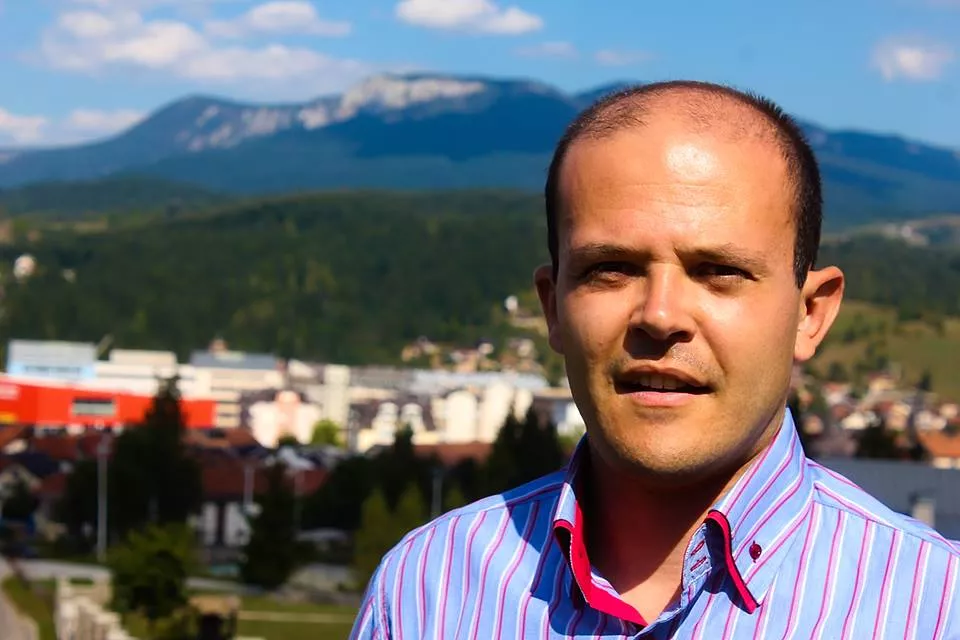
By: Mr Vladimir Vučković
Komentari (0)
Prijavite se za komentiranje
PrijavaJos nema komentara. Budite prvi!
Minuta
Sve →Iz drugih kategorija

High Representative Not Elected: Germans, French and British Sabotaged Americans, New Attempt at End of June

ČOVIĆ WITHOUT MERCY: How Those Who Brought Ademović to Office Created a Political Hell for Him



Sunny Saturday, quite warm



Tragedy in Albanian resort: Two minors drown












