
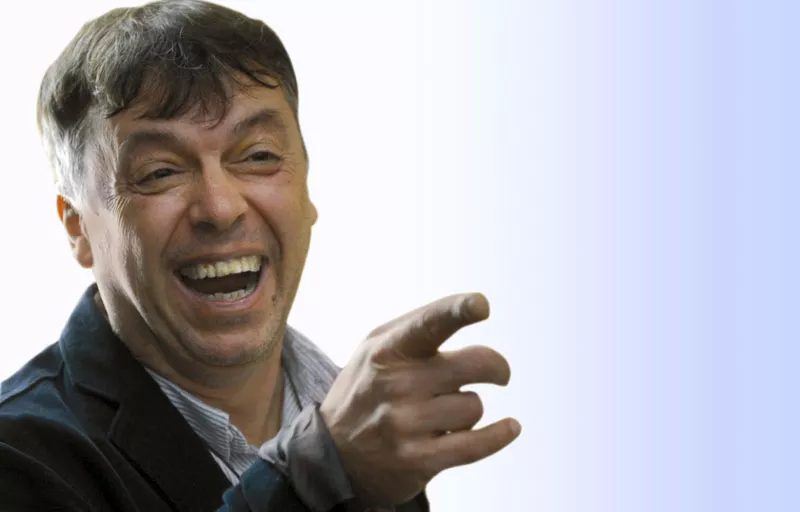
Nenad Janković, better known as Nele Karajlić, used his visit to Sarajevo to regain the publicity he once had, which has long since faded, writes the BH news agency Patria.
Karajlić described his stay in Sarajevo last Thursday as one of his greatest adventures in the last two decades.
The majority of Serbian media reported that Karajlić had to save his head from Sarajevo, fleeing from a hundred people who came to lynch their former fellow citizen with axes and clubs.

Željko Ljubas, a long-time restaurateur from Sarajevo, in whose tavern "Luka" in the old part of the city Karajlić allegedly went for a private party, revealed to the agency Patria that the whole story about lynching Karajlić was fabricated, that because of it he experienced a series of unpleasantries because the inspection searched his restaurant afterwards, and in the end, he did not want to confirm that Karajlić had even been to his restaurant. The media had previously reported that Ljubas confirmed that Karajlić had been to his tavern "Luka".
- Someone conceived this whole story about Karajlić well. Journalists fell for it. You gave him unprecedented publicity - Ljubas told Patria.
The former singer of Zabranjeno pušenje and actor of the cult comedy series "Top lista nadrealista", known for his nationalistic criticisms of the capital of Bosnia and Herzegovina, his hometown from which he moved out in the early 1990s, published a false news story through the anonymous portal Iskra from Višegrad, backed by Emir Kusturica, under the title "Sarajevo mob with clubs welcomed Nele Karajlić, special forces saved him!".
Only 12 hours later, Karajlić published a detailed confession on the portal of Belgrade's Večernje novosti, under the title "Dr Nele Karajlić: How I escaped lynching in Sarajevo on Sunday evening".
Video surveillance from surrounding buildings clearly refuted the newspaper headlines that Karajlić was almost lynched in Sarajevo, whose streets the Prime Minister of Serbia, Aleksandar Vučić, also walked carefree a few months ago, whose statements about Bosnia and Herzegovina were even more radical.
Karajlić's trick had two goals: to regain, at least briefly, the popularity he once had and by which he lived, and to increase the readership of Kusturica's anonymous portal, although, according to media reports, the two are at odds.
He succeeded in this. The news of Karajlić's alleged lynching in Sarajevo echoed throughout the region.
In the text, Karajlić also used a trick. In a dynamic and constantly uncertain text, Karajlić described in detail his arrival in Sarajevo, his stay in the capital of Bosnia and Herzegovina, and then his escape from the city. Towards the end of the text, in one sentence, he admitted that he did not see the alleged mob waiting for him in front of the restaurant, but that he learned everything from the media.
With that sentence, Karajlić will justify, if necessary, that the story about the mob was not invented by him but by the media. However, he knows that after a tense text, none of the readers will even notice this sentence.
Finally, at the end of his confession for Belgrade's Večernje novosti, Karajlić himself denies Sarajevo's unfriendliness:
- I was already on my way to Jahorina, with the discreet escort of the Federal Police - Karajlić stated, carelessly, writes Patria.
Komentari (0)
Prijavite se za komentiranje
PrijavaJos nema komentara. Budite prvi!
Minuta
Sve →Iz drugih kategorija

High Representative Not Elected: Germans, French and British Sabotaged Americans, New Attempt at End of June

ČOVIĆ WITHOUT MERCY: How Those Who Brought Ademović to Office Created a Political Hell for Him



Sunny Saturday, quite warm



Tragedy in Albanian resort: Two minors drown












