
(Patria) - As of July 1 this year, the Federation of Bosnia and Herzegovina will begin implementing the Law on Amendments to the Law on Contributions, which reduces the total contribution rate borne by employers from the current 10.5 to 5 percent. This effectively reduces the overall total contribution rate in the FBiH, which was previously 41.5 percent, by 13.25 percent.
The reduction in contributions, as explained by the FBiH Government, is an important step in the continuation of broader economic reforms aimed at easing the burden on labor, restoring dignity to workers, encouraging legal employment, and combating the gray economy.
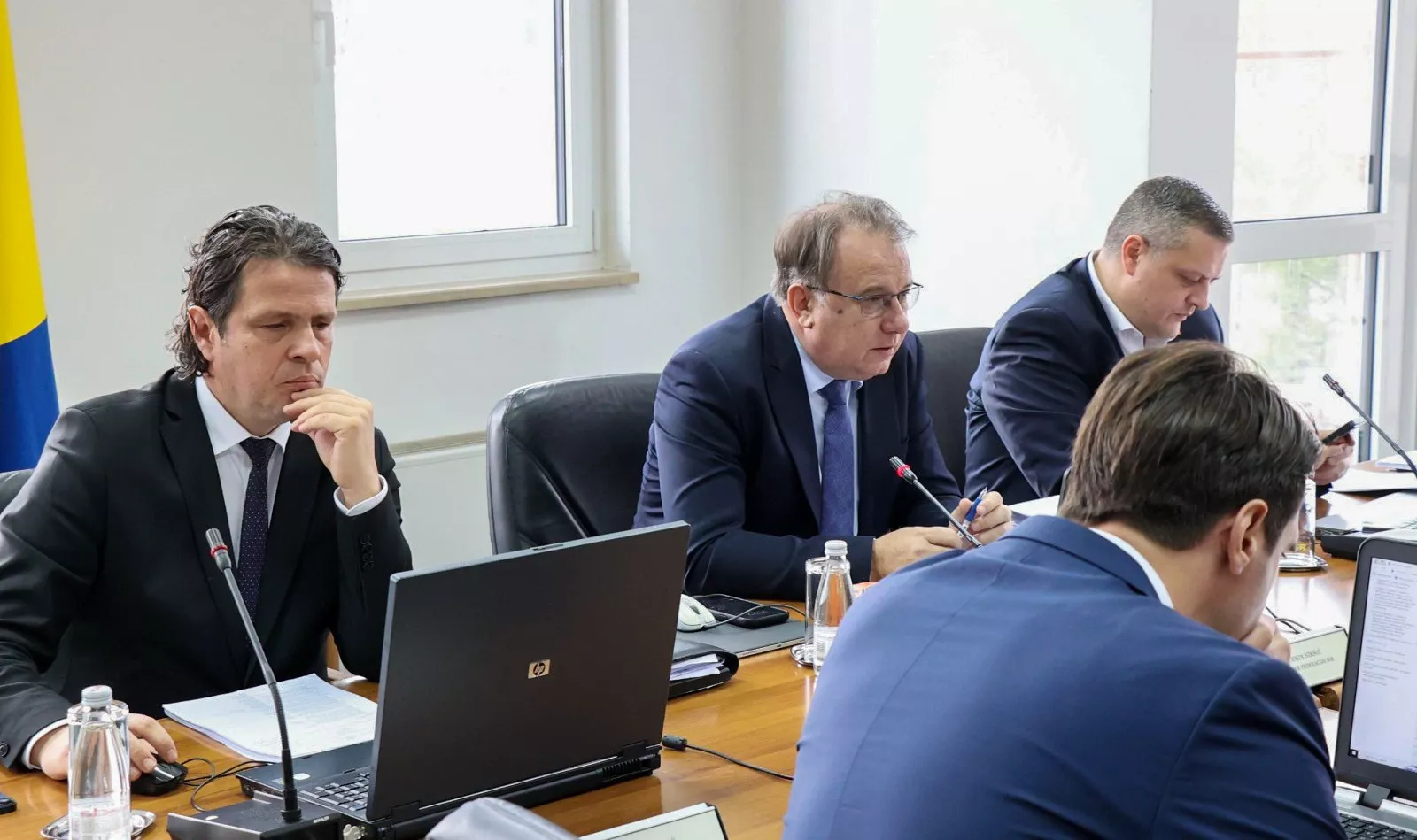
The Prime Minister of the Federation of Bosnia and Herzegovina, Nermin Nikšić, stated on this occasion that the Government leaves no room for improvisation.
"Every move we make is interconnected and planned. The first was the increase in the minimum wage, now we are reducing contributions, and the next is fiscalization. These are all links in the same chain of reform aimed at a stronger, fairer, and more modern economy," said Nikšić.
Incidentally, the reduction in contributions fits into a broader reform framework supported by the business community.
The reduction in contributions represents the first fiscal relief for employers since 2009. The FBiH Employers' Association welcomed the adoption of the law, assessing it as an important step towards improving the business environment, especially after the increase in the minimum wage, which raised overall labor costs.
According to their estimates, and as they have previously stated, this measure represents a significant relief, while also benefiting workers because it creates preconditions for greater formal employment and payment stability. Employers also expressed the expectation that a second wave of reforms will follow by the end of the year, including the fiscalization of transactions and further reduction of contributions.
"We are conducting the reform in stages, responsibly and gradually, without creating a financial vacuum. The FBiH must remain stable, but at the same time, it must become a partner to workers and employers. And we are doing that now through concrete moves, not just declaratively," explained Nikšić.
At the beginning of this year, the Government's decision on the minimum wage came into effect, increasing the lowest monthly net salary in the FBiH to 1,000 KM.
As of May 31, 2025, the number of active business entities in the FBiH was 133,593, an increase compared to 129,784 in May last year. Also, the number of employees on the same date was 546,129, an increase compared to April 2025, when the number of employees was 544,613, although there was a decline in the number of employees compared to December 2024.
The collection of contributions for pension and disability insurance, health insurance, and unemployment insurance in the first five months also recorded growth. In the period January–May 2025, 2.56 billion KM in contributions were collected, while in the same period in 2024, that figure was 2.22 billion KM, representing an increase of over 336 million KM.
These indicators show that the increase in the minimum wage had a positive effect on both budgets and employment, Nikšić claims.
"We have proven that wage growth and growth in budget revenues can go hand in hand. People spend more when they have more, and employers are increasingly realizing that playing by the rules pays off in the long run. Our role is to make the rules fair and bearable," said Nikšić.
A second round of contribution reductions is also planned, which could be implemented by the end of the year, ultimately introducing a single contribution rate. The Government emphasizes that all measures will be carefully timed, and the second round of contribution reductions will be correlated with the implementation of fiscalization to ensure fund stability.
"In a political environment where important reforms are often improvised and delayed, we in the Federation are showing that changes can be implemented in a planned and responsible manner. The application of the law from July 1 is yet another concrete step in a series of reforms we have announced and are now consistently implementing," concluded Nikšić.
On Monday, June 30, a session of the Economic and Social Council for the territory of the FBiH will be held to analyze the collected data, the effects of the FBiH Government's decrees, and to consider extending the decree on the payment of tax-free employer assistance to workers. Instead of the current 450 KM per worker per month, this amount should be lower, given that contributions borne by the employer will also decrease due to the reduction in contribution rates.
Komentari (0)
Prijavite se za komentiranje
PrijavaJos nema komentara. Budite prvi!
Minuta
Sve →Iz drugih kategorija

High Representative Not Elected: Germans, French and British Against Americans, New Attempt at End of June

ČOVIĆ WITHOUT MERCY: How Those Who Brought Ademović to Office Created a Political Hell for Him



Sunny Saturday, quite warm



Tragedy in Albanian resort: Two minors drown












