
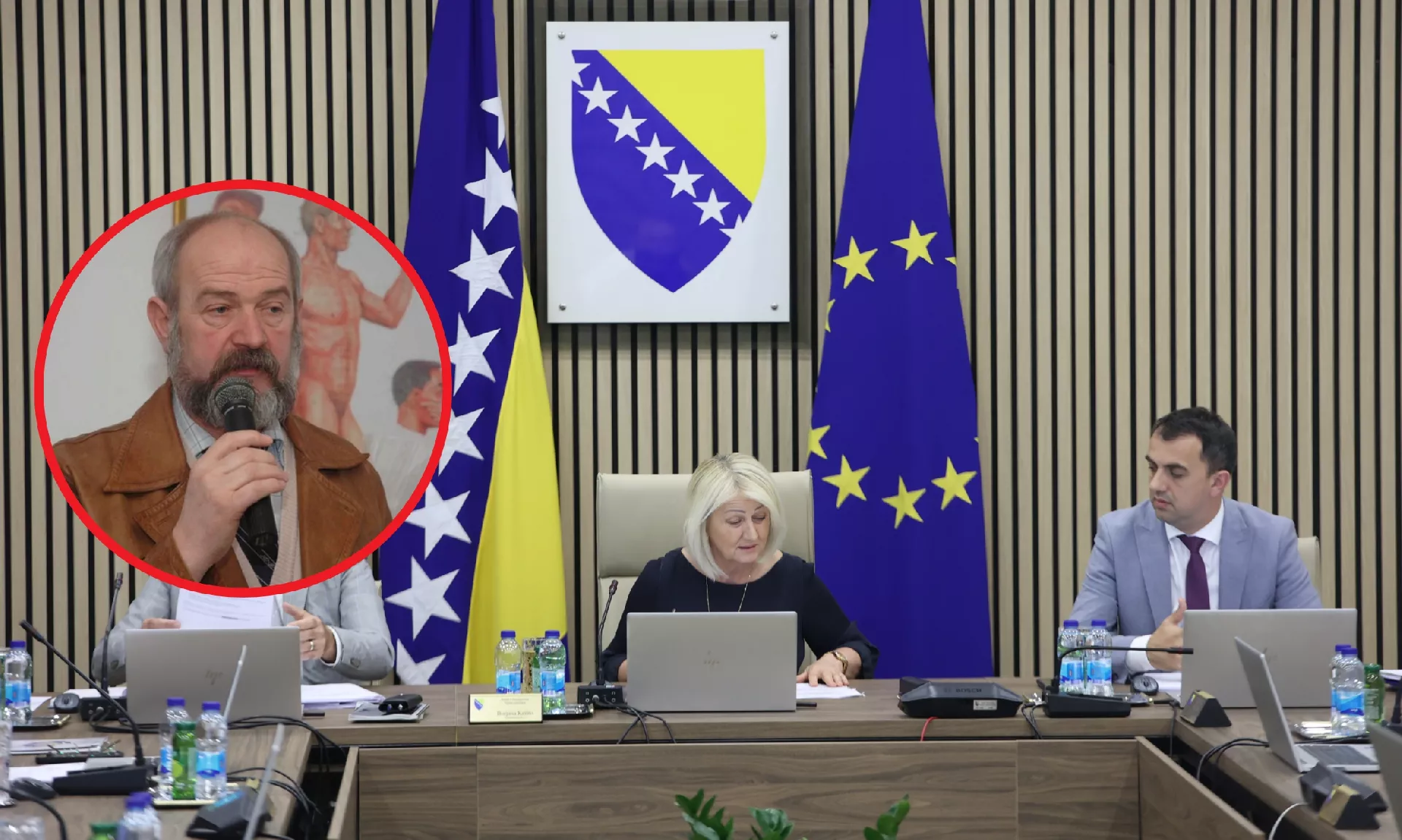
(Patria) - The Council of Ministers of BiH granted citizenship to Serbian writer Blagoje Baković, who previously expressed support for Vojislav Šešelj during his trial in which he was convicted of war crimes in the Vojvodina village of Hrtkovci.
Baković was granted citizenship by the Council of Ministers of BiH at his request, following a recommendation from the Government of Republika Srpska, as a person of particular benefit to BiH in the field of culture, according to information from the Ministry of Civil Affairs, which Detektor had access to.
The Council of Ministers of BiH, we recall, did not mention this information anywhere in its statement following yesterday's 85th session, and when it comes to granting Bosnian-Herzegovinian citizenship, only that in the field of sports was listed, namely to Egyptian citizen Yasser Salem.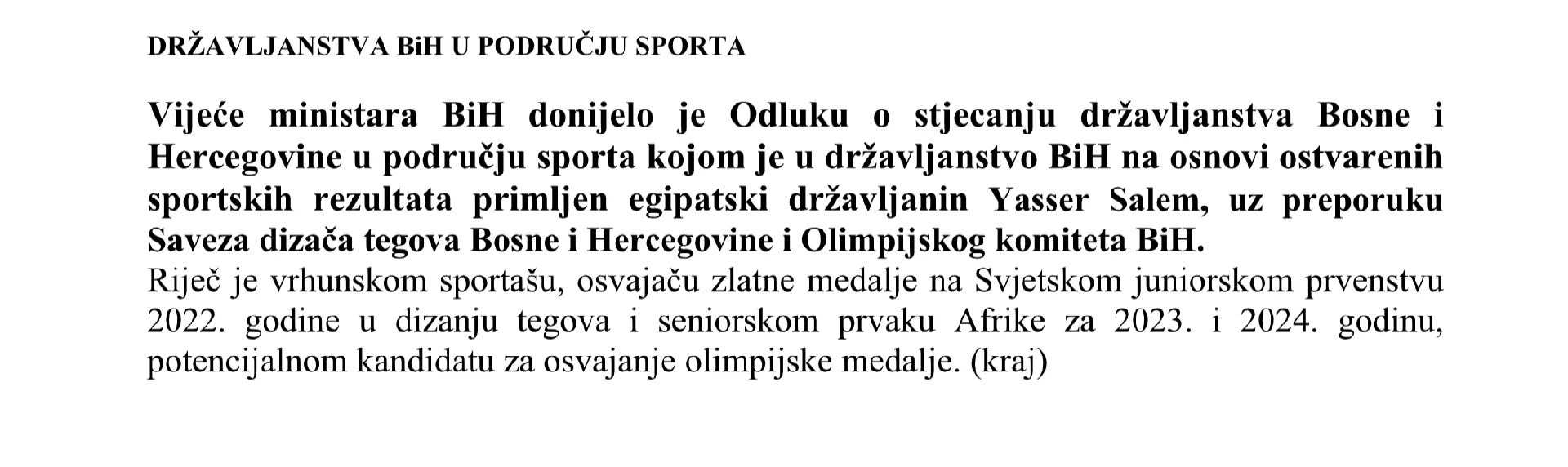
Part of the statement of the Council of Ministers of BiH on the granting of BiH citizenship
Baković is the author of more than 50 books and his poetry has won numerous awards, including some awarded in Russia.
What is not mentioned in his artistic opus is his support for Vojislav Šešelj during rallies organized by the Serbian Radical Party in 2013 and 2014 in Novi Sad, while Šešelj was in the custody of the International Criminal Tribunal for the former Yugoslavia in The Hague.
At the first such rally, titled "Freedom for Šešelj", Baković recited several of his poems, some of which he dedicated to Šešelj and "his struggle in the Hague Tribunal".
A year later, at the protest rally "Free Šešelj", Baković stated that Šešelj is "the seed of freedom of the Serbian people".
- He knows that he went to the Hague Tribunal to defend all of us, and today's greats would give everything to be as small as a grain of salt. As long as there is even the smallest seed of freedom among the Serbian people, we must not give up.
Two crossed planks are nailed to the mouth of my people, and only those they failed to silence speak, people like Šešelj - Baković said at that rally, according to a post by the Serbian Radical Party.
Baković told Detektor that he never supported Šešelj's ideology, nor was he a member of his political party, but he attended the rallies because he believes every person has the right to justice.
- I expressed support for Vojislav Šešelj, as a man who has the right to a trial. I did not defend him at all as a man who is innocent or guilty, but as one who spent ten years in prison without the right to a trial - Baković stated.
He added that he condemns all evil deeds that were committed, and that he never voted for Šešelj, and also denied being aware of the final verdict.
- I condemn that, for example. If it happened, I condemn it and join in that - Baković said after Detektor journalists pointed out the existence of the final verdict.
In April 2018, the Mechanism for International Criminal Tribunals (MICT) finally sentenced Šešelj to 10 years in prison for inciting and committing the persecution of Croats in 1992 in the village of Hrtkovci in Vojvodina.
In the same case, he was tried for persecution on political, racial and religious grounds in the territory of BiH, Serbia and Croatia, but was acquitted of these charges.
During the proceedings, which lasted more than ten years, support rallies were organized several times in Serbia demanding his release from custody.
In 2024, the MICT handed over the case against Šešelj and four of his associates to the judiciary of Serbia, and they are charged with violating the Tribunal's rules in The Hague regarding the protection of witness identities and confidential documentation.
These are documents from the process in which Šešelj was convicted in The Hague, but the new trial in Belgrade has not started to this day.
Baković also added that he expresses support for every person who has "the right to human rights" and that he would attend such rallies for anyone and that he was not there as a party member.
- So, I swear to you, I would do that for anyone, I would do that for a Muslim, for a Croat, if they were held for who knows how long and someone called me: 'Would you support that his trial ends or not?', I would say: 'Yes' - Baković concluded.
Granting citizenship to individuals who have publicly expressed support for people like Vojislav Šešelj is seen by Hikmet Karčić, a research associate at the Institute for Research of Crimes against Humanity and International Law of the University of Sarajevo, as a bad message for victims of crimes.
- Even in cases where such individuals meet formal legal requirements, it is important to consider the moral and ethical aspects of a decision before it is adopted.
Could someone have prevented this, perhaps the Bosniak ministers - probably yes, but why it was not done, I do not know - Karčić points out.
Komentari (0)
Prijavite se za komentiranje
PrijavaJos nema komentara. Budite prvi!
Minuta
Sve →Iz drugih kategorija

High Representative Not Elected: Germans, French and British Against Americans, New Attempt at End of June

ČOVIĆ WITHOUT MERCY: How Those Who Brought Ademović to Office Created a Political Hell for Him



Sunny Saturday, quite warm



Tragedy in Albanian resort: Two minors drown












