
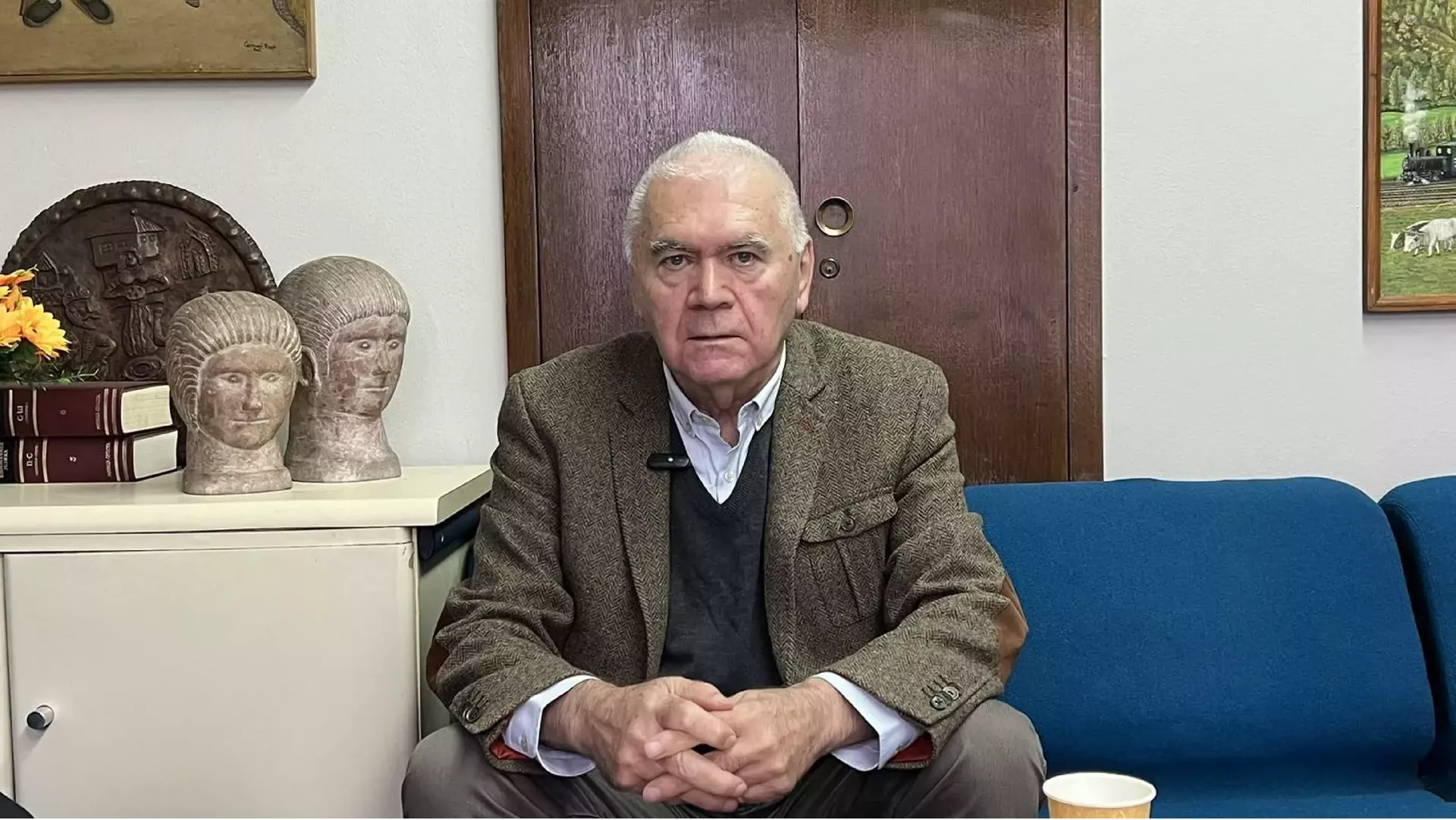
Interview by: Rasim Belko
Adil Kulenović, President of the Association of Independent Intellectuals "Krug 99", in an interview on the occasion of the Statehood Day of Bosnia and Herzegovina, discusses why ZAVNOBiH is important in our history, but also why it is important to remember the roots of that history, and those events that decided that we live today in a sovereign and independent state.
Kulenović also answers what is missing from the intellectual, political, and civic mass of progressive forces to move Bosnia and Herzegovina towards a modern state, to overcome the Constitution born of genocide and the Alliance for a Common Purpose (UZP), and how important decisiveness is in all of this.
And before you start reading or watching the full interview, read and understand Adil Kulenović's message:
"It would be nice if every citizen who identifies with this country, on November 25th, wore a white shirt and showed that they love this country!"
Video and editing: Anel Bešić
Regarding the significance of ZAVNOBiH and how well-known the importance of that event is to today's generations?
Kulenović: I would say that this is indeed a problem that existed, even in the past, not just today. I remember in the pre-war times, during the era of Bosnia and Herzegovina within SFRY, the commemoration of ZAVNOBiH was more of a parade and a demonstration than with full awareness and feeling that it was an extremely important holiday that affirmed the identity of Bosnia and Herzegovina.
In a way, it was almost as if there was a forgetting of the past. It seemed as if Bosnia and Herzegovina existed, but not entirely as it should be today. In intellectual circles, there was a feeling that 1943 was an important phase towards the creation of Bosnian statehood and the final rejection of what came with Austria-Hungary, which was that Bosnia and Herzegovina was treated as a sort of corpus separatum.
The problem is that we had a forgetting of the past in terms of the authenticity of BiH's roots. It was as if the past was remembered from the arrival of Islam, and the medieval past was almost unknown. The greatest awakening to the importance of restoring Bosnia's statehood came during the war, when people identified more with the deep roots of Bosnia and Herzegovina.
Today's lack of feeling for the deep significance of restoring BiH's statehood stems from not knowing and not respecting our past. It's as if we were more connected to BiH through an imposed and lived identity, an identity mediated more religiously than by a sense of statehood.
Did the fact that BiH was the nucleus of the anti-fascist struggle determine that Bosnian representatives resisted the hegemony of Serbia and Croatia?
Kulenović: That is absolutely true. In Marko Attila Hoare's book, we can find countless facts that BiH was not just a geographical meeting point, but that within it, due to its multi-ethnic composition, it was the best support for gathering anti-fascist forces.
Tito (Josip Broz) was undoubtedly aware of what was metaphorically said in 1938 and 1939, and the Cvetković-Maček agreement at the expense of BiH. Their idea that by crushing BiH, the permanent Serbian-Croatian conflict would be suppressed was correct because, by affirming a way of life, it provided a basis for creating political forces and finding solutions for the then Yugoslavia.
I am convinced that 1943, in the sense of ZAVNOBiH, was not a communist conspiracy, but an exit and a solution for the anti-fascist struggle and the restoration of Yugoslavia on foundations that should have provided full equality for BiH as the final solution to the Yugoslav question.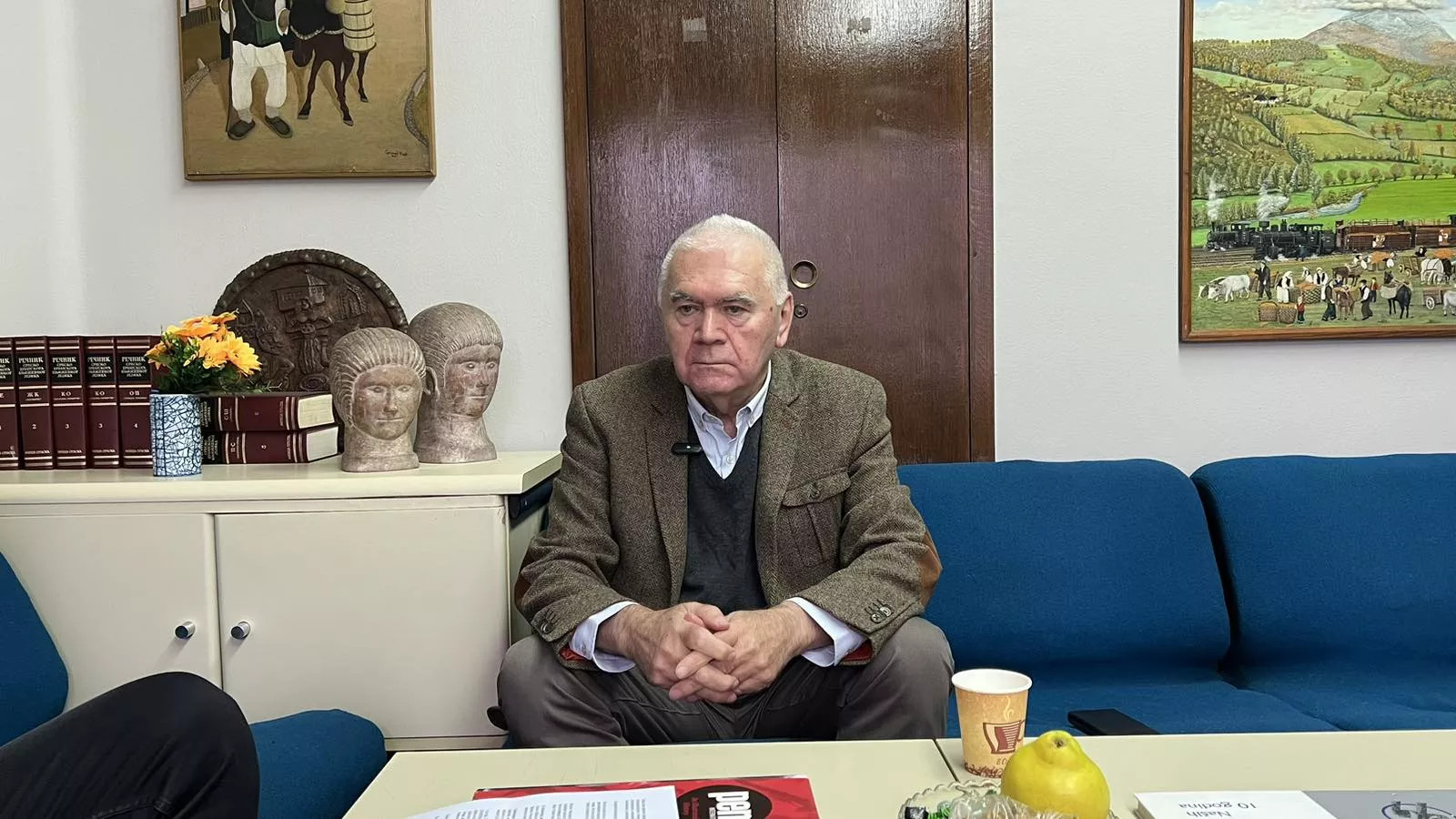
Photo: Patria
ZAVNOBiH is the foundation of statehood, and March 1st is the roof that protects both sovereignty and statehood. However, today we live under Dayton, which recognized the de facto situation after a double aggression. Can politicians and intellectuals today adapt ZAVNOBiH to be the constitution of modern Bosnia and Herzegovina, to overcome both the hegemony we have been fighting for a long time, and the situation where we are not sure if we will survive as a state?
Kulenović: March 1st, as the most important date for BiH in recent history, was undoubtedly marked by the referendum.
The question read - are you for an independent, sovereign Bosnia and Herzegovina, a state of equal citizens, peoples of BiH (descriptive) and other citizens. This question clearly stated the form of state. A state of equal citizens (comma and), not and peoples, but a comma.
In contrast to this question was the "Livno question," which was rejected for discussion, and that Livno question affirmed what we are experiencing today. We have this as a situation and realpolitik, supported not only by domestic political forces but also by the realpolitik of the international community.
The Livno question read - are you for a sovereign and independent Bosnia and Herzegovina of equal and sovereign Serbs, Croats, and Muslims, who will live in their own territories and cantons. And we see that there has been a departure from the key declaration, the expressed will of the citizens in the referendum, which the international community accepted as correct.
Why it turned towards what was not the referendum question, but towards what was a backup question by the HDZ, i.e., the then political establishment of Croatia led by Tuđman, that is something else.
If you look realistically, the later course of the war was a concession to those forces of the Livno question, not the referendum question. This meant that the sovereignty of peoples should be accepted, in other words, division, but also a departure from what were the dreams of a modern order.
Communism did not collapse due to Coca-Cola or great unfreedoms, but it fell due to the great hopes of the majority of intellectuals for freedoms and multi-party systems, which we idealized, but in the end, it turned out that this carrot of freedom showed its ugly face. The course that continues to this day is the course of the Livno question, not the referendum declaration on the sovereignty and independence of BiH, with liberal democracy.
Avdo Humo, one of the participants of ZAVNOBiH, said that if Muslims (today Bosniaks) sleep, they face extinction much faster than they think. Today, these Bosniaks have somehow taken over ZAVNOBiH the most, however much some of them deny it, and have taken over the fight for the statehood of Bosnia and Herzegovina the most. However, the politics that leads both Bosniaks and state policy is somehow asleep and acts reactively. How to deal with this problem that has been going on for years, that this pro-Bosnian politics is asleep?
Kulenović: We had a similar state of confusion during the war. We did not fully know what kind of Bosnia and Herzegovina we were fighting for then. There were principled statements that we were fighting for a sovereign and integral Bosnia, but key visions were missing, and they are missing today. That is why today there is also a discussion on how to achieve Bosnia recognizing what it has as a de facto situation and for that to be a vision for the future that will then draw the popular will to identify with those visions. And that is the question of the Bosnian nation.
We are not aware that we have gone through all the steps of acquiring a nation. We are internationally recognized, we are full members of the UN, and finally, we have received a Constitution that confirmed that Bosnia and Herzegovina is a state that continues the continuity of RBiH.
It was considered completely normal that one day progressive forces would have the right and a real basis to demand that the Constitution created under conditions of genocide and UZP be repealed and that one day it would return to the Constitution of RBiH. These are just indications of what should have been done.
Krug 99 asked the Court in Strasbourg to repeal the BiH Constitution created on the basis of genocide and UZP. The Court in Strasbourg rejected us, stating that we did not meet the formal conditions... A non-legal logic prevailed, behind which was politics, which we are still facing today, where the principles of force are recognized, not law and the international order.
Our path to a modern BiH of the 21st century is an energy that is yet to be unleashed so that the masses and political actors can identify with that vision. I cannot understand Serbs, Croats, but also Bosniaks, who cannot grasp the path and that vision that will lead to development.
To be completely open, every entanglement, every suffering, every confusion of terminology, we must finally remove the veil from our eyes and turn to the future of Bosnia and Herzegovina, which would bring the right for every person in this country to feel equal, not discriminated against. Because we are all discriminated against in this country.
Our determination to fight for the future should simultaneously be our key strength, impulse, and drive in demanding a modern Bosnia and Herzegovina that will be in line with the standards of the best values of Western democracy. This is objectively what most Bosniaks are asking for, who are trying to be suppressed by various diplomacies about Islamism, jihadism, which, to say the least, insults common sense!
Happy Statehood Day of Bosnia and Herzegovina!
Komentari (0)
Prijavite se za komentiranje
PrijavaJos nema komentara. Budite prvi!
Minuta
Sve →Iz drugih kategorija

High Representative Not Elected: Germans, French and British Sabotaged Americans, New Attempt at End of June

ČOVIĆ WITHOUT MERCY: How Those Who Brought Ademović to Office Created a Political Hell for Him



Sunny Saturday, quite warm



Tragedy in Albanian resort: Two minors drown












