
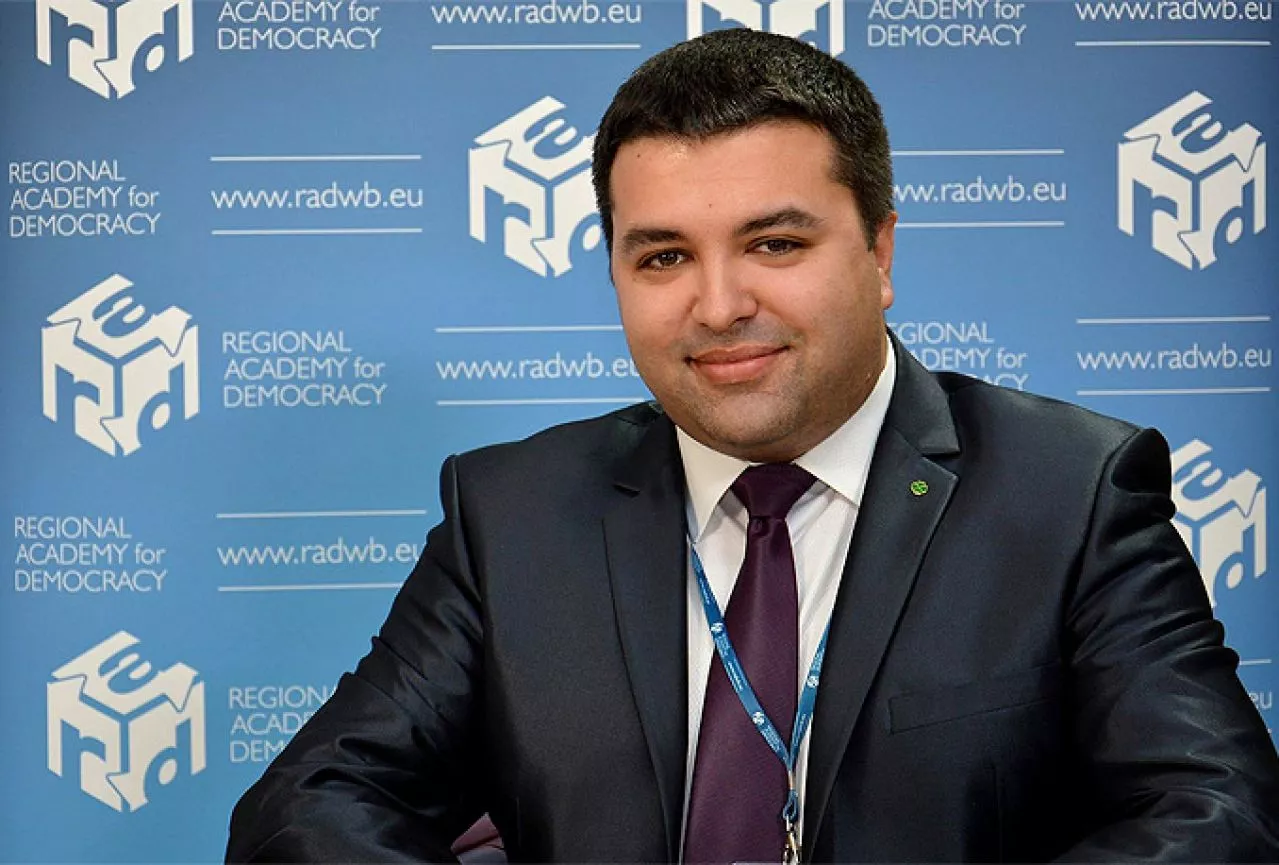
(Patria) - Former representative in the House of Representatives of the Parliament of the Federation of Bosnia and Herzegovina, today CEO of one of the largest IT companies in BiH, Mirza Ustamujić, exclusively revealed to N1 that the elector model will be a proposal of the Council of Europe, if there is no agreement among political leaders regarding the election law of Bosnia and Herzegovina.
The elector model is based on the population census and would satisfy all rulings of the European Court of Human Rights. It would abolish the ethnic prefix and everyone could participate throughout the entire territory of BiH. Regarding the details of this model, Ustamujić said that it began in 2013 when expert teams were formed to implement the Sejdić and Finci ruling, and he was part of one of the two teams. At that time, the position of the SBB, of which Ustamujić was a member, was to go for indirect elections in the Federation, and that is the main reason why the model did not receive support.
“This system is much better because if you were to implement indirect elections, representatives of the Republika Srpska want to have direct elections, and that is fully justified and I agree with that. We know that the parliament is used as a mechanism for management, and it was clear to me, but a large number of political parties do not support an asymmetric solution. In this case, we return to direct elections. This was eight years ago, and at that time I used the platform of the Council of Europe and received support,” Ustamujić told us in the introduction, and then exclusively reported to N1:
“If no agreement is reached, the initiative will be proposed by the Alumni Network of the ‘School of Political Studies’ and presented as their own proposal before BiH politicians.”
What is important in this model?
As Ustamujić told us, the key element here is the weighting.
“Why was this model based on the census? Because the census is credible in terms of ethnic affiliation, region, and where people are located, and it is based on abolishing the ethnic prefix. The HDZ insists on preserving the constituent status, but they have no issue with abolishing the ethnic prefix, and that is entirely legitimate. What we would achieve through this elector system is that we would get representatives of Croats, Bosniaks, and Serbs. What does that mean? According to the census we have, the weighting was 5,000 ethnic votes per one elector. Take Zenica as an example: if there are 80,000 Bosniaks with the right to vote, 20,000 Serbs, and 10,000 Croats, and if we were to weight this, it means Bosniaks would have 16 electors, the Serb representative would have four electors, and the Croat representative two electors. What does that ultimately mean? Citizens go out and vote completely normally, they give their vote to the candidate they want to assign, and a candidate cannot receive more electors than the census from that area allows for that representative. This means that Bosniaks could not at that moment elect the Croat member of the Presidency, but what Bosniaks could do is that representatives of Bosniaks, Croats, and Serbs do not have to be Bosniaks, Croats, or Serbs. So, specifically, the representative of Bosniaks could be Željko Komšić, and he would carry Bosniak electors, but then Željko Komšić would be a representative of Bosniaks and would not take a member from the Croat people's representative. And from the Others category, they vote equally, and selection would go through the Houses of Peoples,” Ustamujić explained.
“No floating electoral units”
“It happened that people were anonymous, leading to vote trading, and to prevent that, the Houses of Peoples would submit their proposals. Individuals or groups would put forward those proposals. Bosniaks from the Others category could nominate someone to be a representative. So, anyone is allowed, but they must have verification. If someone from the Others category received support from the people, it would be possible to have someone from the Others category elected as a member of the BiH Presidency,” he added.
He also emphasized that it is important in this model that there can be no outvoting, it is important that for the Bosniak side there are no floating electoral units, so stories about a third entity are eliminated, but we get that Croats truly elect their representative who does not have to be a Croat. He added that it is good that, if the elector rule is introduced, Bosniaks from the RS will be able to vote for the Bosniak member of the Presidency and their candidate.
He also said that this model would close all rulings of the European Court of Human Rights.
He also explained why this is a good moment for such a model.
“This is a good moment because it removes the fear among Bosniaks of a third entity, among Croats that someone else chooses their representative, and among Serbs that anyone influences that choice. This is a solution where we will resolve the blockade of the last 10, 15 years in the Federation and the state of BiH,” he said.
He also pointed out that adopting this model would finally allow BiH to start dealing with economic issues.
Komentari (0)
Prijavite se za komentiranje
PrijavaJos nema komentara. Budite prvi!
Minuta
Sve →Iz drugih kategorija

High Representative Not Elected: Germans, French and British Sabotaged Americans, New Attempt at End of June

ČOVIĆ WITHOUT MERCY: How Those Who Brought Ademović to Office Created a Political Hell for Him



Sunny Saturday, quite warm



Tragedy in Albanian resort: Two minors drown












