
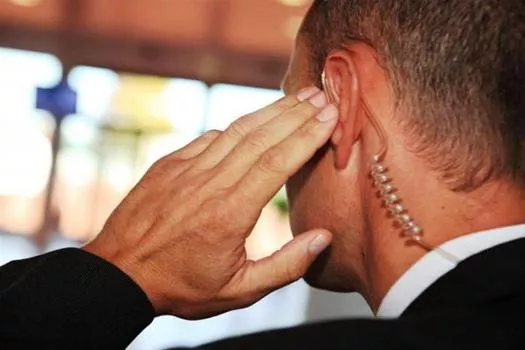
Eavesdropping has become a keyword in regional accusations and exchanges. The exchange of "fire" is constant. In the affair of the attempted coup in Podgorica, Serbian media accused Montenegro of eavesdropping on Serbian territory. Namely, the assassins and putschists were arrested immediately after crossing the border between Serbia and Montenegro.
After that defeat, Vučić directly accused Macedonia of aggressively eavesdropping on its diplomats.
Serbia and Croatia, within a year, have repeatedly accused Bosnia and Herzegovina, especially its OSA Agency, of eavesdropping on Serbian and Croatian politicians.
Vučić sharply criticized Mladen Ivanić, a member of the Presidency of Bosnia and Herzegovina, at a gathering in Gradina, stating that OSA was conducting an intelligence operation against Serbia and that this was particularly significant because Serbs, Ivanić's appointees, were involved. "In previous affairs, it was said that we were eavesdropping on Aleksandar Vučić. Now I say, we do not have the technical capacity to do that," reacted Dragan Mektić, Minister of Security of Bosnia and Herzegovina, to the constant accusations.
"The Commission for Oversight of the Intelligence Service of the BiH Parliament has conducted a full review of all documentation. In the end, all of us on the Commission established that none of it was true, that these were so-called political spins," responded Safet Softić, a member of this parliamentary commission, to the accusations from Serbia and Croatia about eavesdropping. Nikola Špirić, who chaired the Commission at the time of these accusations from Serbia, publicly denied any eavesdropping on Serbian officials, including Prime Minister Vučić.
The attack on Vučić in Potočari on July 11, during the funeral of genocide victims, showed that no means are spared in intelligence warfare. Soon, inspectors from the Serbian Ministry of Internal Affairs appeared in public, revealing the background of that attack. It was clearly a staged attack on the Serbian leader at the time. Serbian Ministry of Internal Affairs officials Milan Dumanović and Mladen Trbović, who uncovered the affair, were investigated, and then remanded in custody. Today, nothing is known about their fate. They were prosecuted for allegedly revealing a state secret of the Republic of Serbia. This court explanation by the state of Serbia confirmed the incitement of riots in Potočari and intelligence activities on the territory of Bosnia and Herzegovina.
No one from the authorities in Sarajevo commented on the confession of these brave men and police professionals, which confirmed the evident violation of BiH's sovereignty? Today, their names are not even mentioned, nor is it known how their persecution ended.
When Russian intentions to buy Aluminij Mostar were recently revealed, accusations from Croatia immediately began that they were monitoring their politicians from BiH. OSA was accused of these eavesdropping schemes. At the same time, Kolinda Grabar Kitarović portrayed Bosnia and Herzegovina as a hotbed of terrorists. This was a diversion of focus to the wrong side. So the authorities wouldn't notice.
The directors of the intelligence services of BiH and Croatia, Osman Mehmedagić and Daniel Markić, respectively, stated that the two services have no disputes, and then left in the same car in an unknown direction. The Minister of Security of Bosnia and Herzegovina, Dragan Mektić, said that at the meeting, "it was stated that the cooperation between the two services is very good, that it will continue in the future, and that this, mostly media-provoked affair, should be calmed down in some way, given that we need to work on improving relations between our two countries, including in the security sector," Mektić said.
There is no doubt in Croatia and Serbia that they are being monitored by other agencies, far more powerful than OSA or similar services in Macedonia and Montenegro. More than two years ago, Serbia and Croatia roughly agreed on a strategy for their intelligence services to monitor and eavesdrop on Macedonia, Bosnia and Herzegovina, and Montenegro. Some intelligence circles claim that data exchange was also agreed upon. When the details of that project, including the Greater Serbia interests behind that strategy, began to be revealed, counter-accusations against these three countries: BiH, Montenegro, and Macedonia, followed. It turned out that no one has the right to eavesdrop on neighbors, only Serbia and Croatia. It is unknown by whose merit, but the systems of monitoring and eavesdropping are rapidly collapsing in the Western Balkan countries.
Written by: Sead Omeragić
Komentari (0)
Prijavite se za komentiranje
PrijavaJos nema komentara. Budite prvi!
Minuta
Sve →Iz drugih kategorija

High Representative Not Elected: Germans, French and British Sabotaged Americans, New Attempt at End of June

ČOVIĆ WITHOUT MERCY: How Those Who Brought Ademović to Office Created a Political Hell for Him



Sunny Saturday, quite warm



Tragedy in Albanian resort: Two minors drown












