
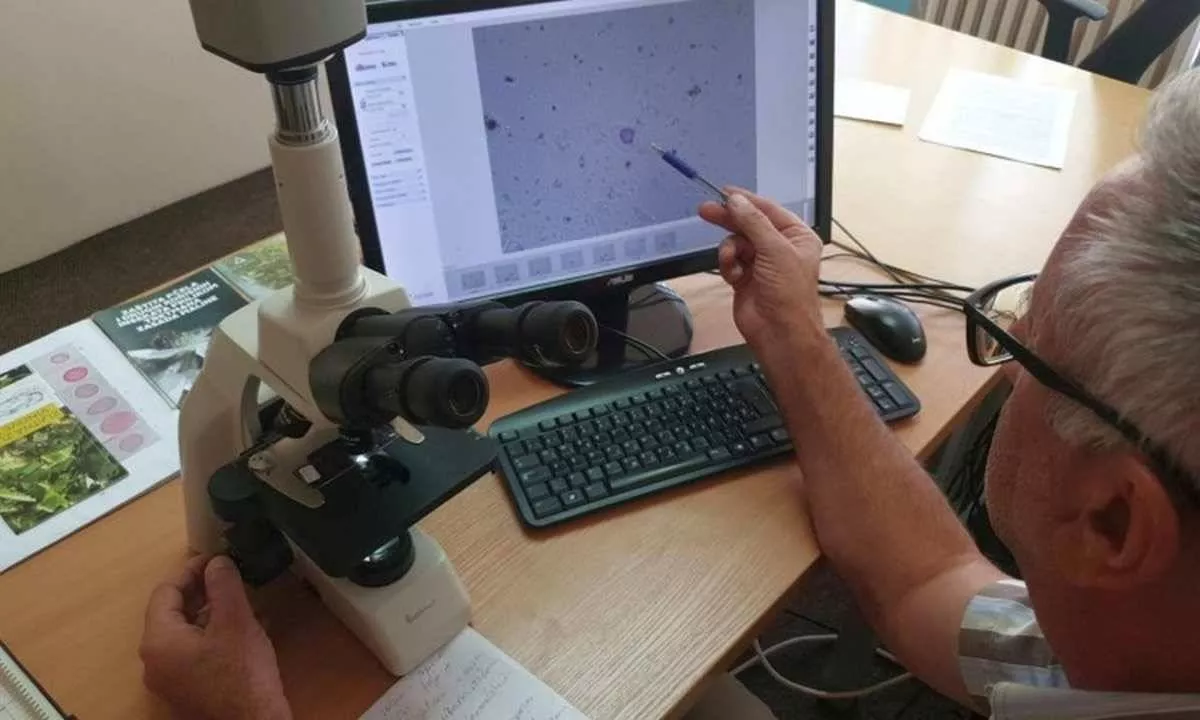
By installing a pollen and spore sampler at the beginning of this week at a location in the center of Zenica, the new season of measuring the presence of allergenic pollen and spores in the Zenica-Doboj Canton (ZDK) by the Institute for Health and Food Safety Zenica (INZ) has begun, and will last until the end of October 2022, confirmed the head of the Plant Protection Department within INZ, Kasim Velić.
The sampler ("pollen trap") captures pollen and spores by actively drawing ten liters of air per minute, in order to obtain a representative sample of pollen from all plants in the surveyed area for the purpose of obtaining relevant data.
The area covered by the monitoring area is 558.5 square kilometers, with an average altitude of 350 m above sea level, the area is dominated by the Bosna River, and is bordered by the northern Vranduk and southern Lašva gorges, occupying a central geographical position in Bosnia and Herzegovina.
- The apparatus for sampling pollen and spores was purchased and first installed in May 2020, and this is the third season of pollen and spore monitoring in this area. Our job is to identify and analyze 24 types of pollen grains from different plant species. The identification and analysis are carried out, among other things, based on the shape and size of the pollen grain, the type, arrangement, and number of pores, states Velić.
All plant species that release pollen, especially those whose pollen has allergenic properties, can be divided into three groups.
The first is "woody plant species" which, according to the pollen calendar, release pollen from the end of January to the beginning of May and are present throughout the Zenica-Doboj Canton, mostly in the hilly and mountainous parts, but also along river courses. Among them are hazel, alder, yew, cypresses, birch, elm, willow, poplar, ash, plane tree, oak, spruce, fir, pine, fir, maple, horse chestnut, hornbeam, common chestnut, beech, walnut, elder, and linden.
The second group includes herbaceous plants, including those from the grass family, whose pollen is present according to the pollen calendar from the end of April to mid-September and are present throughout the Zenica-Doboj Canton regardless of altitude. Among others, these are ryegrass, sweet vernal grass, bentgrass, fescue, soft brome, ryegrass, meadow grass, corn, and similar.
The third group includes herbaceous weeds with summer-autumn pollen release. It consists of a small number of plants, but with very dangerous pollen, which causes allergic reactions even at low concentrations in the air. Among others, these are plantain, nettle, sorrel, mugwort, lemon balm... Among them, ragweed or cocklebur is the most significant weed, very invasive and with the highest allergenic potential, which has not been present in these areas for the past two to three decades.
- The main goal of monitoring is to assess the qualitative and quantitative composition of pollen from allergenic plant species in the lower parts of the troposphere during the vegetation season in the Zenica-Doboj Canton. By monitoring pollination, we achieve early identification, and by providing regular information and recommendations, we reduce the harmful effects of allergies. Additionally, we prepare sufficient information for the creation and publication of the ZDK pollen calendar, says Velić.
According to INZ, the realization of this project resulted in the submission of an application for access to the European Aeroallergen Network (EAN), and subsequently its admission to full membership in this association, so this monitoring station has become an integral part of the European pollen network.
EAN is a database, founded in 1986 in Vienna, where data on pollen concentrations from so-called "monitoring units" spread across almost all European countries is collected, as well as membership in the team for combating ragweed.
Data on the occurrence, types, and concentration of pollen are sent weekly to national centers, which then forward the data to the European coordination center.
- INZ is intensively working with municipalities and cities in ZDK to expand the pollen monitoring network for the entire Canton, and during 2022, the procurement of pollen samplers is expected in the municipality of Tešanj, and the cities of Zavidovići and Visoko, which would give us full control over the beginning and duration of pollination of allergenic plant species and timely information for citizens sensitive to pollen in order to take adequate protective measures, states Velić.
Komentari (0)
Prijavite se za komentiranje
PrijavaJos nema komentara. Budite prvi!
Minuta
Sve →Iz drugih kategorija

High Representative Not Elected: Germans, French and British Sabotaged Americans, New Attempt at End of June

ČOVIĆ WITHOUT MERCY: How Those Who Brought Ademović to Office Created a Political Hell for Him



Sunny Saturday, quite warm



Tragedy in Albanian resort: Two minors drown












