
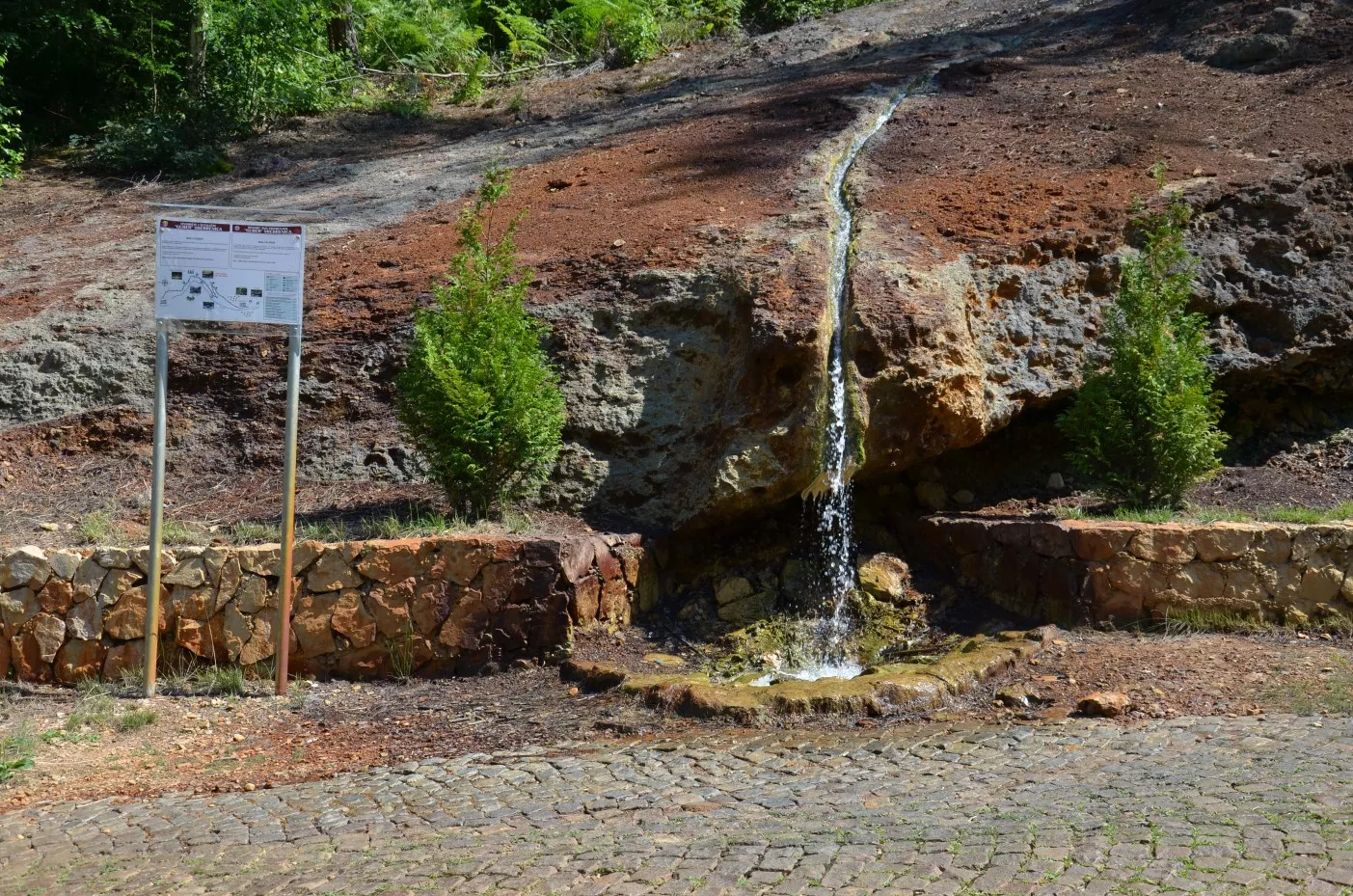
These days, water samples from Crni Guber in Srebrenica, northeastern Bosnia and Herzegovina, are being taken to determine if the water from the nearby spring still has the properties to establish a spa.
Otherwise, before the 1990s, there was a spa at that location, and the medicinal waters of Crni Guber were distributed in Europe during the Austro-Hungarian era.
During the war, all spa facilities were devastated, and tourism ceased. In recent years, attempts have been made to revive spa tourism.
There is a belief that these medicinal waters in Srebrenica got the name Guber because they treated leprosy. Legend has it that a detachment of soldiers, infected with leprosy, came here, bathed in the river, and all were cured of the deadly disease within a few days.
Srebrenica is known for its 38 medicinal waters of Crni Guber, of which the Veliki Guber spring is the most exploited. It is used in the treatment of anemia, as it contains 100 milliliters of iron per liter. This water is also used for the treatment of rheumatic diseases.
One kilometer from Srebrenica is the Mali Guber spring, writes Radio Free Europe.
It springs from volcanic rocks. It is used for stomach problems and the elimination of parasites and worms.
All sources of medicinal waters are near the city. The water for treating sinuses and the water called Ljepotica are most commonly used.
Spa tourism in Srebrenica reached its peak in the 1980s. Hotels and all necessary facilities were built. About 20,000 guests stayed here annually. The Domavija Hotel was devastated during the war and is not in operation.
Komentari (0)
Prijavite se za komentiranje
PrijavaJos nema komentara. Budite prvi!
Minuta
Sve →Iz drugih kategorija

High Representative Not Elected: Germans, French and British Sabotaged Americans, New Attempt at End of June

ČOVIĆ WITHOUT MERCY: How Those Who Brought Ademović to Office Created a Political Hell for Him



Sunny Saturday, quite warm



Tragedy in Albanian resort: Two minors drown












