
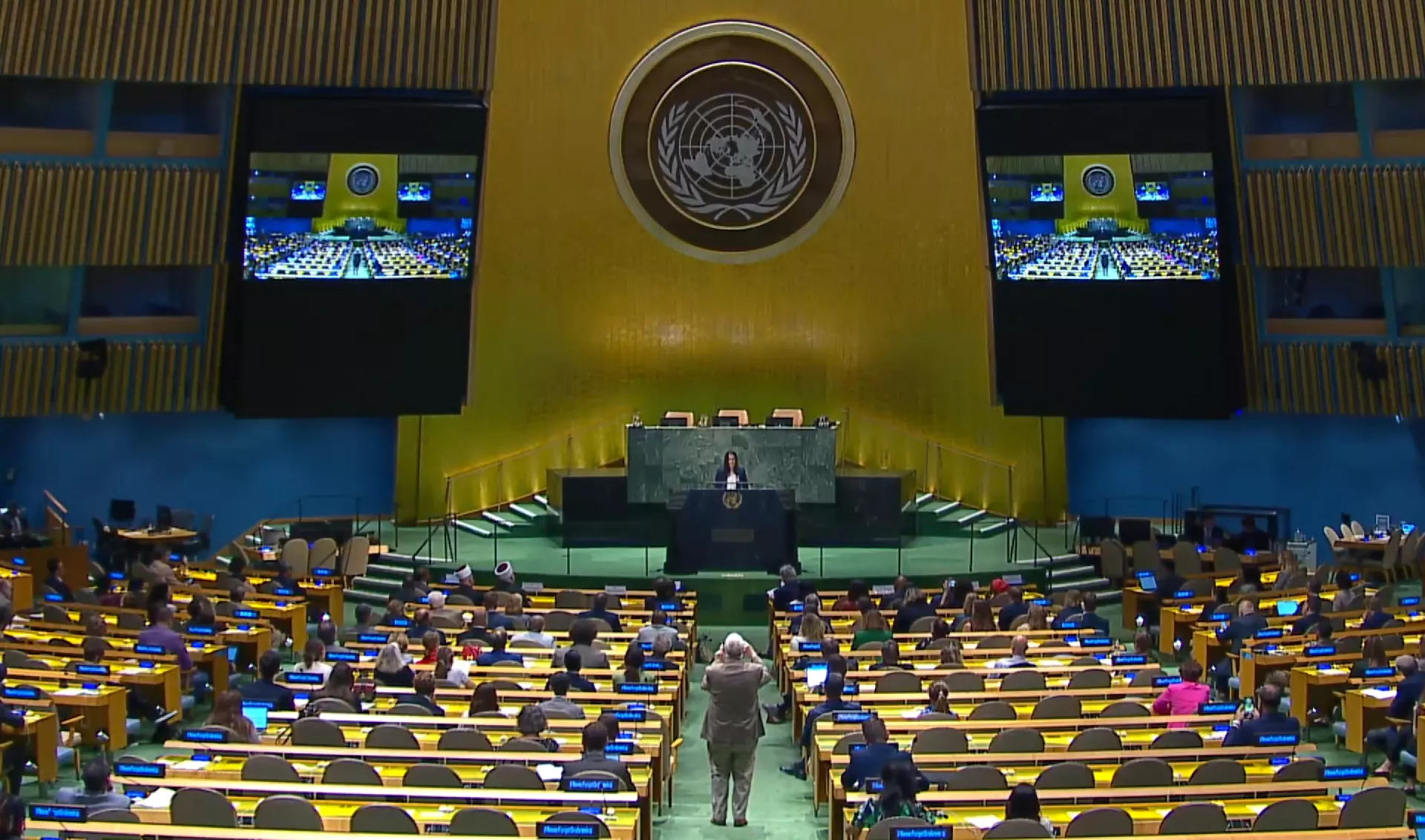
(Patria) - A high-level commemoration was held today at UN headquarters in New York on the occasion of the International Day of Reflection and Remembrance of the 1995 Srebrenica Genocide, reports RSE.
This is the first time such an event has been held after the UN General Assembly adopted the Resolution on July 11 as the International Day of Remembrance of the Srebrenica Genocide on May 23.
"Srebrenica represents one of the darkest chapters in modern human history. The war that followed the breakup of former Yugoslavia claimed more than 100,000 lives in Bosnia and Herzegovina between 1992 and 1995, mostly Bosnian Muslims, and displaced more than two million others," the UN stated.
The event was organized by the Permanent Mission of Bosnia and Herzegovina to the UN, with the co-sponsorship of the permanent missions of Albania, Australia, Austria, Bangladesh, Bulgaria, Canada, Croatia, Estonia, Finland, Germany, Iceland, Ireland, Liechtenstein, Lithuania, Malaysia, the Netherlands, New Zealand, North Macedonia, Rwanda, Slovenia, Sweden, and Turkey.
Lagumdžija Opened the Gathering
The commemoration was opened with an introductory speech by the Ambassador of Bosnia and Herzegovina to the UN, Zlatko Lagumdžija, who thanked the initiators of the Resolution's adoption – Germany and Rwanda – as well as the co-sponsoring countries.
Lagumdžija explained that 1,000 people killed in the genocide are still being searched for, noting that another 14 were buried today.
"The youngest is Beriz, buried next to his father who was buried 11 years ago," Lagumdžija said, among other things.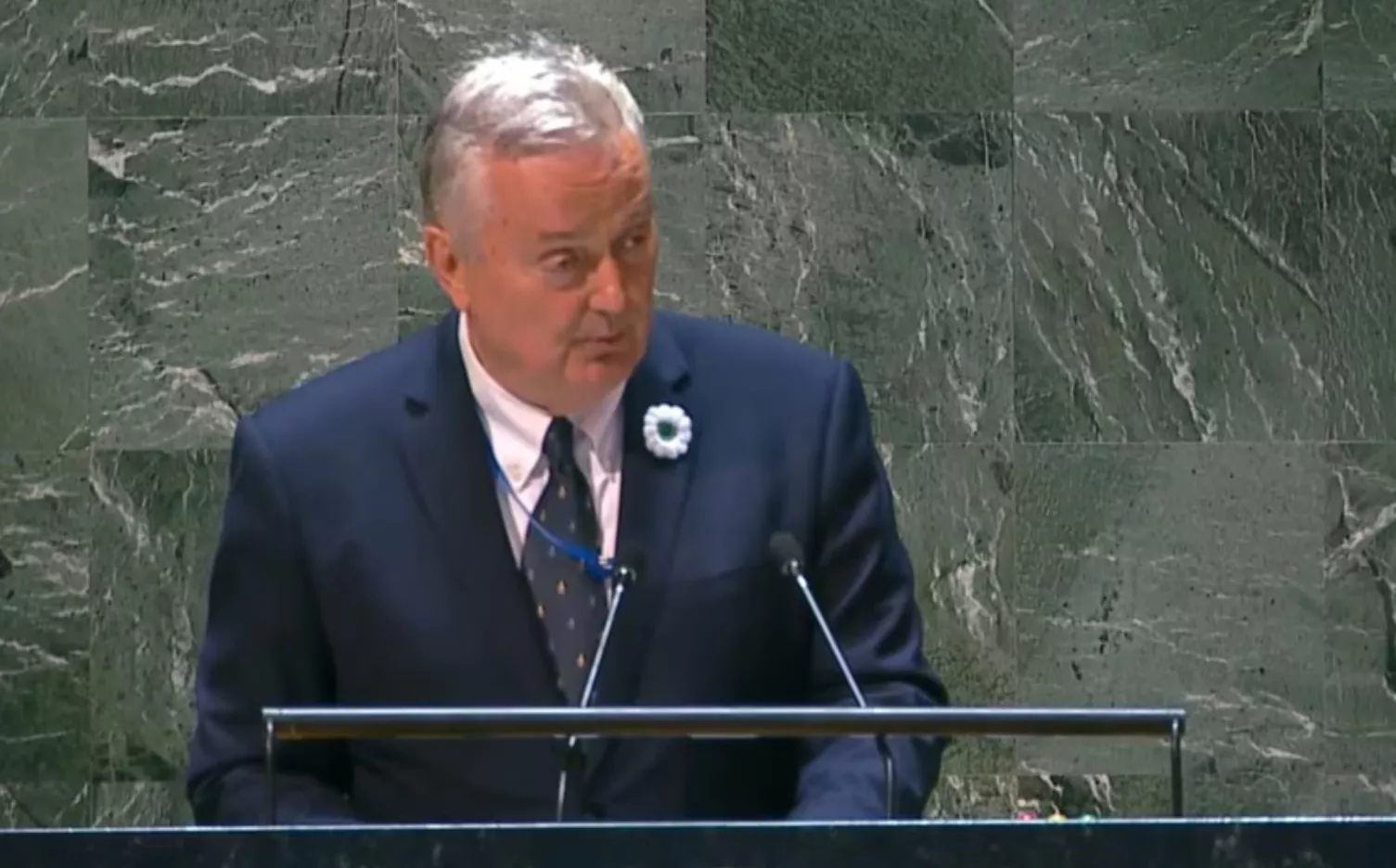
Poignant moments from the summer of 1995 were shown to those present, and some facts were highlighted, such as the fact that more than 500 children were killed in the genocide.
It was also stated that the victims were found in more than 80 mass graves (primary, secondary, tertiary), and it was pointed out that hundreds of remains are still missing.
Bećirović: Court Verdicts Cannot Be Erased from History
In a video message, the Chairman of the Presidency of Bosnia and Herzegovina, Denis Bećirović, thanked the countries that voted for the Srebrenica Resolution.
He emphasized that court verdicts, which confirmed the Srebrenica genocide, cannot be erased from history.
"By adopting the Resolution, a message was sent that the UN must not forget the final verdicts on the committed genocides in Rwanda and Srebrenica and must be a constant warning to humanity.
We must all fight so that genocide never happens again," Bećirović stated, adding that by remembering, we fight for a secure future for new generations.
Francis: The Lesson from Srebrenica is Clear
The President of the UN General Assembly, Dennis Francis, recalled that in April 1993, the UN Security Council declared Srebrenica a safe zone, but that this "supposed sanctuary" became the site of the largest massacre on the territory of former Yugoslavia in July.
"Nearly three decades after this terrible chapter, survivors are trying to achieve justice and reconciliation. The Hague Tribunal and the International Court of Justice have recognized the massacre as an act of genocide.
The lesson from Srebrenica is clear: intolerance and bias have culminated in atrocities. We must always be vigilant about rhetoric that discriminates against certain groups, as it is always rooted in hatred.
It is crucial to prosecute those responsible, but attempts to deny and forget cannot be accepted," Francis stated.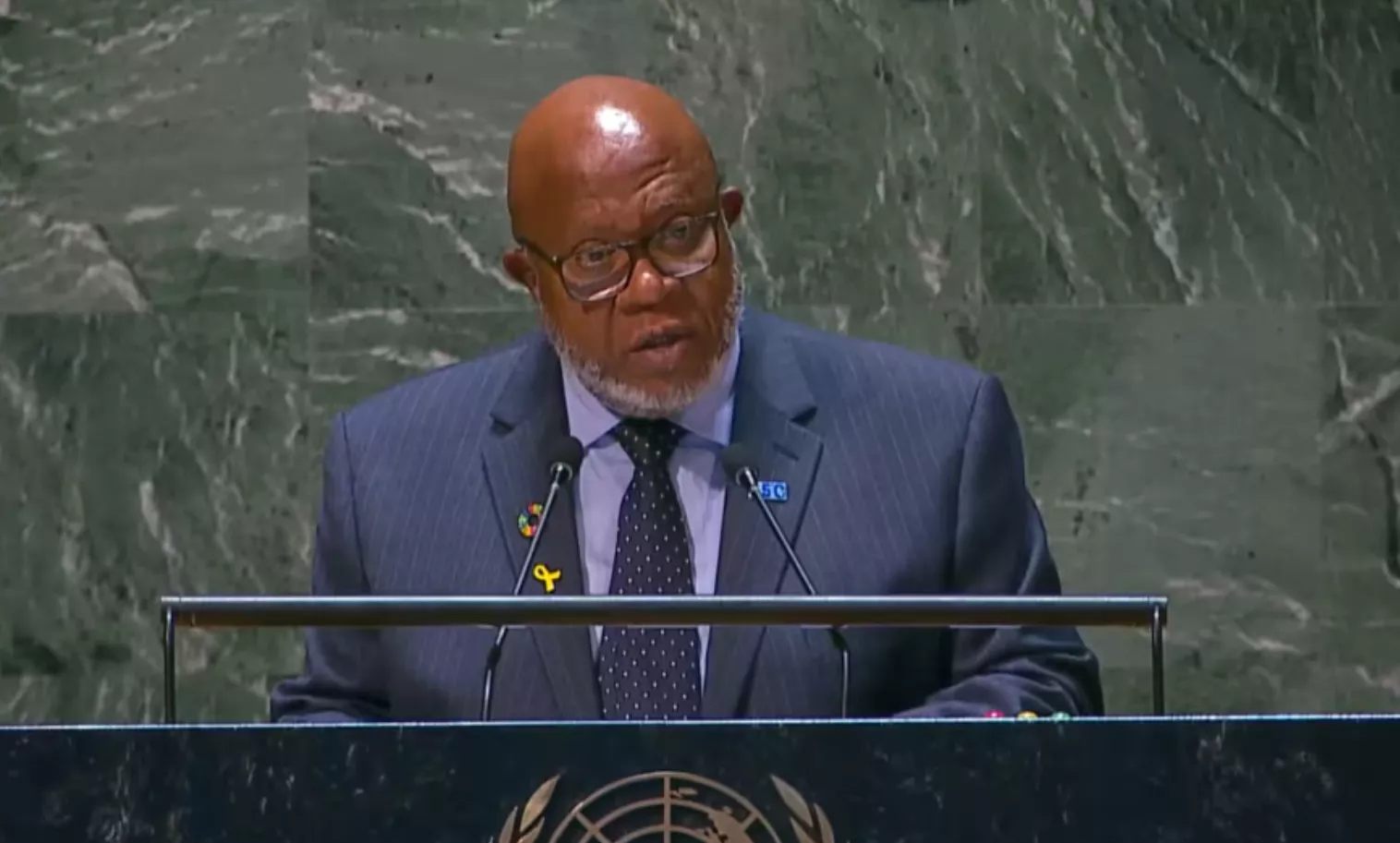
Konaković: The Lessons of Srebrenica Must Not Be Forgotten
The Minister of Foreign Affairs of Bosnia and Herzegovina, Elmedin Konaković, said that the lessons of Srebrenica must never be forgotten.
The Resolution, Konaković stated, represents hope for future generations and does not attribute blame to any group or nation, but rather underscores the truth and aims to honor the victims.
"To those who try to distort the Resolution, I say that history cannot be rewritten for political agendas. Denying genocide insults the memory of the victims and obstructs peace.
We must reject divisive policies and embrace the principles of truth. Srebrenica reminds us to be wary of hatred and intolerance," Konaković stated.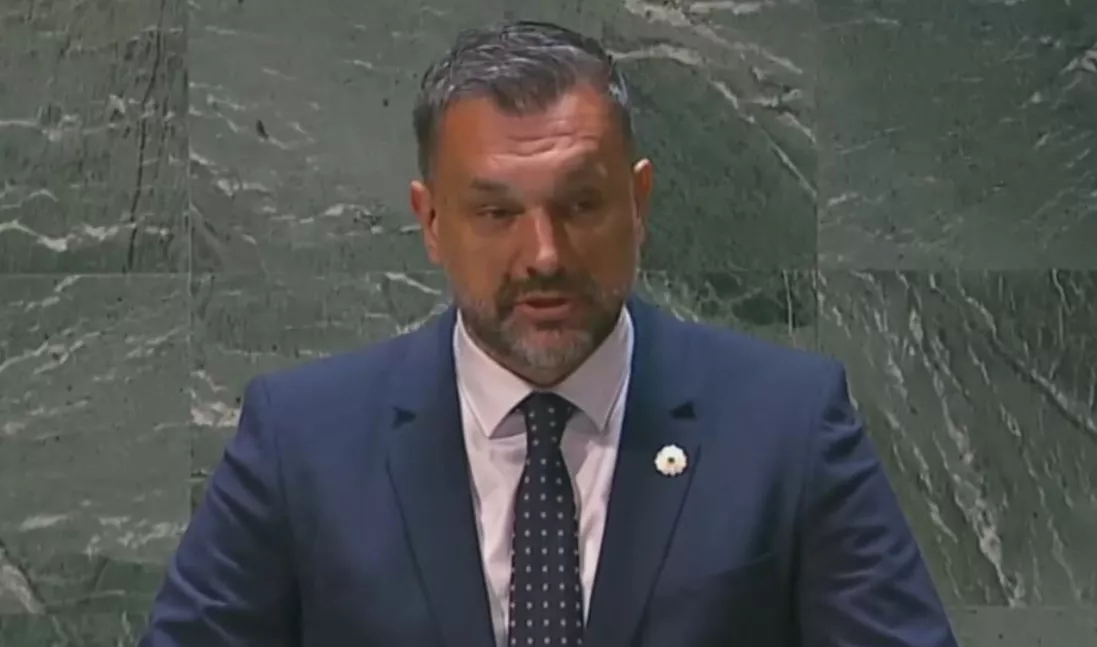
Guterres: Fight Against Division and Intolerance
During the commemoration, a message from UN Secretary-General António Guterres was read, who stated, among other things, that it is necessary to fight against division and intolerance.
"The memory of Srebrenica should strengthen our resolve to build a world free from genocide and where justice and peace will prevail," Guterres stated, emphasizing that "never again" in such a world must be a firm promise.
Leendertse: A Tragic Chapter in European History
The Permanent Representative of Germany to the UN, Antje Leendertse, said that the Srebrenica genocide represents a tragic chapter in common European history.
Together with Rwanda, Germany initiated the adoption of the Resolution in the UN General Assembly, which made July 11 the International Day of Remembrance of the Genocide.
The Resolution is not just a symbol of remembrance, but a commitment to justice and truth, and to preventing future crimes. It also sends a clear message against any denial of genocide, Leendertse stated.
She said that the purpose of the commemoration is not to reopen old wounds, but to heal them.
"Germany is aware of this lesson given our own dark past. The legacy of Srebrenica is a reminder of our shared responsibility to protect and promote peace," she added.
Salihović: Surviving the Genocide was a Terrifying Experience
Almasa Salihović was five years old when the war in Bosnia and Herzegovina began, and eight years old when her brother was killed in the Srebrenica genocide in July 1995. She and other family members managed to escape.
"As I stand before you, I carry the burden of my own story, which is a part of me as well as a reflection of other stories," she said.
Incomplete remains of her brother were found in 2008 in a mass grave.
"At the time of his death, my brother Abdulah was a 17-year-old boy, full of ambitions and dreams. He was a believer, intelligent, honest, and the kindest person I have ever known.
I regret that I couldn't tell him all of this, nor how much I love him," stated Salihović, who works as a spokesperson for the Srebrenica Memorial Center in Potočari.
She said that surviving the genocide was a terrifying experience.
"On July 11, our worst fears came true. I was eight years old, and I have memories filled with helplessness. I didn't understand what was happening to us or what we had done to deserve it. I still don't understand it today," Salihović added.
She last saw her brother at the UN base in Potočari, where they sought protection.
"He was executed along with thousands of others and thrown into a mass grave, and in 2008, less than half of his remains were found and buried," she concluded.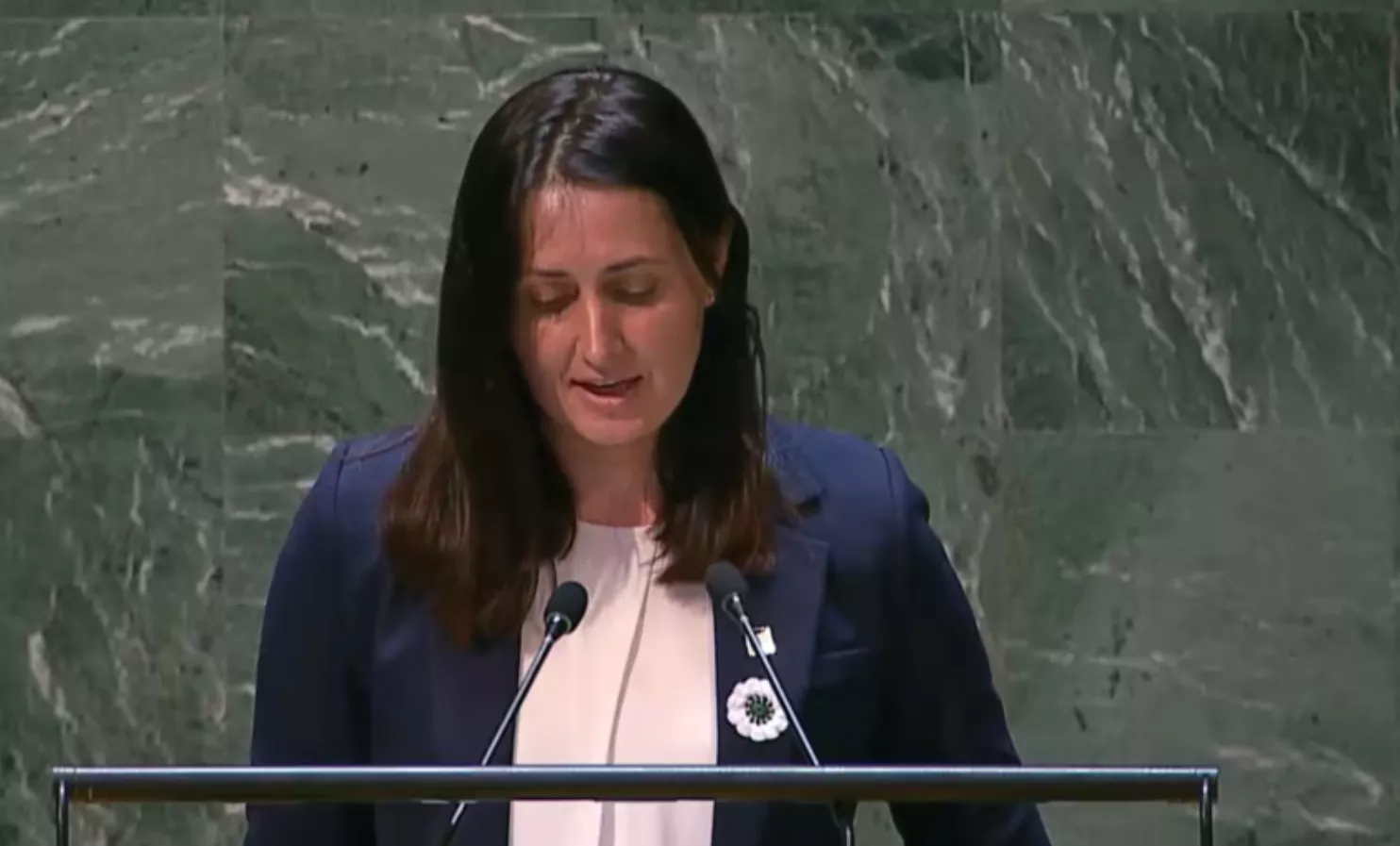
The commemoration at UN headquarters concluded with a video of the song "Srebrenica Inferno" performed in Potočari.
Lagumdžija concluded by emphasizing that there is no place for those who deny genocide, glorify war crimes, and relativize established facts.
Komentari (0)
Prijavite se za komentiranje
PrijavaJos nema komentara. Budite prvi!
Minuta
Sve →Iz drugih kategorija

High Representative Not Elected: Germans, French and British Sabotaged Americans, New Attempt at End of June

ČOVIĆ WITHOUT MERCY: How Those Who Brought Ademović to Office Created a Political Hell for Him



Sunny Saturday, quite warm



Tragedy in Albanian resort: Two minors drown












