
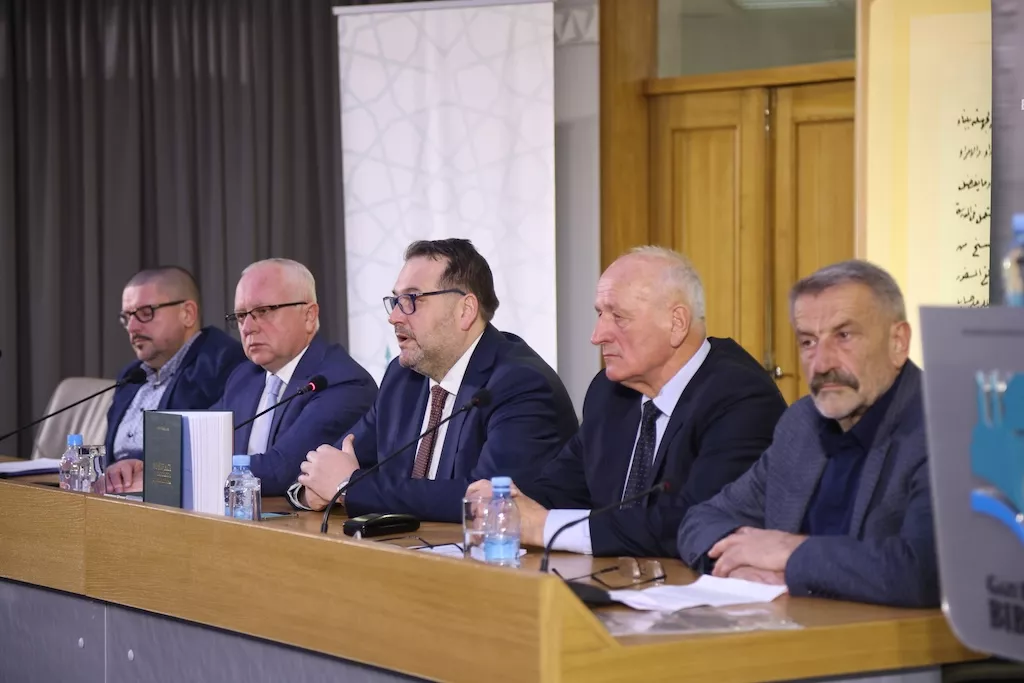
(Patria) - The Council of the Congress of Bosniak Intellectuals (VKBI), in cooperation with the Bosniak Council in Montenegro, the Association of Citizens Originating from Sandžak in BiH and the Gazi Husrev-beg Library in Sarajevo, organised a promotion of the book "Bosniaks from Načertanije to Memorandum" by author Dr. Hamdija Šarkinović tonight at the Library premises.
As assessed by the Secretary of VKBI, Emir Zlatar, this book is one of the more valuable ones for every ordinary person, given that it sublimates the Greater Serbian project, from Načertanije, a document created in the Principality of Serbia, to the SANU Memorandum, which was made before the aggression on Bosnia and Herzegovina and the breakup of the former Yugoslavia.
- The book is good for anyone who wants to see, with clear documents, examples and strategy, what the Greater Serbian project actually is, which today is presented as the 'Serbian world', and what it is all about.
Unfortunately, the Bosniak people are still not aware that they are in the focus of the realisation of a project in which they are supposed to disappear, that is, that Bosnia and Herzegovina should cease to exist as a country, that its constituent people should disappear.
From 1992 to 1995 there was a bloody war, but this is perhaps the first time in the last 200 years that Bosniaks decided to defend themselves and showed determination to preserve Bosnia and Herzegovina, that is also the perspective for Bosniaks living in neighbouring countries, that they must finally work together on their identity and be an example of how one should build one's own country - Zlatar told the media.
A welcome address was given by Prof. Dr. Kasim Trnka, President of the VKBI Council for Constitutional, Legal, Social and Political Issues, assessing it as very important that this work, which was published in Montenegro, is also promoted in BiH, as the homeland of Bosniaks.
- In a thorough study, the author has shown the continuity of Greater Serbian nationalist policy, starting from Načertanije, through the Memorandum to the 'Serbian world' and contemporary events and secessionist phenomena in Bosnia and Herzegovina.
Thus, we can trace the continuity of Greater Serbian state policy, which was particularly devised by the Serbian Academy of Sciences at the end of the 1980s.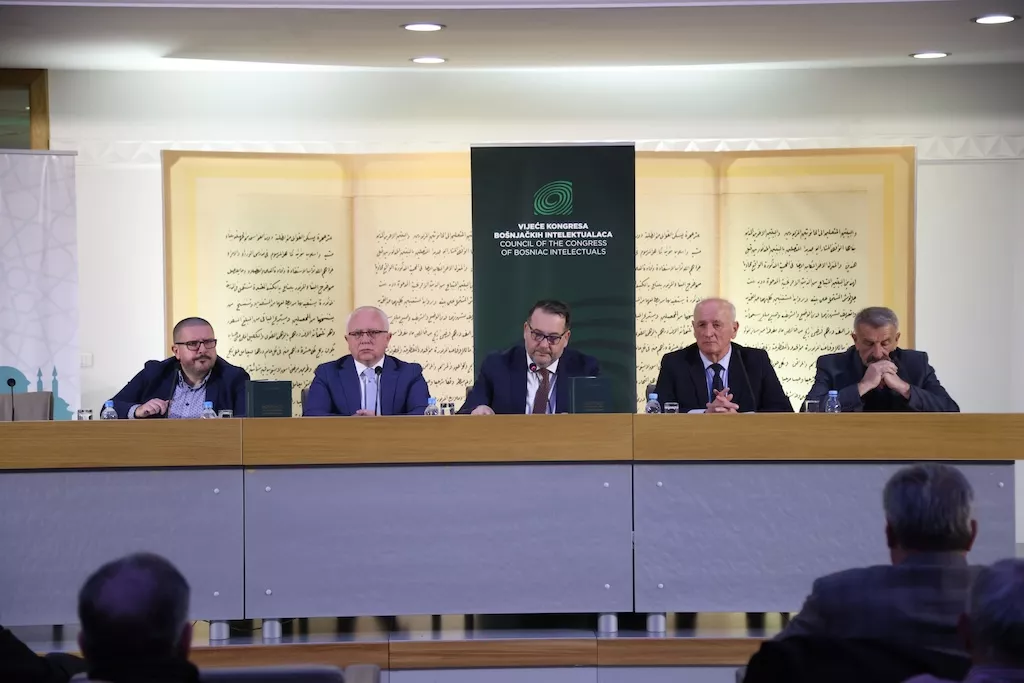
The author rightly, in a documented, thorough manner, systematically presents the documents relating to this. Many of these documents are not sufficiently known to the public.
He concludes that after all this, Bosniaks, who suffered the greatest suffering, genocide, war crimes, who were in danger of disappearing, now that they have come to a state, when they are in a position to further develop towards the European Union, should be aware of these historical events - Trnka emphasised.
This book, in fact, represents the third edition of a multi-decade project.
- I asked myself why all this is happening to Bosniaks. We were the only people without our own cultural, historical, national and every other identity. The goal of this book is precisely that, through the programmes presented in this book, our people understand where they are, what they are and what they should do - the author of the book stated.
The promoters of the book, in addition to the author, were Suljo Mustafić, President of the Bosniak Council in Montenegro, Mirza Rastoder, President of the Executive Board of the Bosniak Council in Montenegro, and Osman Sušić, MA, from the University of Sarajevo.
- This book is a great contribution to historiography, first of all, especially Bosniak historiography, because it studies a very long period, almost 180 years, a period of continuity of various national and political programmes that concerned Bosniaks, but were not Bosniak.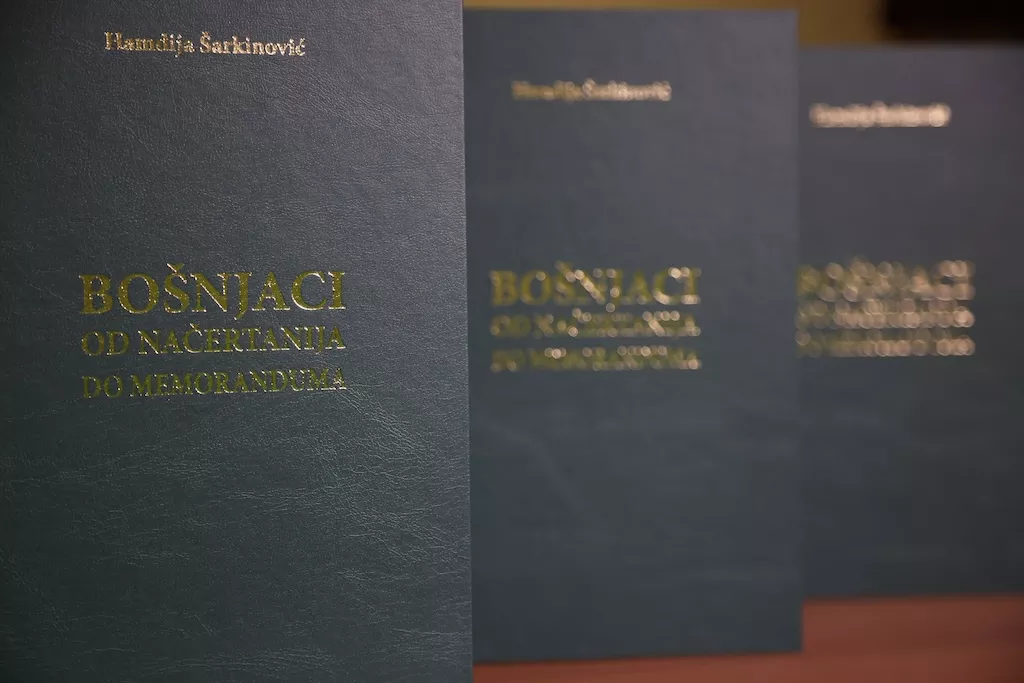
Thus, it is about the continuity of documents, which were created as secret, unofficial sources, and over time became models or paradigms of public policies. It is about facts related all the way from Načertanije to the Memorandum.
Undoubtedly, these are great-state programmes, under whose model this or that form of assimilation of Bosniaks was carried out, then the expulsion of Bosniaks, and all this escalated into genocide in Bosnia and Herzegovina.
The book is very valuable, very important and was missing from our historiography, as well as the historiography of all others in the Balkans, simply these are facts presented to readers, documents that in their impartial, objective and clear language speak about how Bosniaks were treated from Načertanije to the Memorandum - stated Suljo Mustafić.
The book, through archival material, deals with legal-political and social relations in the region with an emphasis on the position of Bosniaks in a historical context.
Komentari (0)
Prijavite se za komentiranje
PrijavaJos nema komentara. Budite prvi!
Minuta
Sve →Iz drugih kategorija

High Representative Not Elected: Germans, French and British Sabotaged Americans, New Attempt at End of June

ČOVIĆ WITHOUT MERCY: How Those Who Brought Ademović to Office Created a Political Hell for Him



Sunny Saturday, quite warm



Tragedy in Albanian resort: Two minors drown












