
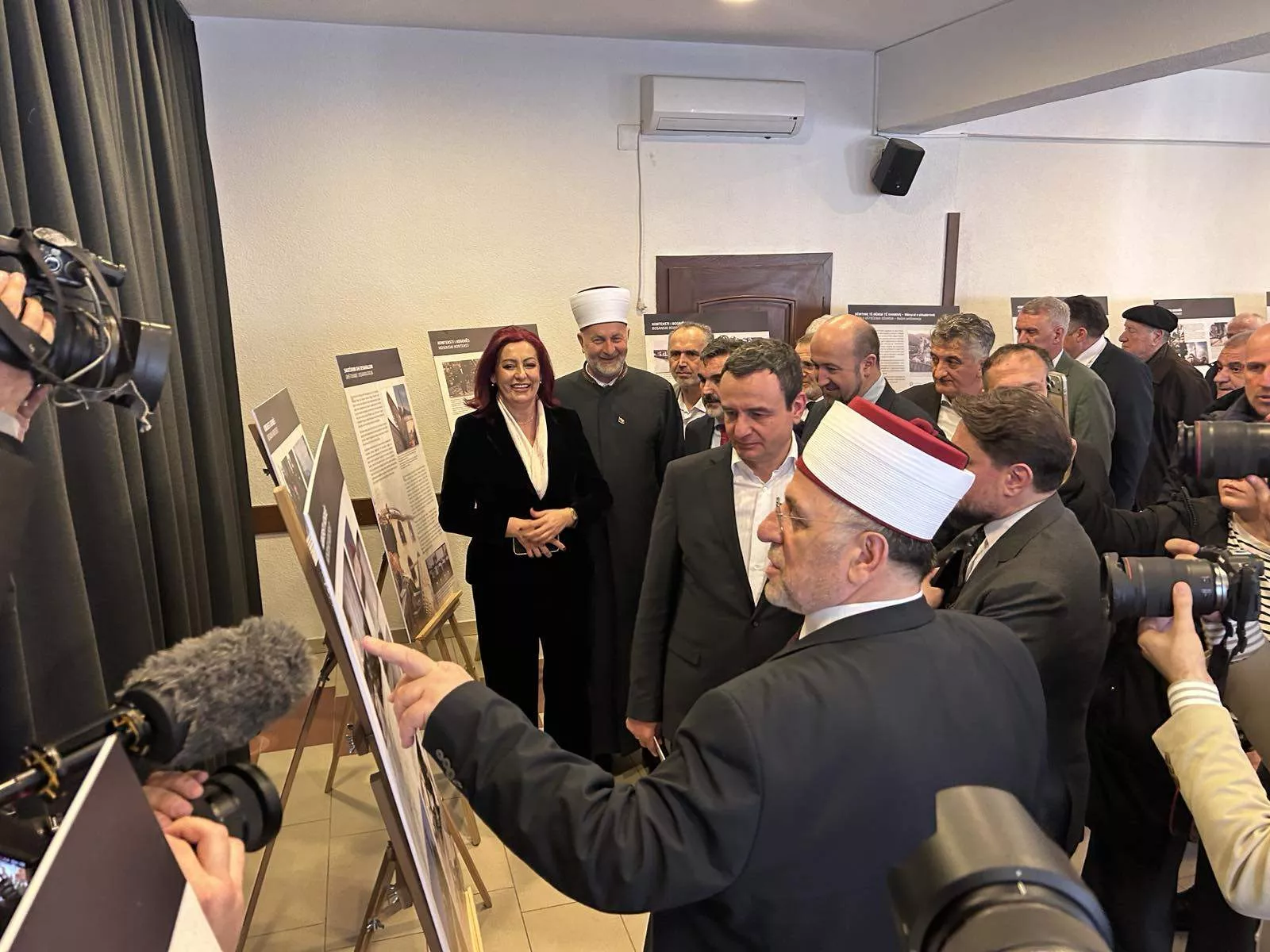
(Patria) - The exhibition "Memory in Pictures: Destroyed Mosques in Bosnia and Herzegovina and Kosovo during the 90s - Planned Sacralicide", was solemnly opened today in Pristina, organized by the Islamic communities of Bosnia and Herzegovina and Kosovo.
This is a bilingual (Albanian and Bosnian) thematic exhibition whose aim is to show the systematic destruction of mosques during the aggression against Bosnia and Herzegovina (1992-1995) and the Kosovo War (1996-1999).
The exhibition, opened at the headquarters of the Islamic Community in Kosovo, not only presents a visual and documentary depiction of the scale of destruction but also points to the ideological basis of sacralicide and urbicide as an attempt to erase the material heritage and elements of the religious and cultural identity of the Balkan Muslims - Bosniaks in Bosnia and Herzegovina and Albanians in Kosovo.
During the aggression against Bosnia and Herzegovina, 614 mosques, 218 mesjids, 69 mektebs, four tekkes, 37 türbes, and 405 other waqf properties were destroyed.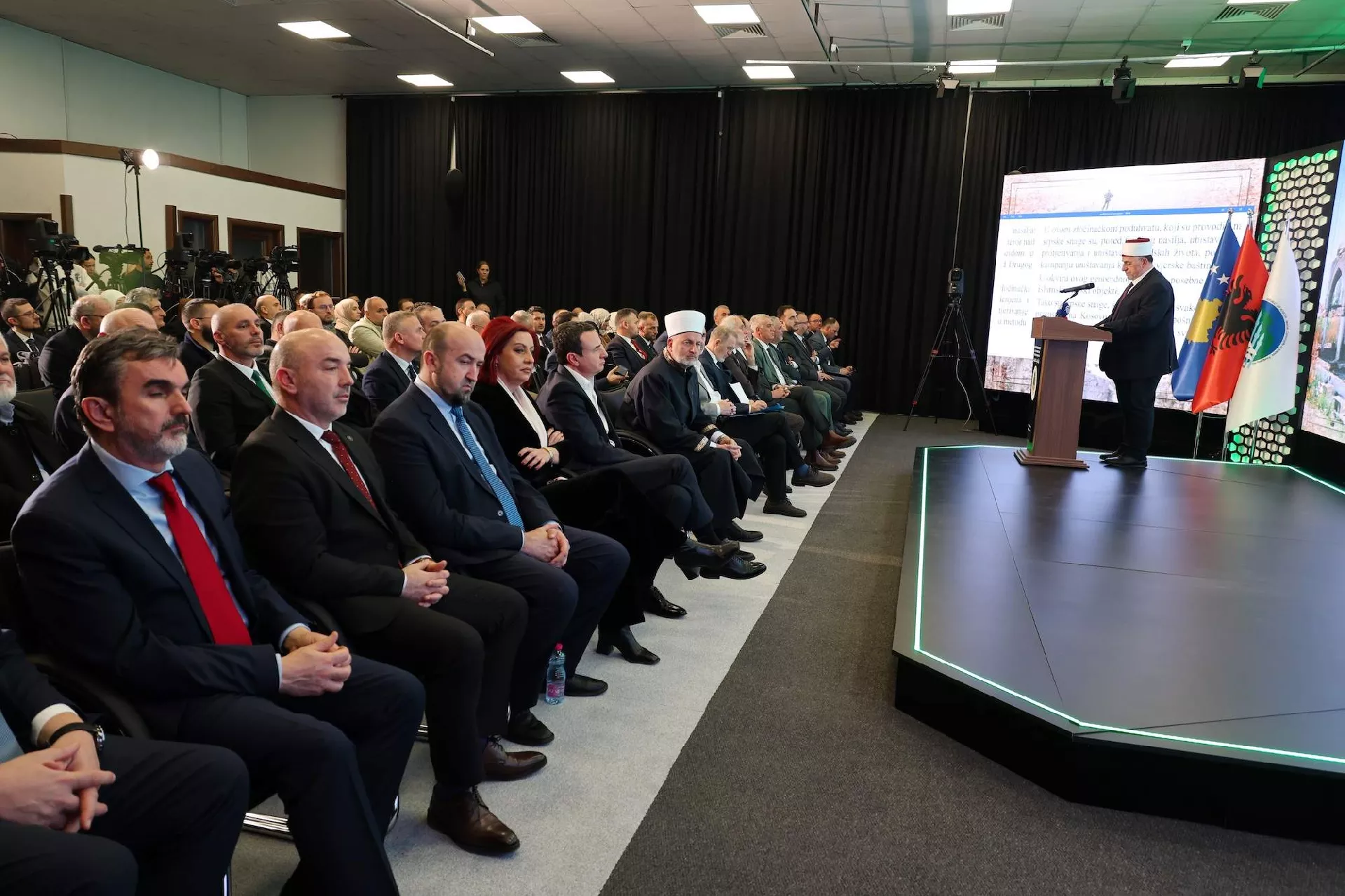
During the Kosovo War (1998-1999), Serbian forces burned, shelled, and desecrated 218 mosques out of a total of 560 that existed in Kosovo at the time.
The headquarters of the Presidency of the Islamic Community of Kosovo was also burned, the "Alauddin" madrasa was damaged, the buildings of four old historical madrasas, three tekkes, one hammam, and 78 business premises owned by waqfs and local boards across the country were demolished.
The mufti of the Islamic Community of Kosovo, Naim-ef. Ternava, addressed the attendees, emphasizing that Islamic religious buildings were also particular targets within the genocidal project.
- Thus, Serbian forces, with the aim of erasing every trace of Albanian presence in Kosovo and Bosniak presence in Bosnia and Herzegovina, demolished and destroyed sacred and monumental sites of exceptional historical, architectural, and identity value.
Centuries-old mosques, many of them unique and irreplaceable, historical bazaars of identity significance, madrasas, libraries, archives, and other educational and cultural institutions whose foundations were endowments established by Albanians and Bosniaks, ulema, scholars, and enlightened benefactors of both our peoples were destroyed - said Mufti Ternava.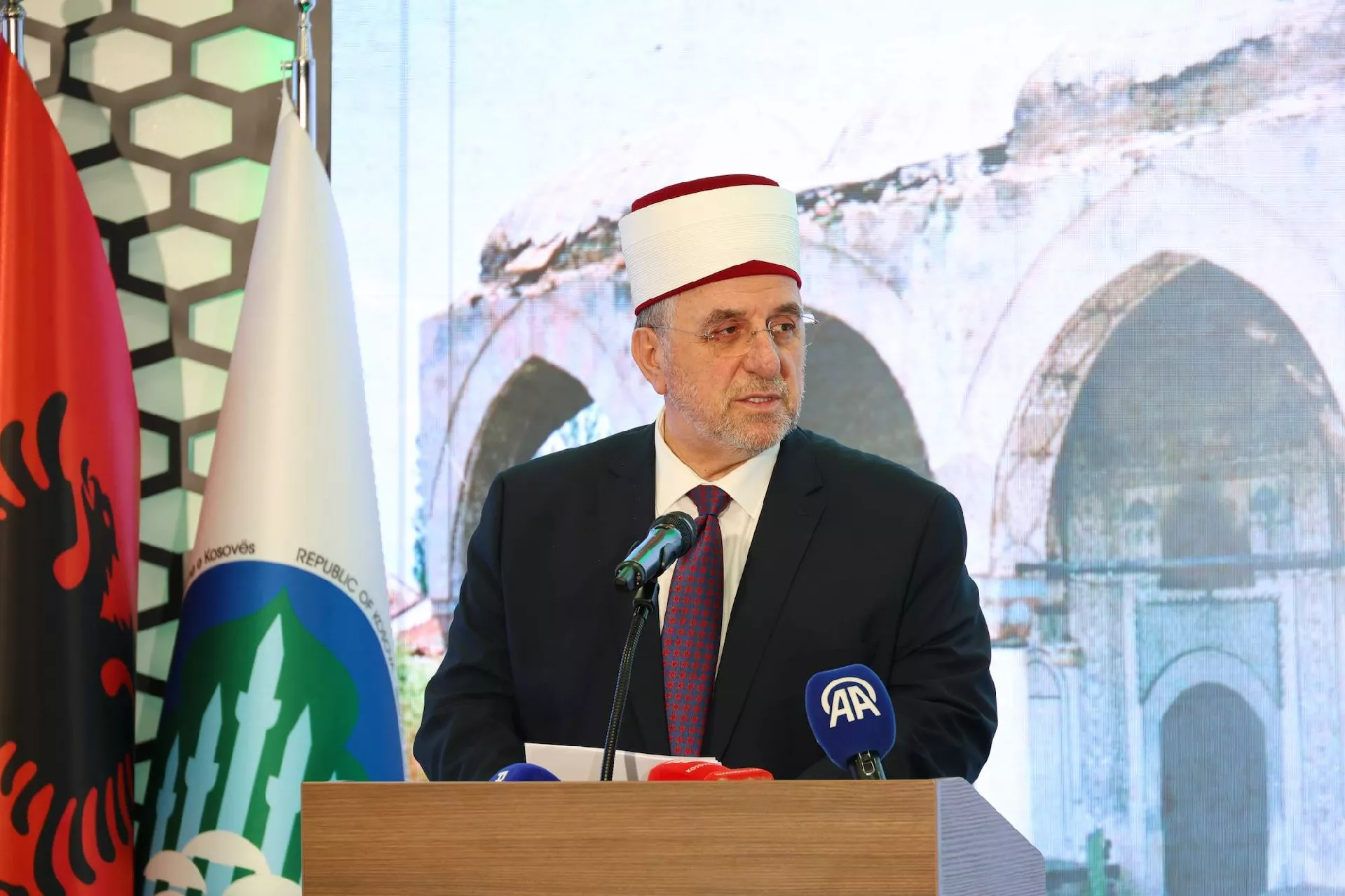
He called for the exhibition to be translated into foreign languages and presented in Bosnia and Herzegovina, Kosovo, and in the countries of the Albanian and Bosniak diaspora, emphasizing that its goal is to promote civilizational values, mutual respect, and sustainable peace, not to incite hatred or conflict.
The exhibition was also attended by representatives of the religious, cultural, and political life of Kosovo, including the Prime Minister of the Republic of Kosovo Albin Kurti, his deputy Emilija Redžepi, the chief imam of the Islamic Community of Kosovo Vedat Sahiti, and others.
Prime Minister Kurti emphasized that the exhibition has special significance because it clearly and convincingly documents the destruction of religious and cultural heritage as part of a deliberate strategy to erase the cultural and religious identity of the people.
- Cultural heritage represents the foundation of our collective identity. It connects us with the past, strengthens awareness of common values, and fosters responsibility to preserve historical memory for future generations.
During the war in 1998-1999, in addition to thousands of lost lives and enormous material damage, Kosovo also suffered severe destruction of cultural heritage that was deliberately destroyed by Serbian armed forces - said Kurti, stating that 1,788 cultural heritage monuments and 3,724 museum objects were destroyed in Kosovo.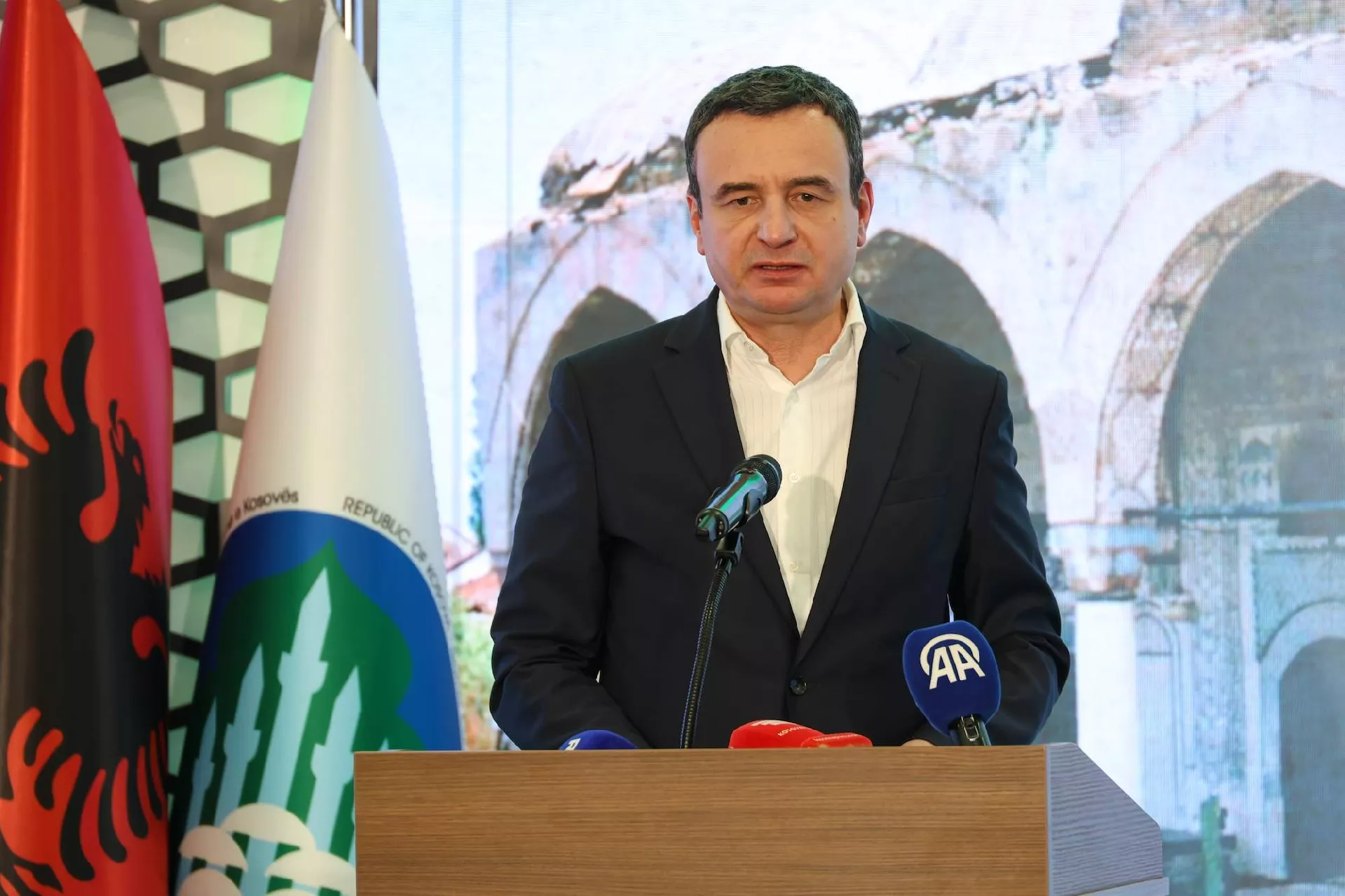
The mufti of Goražde, Remzija-ef. Pitić, accompanied by the director of the Directorate for Foreign Affairs of the Riyaset, Muhamed Jusić, and the head of the office of the reis-ul-ulema, Rifat Fetić, was the envoy of the reis-ul-ulema Husein-ef. Kavazović at this event.
- We know that our mosques were not destroyed by drunk individuals or isolated groups. We know that it was an integral part of the system and policy from the highest level, with the aim of destroying our strongest symbols.
The destruction of mosques was part of a criminal policy in whose creation participated intellectuals, politicians, journalists, and the entire security apparatus. We also know how to rebuild them, because that is how we build ourselves and our culture.
We know how to remember and commemorate, because memory is the most important characteristic of a human being and the fundamental obligation of God's creature. This exhibition is our shared memory - said Mufti Pitić.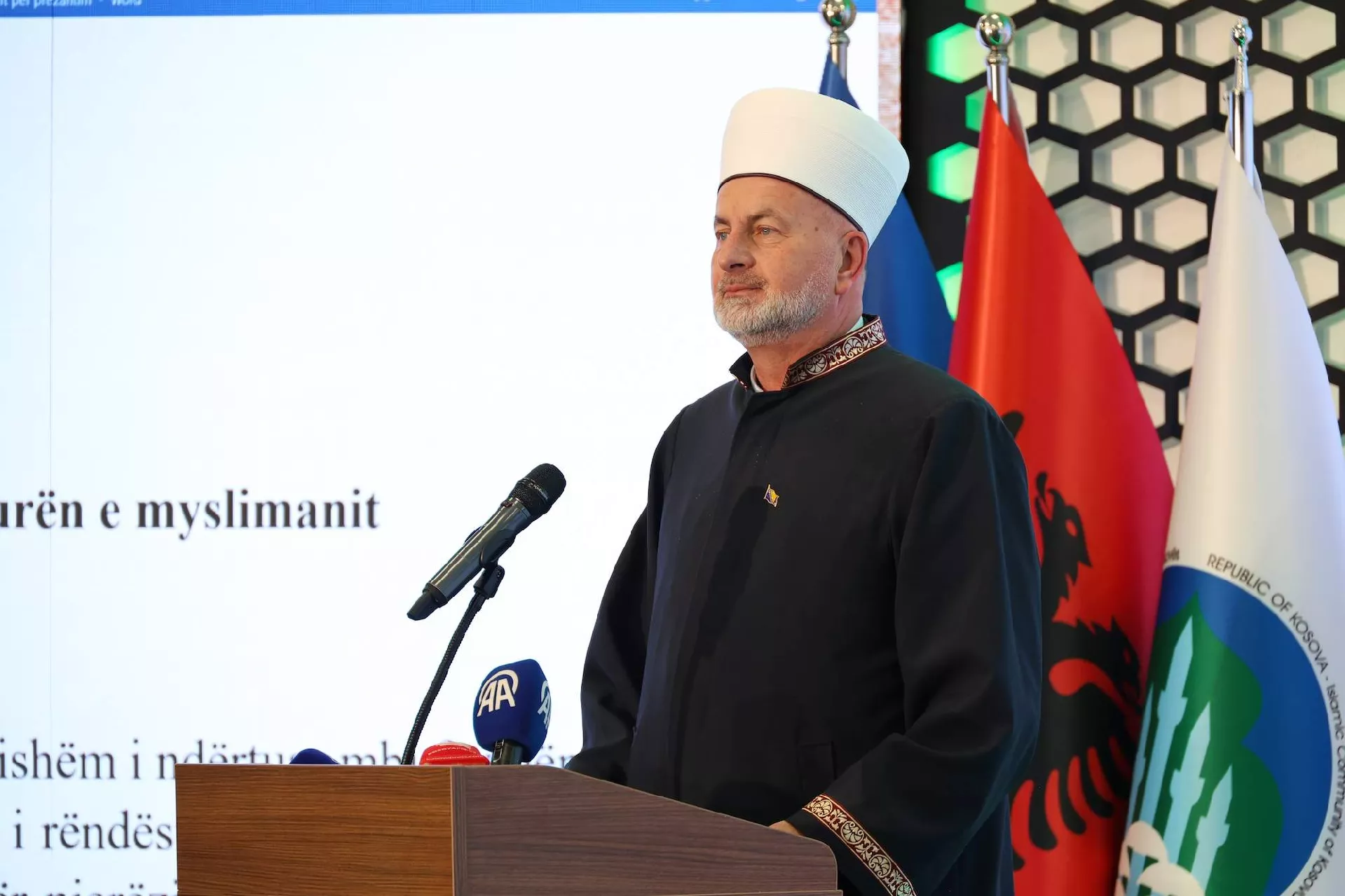
Mirsad Kalajdžić, one of the authors, spoke about the exhibition on behalf of the Islamic Community in Bosnia and Herzegovina. Ramadan Shkodra, one of the authors of the exhibition on behalf of the Islamic Community of Kosovo, emphasized that the aggressor has still not received deserved punishment.
- The official policy of Serbia continues to relativize and deny the crimes of Milošević and Mladić, without moral and political remorse and without distancing itself from the ideologies that produced these crimes.
In this context, the exhibition has special significance as an act of historical memory and resistance to oblivion and the falsification of truth - said Shkodra.
The authors of the exhibition on behalf of the Islamic Community of Kosovo are Ramadan Shkodra and Bashkim Mehani, with photographs by Sabrija Bajgora and translation of the content into Bosnian by Azmir Jusufi.
On behalf of the Islamic Community in Bosnia and Herzegovina, the exhibition was prepared by a team appointed by the Directorate for Foreign Affairs and Diaspora of the Riyaset of the Islamic Community in BiH and the Council of Muftis.
The director of the Directorate for Foreign Affairs and Diaspora, Muhamed Jusić, emphasized that the exhibition represents a continuation of cooperation between the Islamic communities in Bosnia and Herzegovina and Kosovo.
- Islamic communities in the Balkans have gone through numerous trials, from systematic crimes during decades of communist rule to the contemporary challenges of societies in transition.
It is important that we learn together from the past and exchange experiences so that certain things do not happen again. We must pass on numerous lessons about freedom, peace, and resilience to new generations - said Jusić.
A bilingual catalog has also been published along with the exhibition, which will be available to the public in Bosnia and Herzegovina and Kosovo, and the exhibition will also be presented in Sarajevo next year.
Komentari (0)
Prijavite se za komentiranje
PrijavaJos nema komentara. Budite prvi!
Minuta
Sve →Iz drugih kategorija

High Representative Not Elected: Germans, French and British Against Americans, New Attempt at End of June

ČOVIĆ WITHOUT MERCY: How Those Who Brought Ademović to Office Created a Political Hell for Him



Sunny Saturday, quite warm



Tragedy in Albanian resort: Two minors drown












