
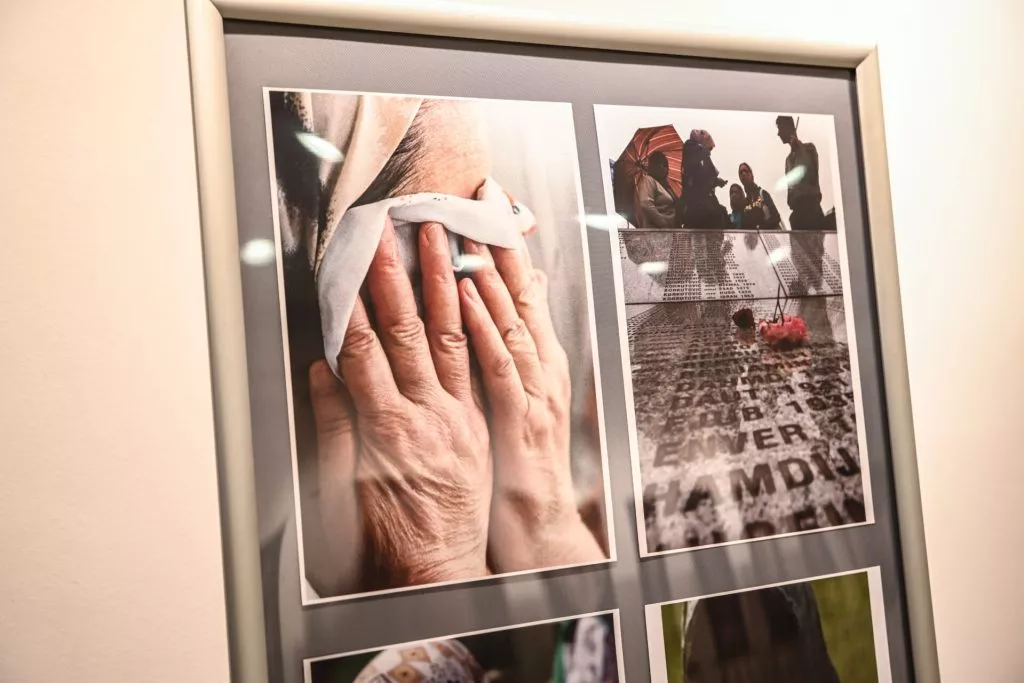
(Patria) - In remembrance of the tragic events in Srebrenica, and on the occasion of the 29th anniversary of the genocide that occurred on July 11, 1995, the exhibition “Ars Memoriae” was opened today in the gallery of the Novi Grad Municipality Sarajevo.
This is a reinterpretation of the exhibition that was first presented in 2015 at the Srebrenica Memorial Center in Potočari, on the occasion of the 20th anniversary of the Srebrenica genocide.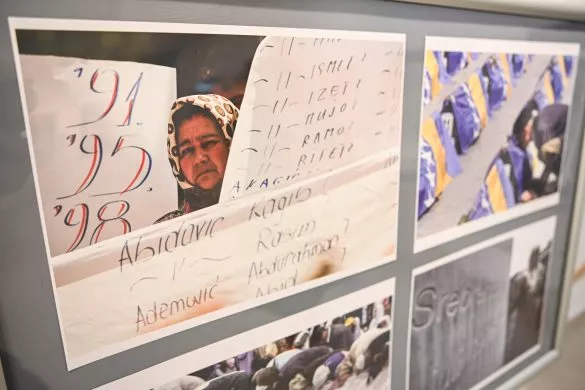
The exhibition features works by artists who, through their artworks, offer a visual dedication and remembrance of the Srebrenica genocide. The artists who participated in the creation of the exhibition and whose works are displayed are Danilo Krstanović, Juliett Walker, Elma Čaušević-Mujezinović, Danis Lan Fejzić, and Adis Elijas Fejzić.
The exhibition is designed as a collage of different authorial sensibilities that are placed within a unique visual concept. Each author, with their personal and professional experience, authentically speaks and leaves their mark on the Srebrenica, and the overall Bosnian-Herzegovinian tragedy.
The opening of the exhibition was attended by the Mayor of Novi Grad Municipality Sarajevo, Semir Efendić, who emphasized that this exhibition is just a small contribution that the local community is making to preserve the memory of the Srebrenica genocide, stressing that we must be strong and strive for justice, but also be aware and have the strength to defend ourselves from evil.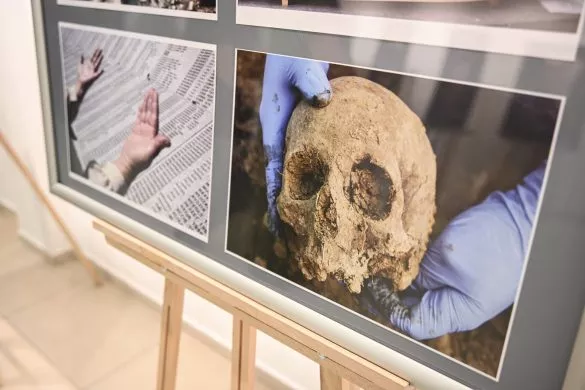
“For several years now, our Gallery has thematically followed July 11, the date when the Srebrenica genocide is commemorated. This exhibition is part of that and a small contribution from our local community and an attempt to adequately mark all important dates and events for our municipality and Bosnia and Herzegovina.
Yesterday, a large Srebrenica flower was completed at the roundabout on Džemala Bijedića street, likely the largest in size in all of BiH. This is our way of remembering what happened in Srebrenica. I think our messages and what we learn from it are not quite complete. We cannot expect evil to defeat itself.
We must be strong and must not allow ourselves to be humiliated. What happened in July 1995 is a lesson for all future generations that we must not allow ourselves to be in a position of weakness. At that time, evil was stronger and more powerful, it gained more space, and to prevent it in the future, we need strength on the side of justice. Justice, besides being an ideal, must also have the strength to defend itself from evil,” said Efendić.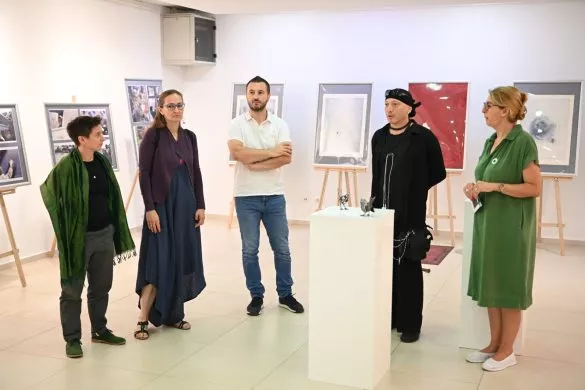
The author of the exhibition concept, the renowned BiH artist Adis Elijas Fejzić, said that the aim of the exhibition is to remind of the Srebrenica genocide, emphasizing that through remembrance, hope can also be born that we will become better people.
“This exhibition is one of the reinterpretations of the original exhibition 'Art of Remembrance', and this is the first time we are doing it again under this name, but now in cooperation with the Gallery of the Novi Grad Municipality Sarajevo. We can say nothing else about Srebrenica except that it is a tragedy, and that is the only word that can describe it, and no word is truly worthy. But what can an artist do but talk about it precisely because of remembrance, and through that remembrance, perhaps some hope can be born that all of us in this space and our triangle, if not wider, will become better towards each other,” said Fejzić.
He added that the exhibition includes works by several authors who participate in the entire concept and who have all spoken about Srebrenica in their own way.
“We have Danilo Krstanović, who literally conveyed the echo and reflection that occurs after the genocide, where his photographs capture moments of pain that never fades. It is a document of pain. With Danis, we have an abstracted approach to depicting pain, suffering, and remembrance through graphics.
J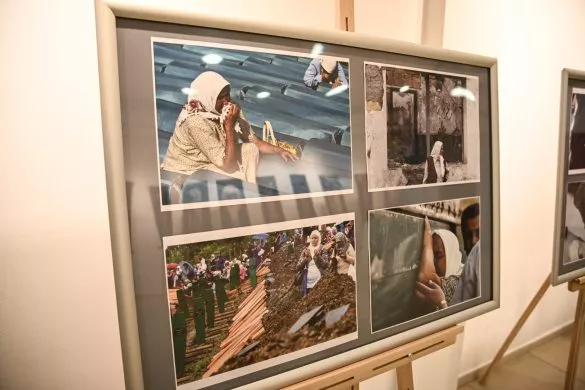 uliet and Elma did it through sculptures and installations. With the assistance of Goran Lizdek, I created a lyrical metaphor mainly for the pain of women who remained alive after losing their husbands, sons, and brothers. I think we have put together an exhibition that speaks about the same thing in different ways, and each of us artists speaks about different aspects that constitute the entire complex of that pain,” stated Fejzić.
“The Night is Long”
One of the artists, sculptor Elma Čaušević-Mujezinović, tells the story of waiting for loved ones, hope, desire, but ultimately the harsh truth that those they are waiting for will not come.
“I have exhibited several works here. One installation depicts the ritual of drinking coffee, titled ‘The Night is Long’. It directly relates to our tradition of drinking coffee and the specific practice of turning a coffee cup upside down if someone happens to visit. In this case, this tradition is presented in a somewhat more eerie way, given the title ‘The Night is Long’.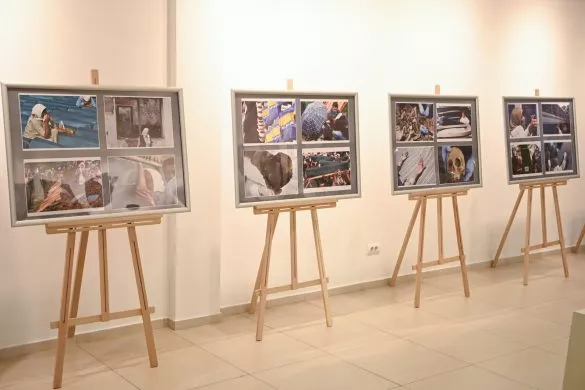
We see a mother waiting. Initially, she waits for her sons, fathers, husbands, and family to return from that long walk of death. Later, when that wait is not fulfilled, she waits for their remains to be found, and after that, she waits for her own death to join them,” said Elma.
Juliet Walker, an artist from Great Britain, also contributed to the exhibition and presented her works and her perspective on Srebrenica and the lives of the people who remained and survived the genocide.
“Everything that happened in Srebrenica is horrific, and it is difficult to turn it into art because it must be something deep and from the heart. I focused on what it is like to live 29 years without someone. Not on the event itself, but on that process.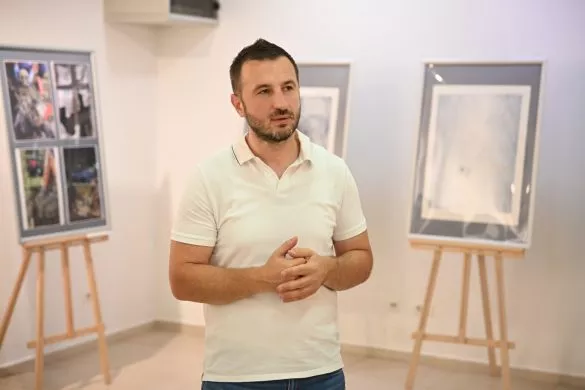
One work on display talks about what it is like to lose a husband. I don't know this, but I can imagine that the body feels empty and heavy at the same time. Another aspect of this work is about talking to someone you have lost, talking to their soul in a way. Another work represents 29 candles, and one candle is larger than the others and represents a mother and talks about what it would be like to lose a son. The son remains in memory, with the same form, at the same age, while the mother grows older, and the son always remains the same,” said Walker.
The exhibition will be open until July 22, 2024, every working day from 10 AM to 4 PM. Admission to the exhibition is free.
Komentari (0)
Prijavite se za komentiranje
PrijavaJos nema komentara. Budite prvi!
Minuta
Sve →Iz drugih kategorija

High Representative Not Elected: Germans, French and British Against Americans, New Attempt at End of June

ČOVIĆ WITHOUT MERCY: How Those Who Brought Ademović to Office Created a Political Hell for Him



Sunny Saturday, quite warm



Tragedy in Albanian resort: Two minors drown












