
(Patria) - In the Federation of Bosnia and Herzegovina, about 40,000 workers are missing to maintain existing work processes, while experts note that about 200,000 workers are missing to sustain the pension insurance system, and the issue of reindustrialization and preserving the domestic workforce is today a question of long-term stability of the economic and social system, said the initiator of the idea of reindustrialization of FBiH and member of the ESV of FBiH, Adnan Smailbegović.
He pointed out that the problem of labor shortage is no longer exclusively an economic issue, but a matter of functioning of the entire social system, including the pension and health sectors.
"If we do not have enough employed people, in the long run there will be no one to fill pension funds, finance the health system, and carry the economic development of the country. We must talk about this openly and without sugarcoating reality," said Smailbegović.
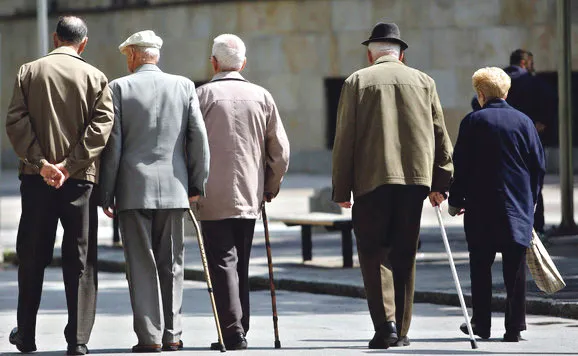
It was particularly emphasized that the Federation of BiH today has one of the most unfavorable ratios between the number of employed and pensioners in Europe. According to available data, there are only about 1.15 employed workers per pensioner, while the European average is about 1.7, and some European economies have more than three workers per pensioner. According to statements by competent managers, the ratio of employed to pensioners in FBiH weakens year after year, so that from 2023, when the number of pensioners was 444,666, the number of workers was 541,261, and the number of unemployed registered with the Employment Bureau was 273,229, i.e., 1.22 employed per pensioner, or 1.98 employed per unemployed person. In 2025, the number of pensioners has significantly increased to 465,392, the number of employed to 547,390, and the unemployed to 255,482, indicating a ratio of employed/pensioners – 1.17, and employed/unemployed – 2.14. Even if all the unemployed from the Employment Bureau registry were employed immediately, which is of course impossible, even in that case the ratio would be 1.72 employed per pensioner.
"This is not a statistical problem, but a question of system sustainability. If we want to reach the European average and stabilize the pension and economic system in the long term, we need about 200,000 more workers than we have today," stated Smailbegović.
He also warned about the continuous departure of the working-age population, especially young people, who leave Bosnia and Herzegovina due to a lack of perspective.
"People do not leave only because of salaries. They leave because they do not see security, stability, and the possibility to plan their future here. And that is precisely why we no longer have the luxury of waiting and postponing serious economic decisions. As a key response to existing challenges, long-term investment in the industrial base of this country is needed, i.e., the need for systemic reindustrialization and stronger development of production capacities," emphasized Smailbegović.
He stressed that industry plays a central role in economic development, as it directly generates the largest number of jobs and drives an entire chain of other activities, from transport and logistics to energy and services.
"Reindustrialization is not a matter of one industry or one sector. One factory does not only open jobs within its own facilities, but drives the entire local economy," said Smailbegović.
As priority measures, he listed attracting foreign investments, stimulating domestic companies to invest and expand production, reducing the tax burden on labor, increasing productivity and investment in technology, as well as serious reforms in the education system. We are too slow as a system and extremely uncompetitive in the regional and wider market, especially the European one. We are not sufficiently following green reforms, European policies related to green energy, we have missed and are missing the opportunity to increase competitiveness through grants from the Growth Plan, we are insufficiently following EU market rules, and numerous other measures indicate the need for serious systemic interventions to improve the situation. We talk about reindustrialization because a more active launch of industry, in addition to the mentioned issues, also implies issues of modernization, digitalization, application of artificial intelligence, faster and more efficient financial operations, and modernization in general.
One of the key focuses is also systematic worker housing construction with the aim of retaining the domestic workforce.
"Apartments for workers are not a social measure, but a serious development and industrial policy. Today, many young people, even when they work, do not have a realistic possibility to buy an apartment. This directly affects the decision to leave the country. We must create conditions for them to see a future here and want to earn a living in their own country. When a person knows that through their work they can solve their housing issue, then staying in Bosnia and Herzegovina becomes a real and sustainable decision. The goal of worker housing construction is to enable a worker to buy a decent apartment for a maximum of 100,000 KM, which they will pay off over the next 15 to 20 years with an average interest of 600 KM. The most successful countries in the world seriously invest in housing, infrastructure, and the quality of life of workers because they know that without people there is no economy. Competition in the region is truly evident and great. Neighboring and other countries are developing serious strategies to attract labor through increased allocations, cost redirection, better health and social protection, housing solutions for young people, changes in the labor law environment, and more, and if we in BiH do not adapt our regulations, we will remain uncompetitive and simply without a model to motivate and retain our people to work in their own country. Employers cannot change this environment on their own by raising their workers' incomes because this is a matter of the market, productivity, competitiveness, and more. We must be reasonable and think in partnership about the future of the economy and the country as a whole," stated Smailbegović.
It was also emphasized that in a certain period, engagement of foreign labor will be necessary due to the lack of domestic workers on the market, but that this cannot represent a permanent replacement for the domestic workforce.
"Foreign workers are not and cannot be a replacement for the domestic workforce. Even the attempt to compensate for the labor shortage where it is most urgent with foreign labor does not yield adequate results. For comparison, while in the whole of BiH quotas for foreign workers amount to about seven thousand, in neighboring and other countries with similar economies, the number of foreign workers reaches 120,000 to 200,000. They can help the system function today, but only the domestic workforce, which stays and develops here, can ensure the long-term stability of the economy and society. These are two different things and we must not confuse them," said Smailbegović.
It was emphasized that Bosnia and Herzegovina no longer has room for delaying serious economic reforms and strategic decisions.
"Every year in which we do not act further weakens the system and deepens the gap between Bosnia and Herzegovina and developed European economies. Today we decide what kind of country we will have in twenty years. We are not just talking about economic indicators. We are talking about young people staying here, families having security, companies investing, and Bosnia and Herzegovina becoming a country where one can plan for the future. If we want a stable economy, higher wages, and fewer people leaving, then we must seriously discuss production, productivity, and reindustrialization. Without a strong economy, there is no strong society. Currently, certain initiatives from this package have been sent to the relevant ministries, and we expect an early invitation to continue consultations and develop initiatives, and due to the importance of these issues, we will request that they be considered at one of the first upcoming sessions of the Economic-Social Council of FBiH. Industrialization, and thus reindustrialization, requires clear reforms, regulations, adaptation to the internal and external market, launching small businesses as support for larger systems, i.e., serious, broader interventions to motivate both employers and workers to invest here in the country in every way and to seek their permanent solutions here," concluded Smailbegović.
Komentari (0)
Prijavite se za komentiranje
PrijavaJos nema komentara. Budite prvi!
Minuta
Sve →Iz drugih kategorija

High Representative Not Elected: Germans, French and British Sabotaged Americans, New Attempt at End of June

ČOVIĆ WITHOUT MERCY: How Those Who Brought Ademović to Office Created a Political Hell for Him



Sunny Saturday, quite warm



Tragedy in Albanian resort: Two minors drown












