
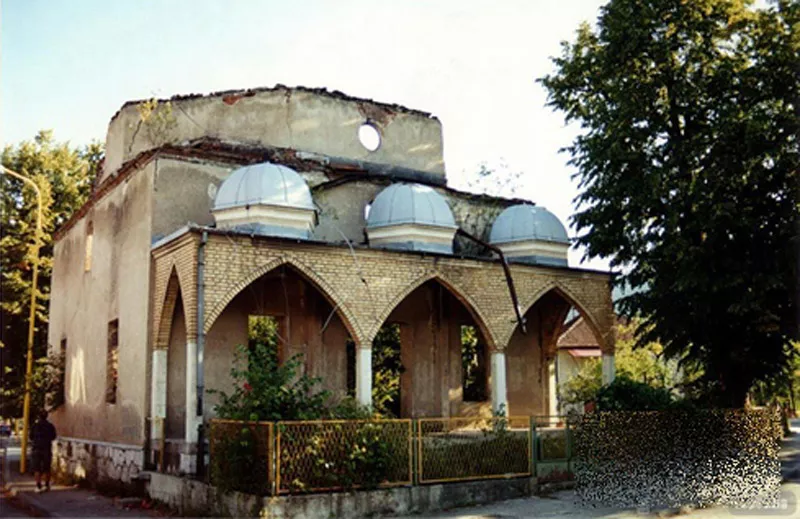
In the continuation of the trial of Ratko Mladić, Defence expert Dragić Gojković said that dozens of mosques were destroyed during the war in BiH in combat or when the Army of Republika Srpska (VRS) was not nearby, BIRN reported, as carried by the news agency Patria.
Gojković claimed that ten mosques were destroyed in combat and 84 in areas that the VRS had already left, mostly in the summer of 1992.
“That was classic chaos, uncontrolled,” said Gojković, while being cross-examined by prosecutor Arthur Traldi.
Mladić, the former VRS commander, is on trial for genocide committed in Srebrenica and several other municipalities, persecution of the non-Serb population, terrorising the citizens of Sarajevo, and taking UNPROFOR members hostage.
The destruction of religious and cultural buildings of Muslims and Croats was, according to the indictment against Mladić, part of the persecution of the non-Serb population across BiH.
The Defence expert, however, could not list which individual religious buildings were destroyed when and under what circumstances, although the prosecutor and judges repeatedly called on him to do so. The answer he repeated was that he had drawn his conclusion based on data on destroyed mosques found in a report by Hague prosecution expert Andras Riedlmayr.
After the prosecution representative showed him VRS documents indicating that at the time of the destruction of the mosques, the army was conducting operations across the Bosanska Krajina region, Gojković suggested that the army then had “other priorities,” such as breaking through the Posavina Corridor.
“Parts of units were there throughout the war... in bases, but that area was free, there were no Muslims, and what would the army do there, in those villages… There were groups of savages there, doing what they did… Now, whether they wore uniforms, I cannot speak about that,” said Gojković, who began his testimony on Monday, 10 August.
He maintained his statement that there was no “organised” destruction, suggesting that civilian authorities and police were responsible for areas that the VRS had previously “liberated.”
As evidence that the mosques were destroyed on the orders of the military and political leadership of Republika Srpska, prosecutor Traldi cited a statement by the accused Mladić that a mosque with two minarets in Tešanj could not be allowed to stand.
“I don’t know about that, nor am I interested,” Gojković replied.
The trial continues on Wednesday, 12 August.
Komentari (0)
Prijavite se za komentiranje
PrijavaJos nema komentara. Budite prvi!
Minuta
Sve →Iz drugih kategorija

High Representative Not Elected: Germans, French and British Sabotaged Americans, New Attempt at End of June

ČOVIĆ WITHOUT MERCY: How Those Who Brought Ademović to Office Created a Political Hell for Him



Sunny Saturday, quite warm



Tragedy in Albanian resort: Two minors drown












