
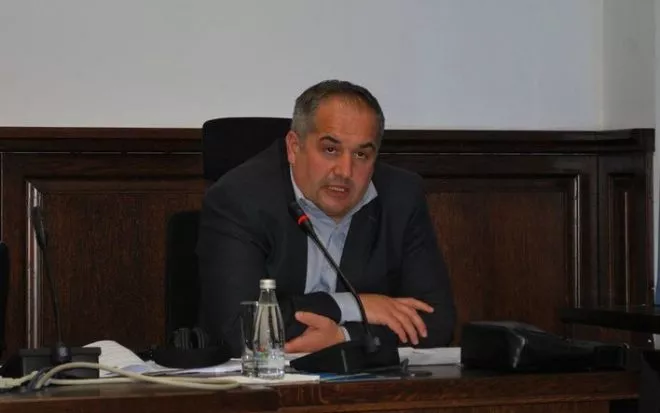
State prosecutor Ćazim Hasanspahić kept a war crimes case against HDZ BiH leader Dragan Čović in a drawer for ten years. This was established after Hasanspahić was removed from his position as prosecutor in the terrorism department last week and transferred to the organized crime department.
According to information from Istraga, the case against Dragan Čović is dated 2016. How it ended up in the files of a prosecutor in charge of terrorism instead of the War Crimes Department is not yet known. At the time the case was formed, the War Crimes Department was headed by Gordana Tadić, who would become acting chief state prosecutor a year later.
In the case against Dragan Čović, prosecutor Hasanspahić did not take any significant action, and for a certain period the case was not even recorded in the TCMS, the electronic case management system. This case, as we learn, is linked to documents previously published concerning Čović's role in the exploitation of Bosniaks detained in camps of the joint criminal enterprise of Herceg-Bosna.
As early as 2013, Federal Television published a document with a Hague mark stating that Čović requested the prison warden where Bosniaks were detained to send him labor to the Soko facility in Mostar.
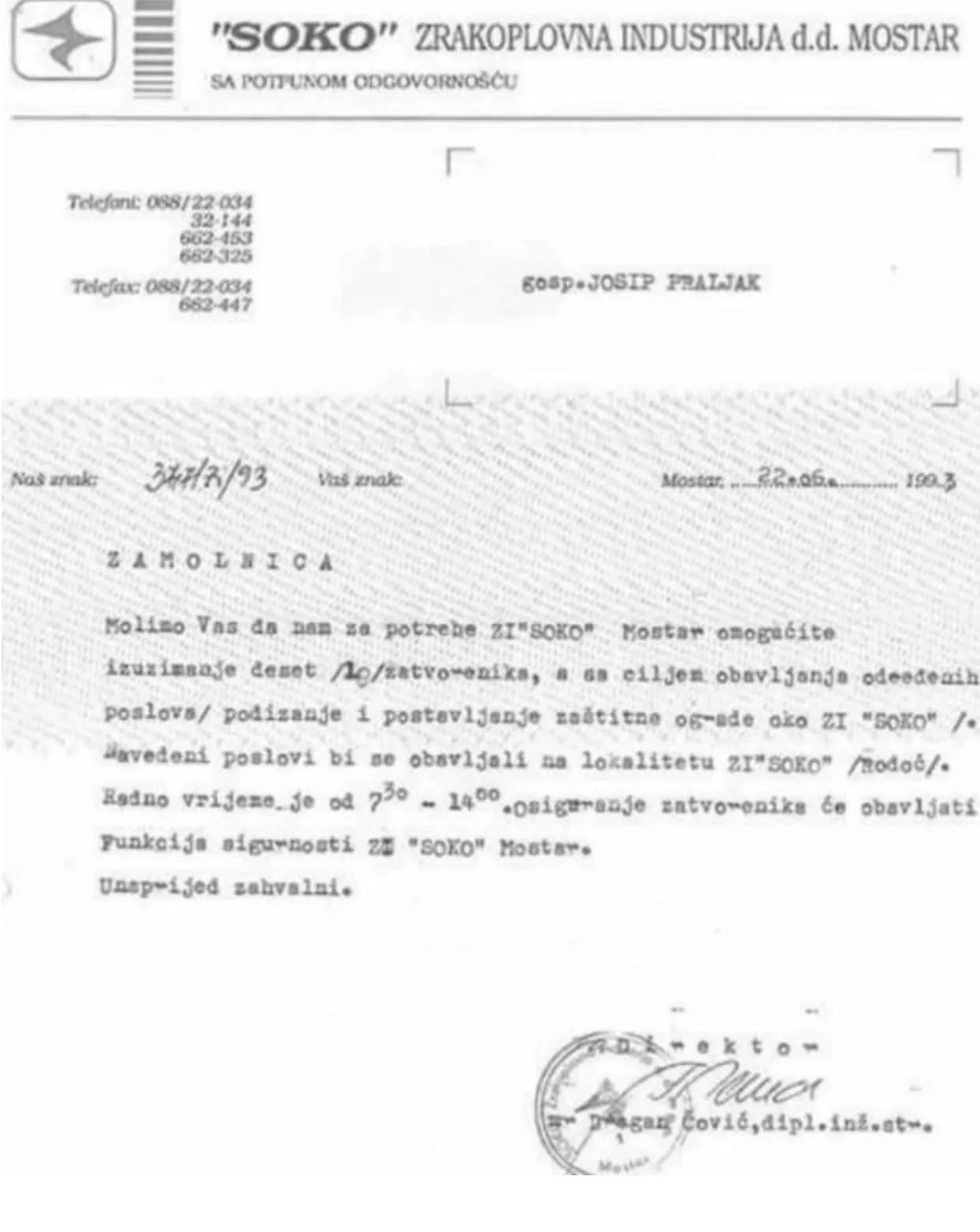
“Please enable us to take out ten prisoners for the needs of ZI Soko, with the aim of performing certain tasks – raising and installing a protective fence around ZI Soko… The security of the prisoners will be carried out by the Security Function of ZI Soko Mostar,” states the disputed document dated June 22, 1993, signed by Dragan Čović.
After that, Dragan Čović appeared on the show Nedjeljom u 2 on HRT. When asked by the editor and host Aleksandar Stanković whether the document was authentic, Čović said: ‘Possible, you will never find my signature or anything incriminating linked to me (…) everything I did from 1992 to 1995 was more than honorable.’ When it was noted that people came there forcibly and without pay, he replied that during the war “no one worked for money” and that “they did not experience any discomfort or were treated dishonorably in any way.”
A few years later, Zagreb's Novosti found several witnesses who testified about this case. Among them was Samir, who was arrested in Stolac. Members of the Croatian forces took him for a five-hour interrogation in Dretelj, after which he ended up in a barracks. He was one of about 50 Bosniak intellectuals who suffered a similar fate. In the first period, he was taken to the front line to dig trenches from which the HVO fired on the Army of BiH, daily exposing himself to danger.
“I worked at the Soko complex for at least three months. Every now and then, a few of us would be taken, we worked as needed,” said the former detainee.
At first, they cleaned the rooms and surroundings, and then he started working with a master craftsman as a glazier. During his work at the Soko complex, he experienced verbal threats from guards.
However, the BiH Prosecutor's Office never intensified work on this case.
Prosecutor Hasanspahić is also under scrutiny by the Office of the Disciplinary Prosecutor because, for the needs of prosecutor Džermin Pašić and former prosecutor Dubravko Čampara, he tracked BiH Prosecutor's Office investigators via travel orders who were working on cases of interest to Pašić and Čampara, even though they were not assigned to them.
Komentari (0)
Prijavite se za komentiranje
PrijavaJos nema komentara. Budite prvi!
Minuta
Sve →Iz drugih kategorija

High Representative Not Elected: Germans, French and British Against Americans, New Attempt at End of June

ČOVIĆ WITHOUT MERCY: How Those Who Brought Ademović to Office Created a Political Hell for Him



Sunny Saturday, quite warm



Tragedy in Albanian resort: Two minors drown












