
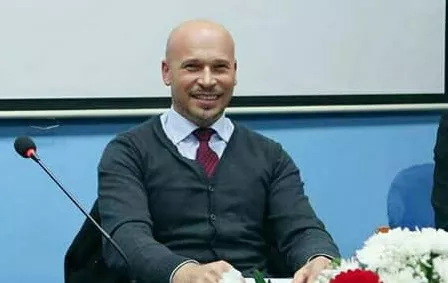
By: Dr. sci. Nermin Tursić
Since the very period of gaining sovereignty and independence of the state of Bosnia and Herzegovina, the slogan of "agreement of the peoples" was installed, which to this day has remained the basis of ethno-political action.
The internationalization of such a policy presents a particular problem, in that "BiH ethnic leaders" officially meet and negotiate with official representatives of neighboring countries with the intention of resolving internal issues in Bosnia and Herzegovina. The Republic of Turkey recently joined such an initiative. Unfortunately, this type of political concept causes immeasurable damage to Bosnia and Herzegovina and its sovereign rights, as it deprives the country of its active status in interstate (international) relations, and transfers it to ethnic communities and their "representatives".
There are two main reasons why this political practice should be abandoned.
First, the direct support of ethnic communities by neighboring countries reflects an open interference in the internal affairs of the state of Bosnia and Herzegovina and further encourages "ethnic representatives" to act in accordance with their acquired positions of political power, rather than in accordance with the constitutional and legal order. For example, instead of representing the state of Bosnia and Herzegovina and defending its interests, as per his constitutional position and the function for which he was elected along with the other two members of the Presidency, Milorad Dodik, as a member of the BiH Presidency from the RS entity, persistently tries to represent the interests of the RS entity and Bosnian Serbs, opposing them to the interests of the state of Bosnia and Herzegovina.
By constantly rhetorically invoking "entity sovereignty" and "the right of peoples to self-determination," he seeks to create a state of "cold war" between the "constituent peoples," and thus portray Bosnian society as a permanently and irrevocably divided category. He further strengthens his intentions by denying genocide, humiliating victims, and insulting the religious and national feelings of Bosniaks. In the spirit of the "Serbian World" strategy, he calls for the unification of the RS entity with Serbia, while by blocking state institutions, he seeks to portray Bosnia and Herzegovina as an "impossible state." He deliberately ignores the main goal of the "Dayton Peace Agreement" regarding the sovereignty of the state and the indivisibility of territory, as well as "Annex VII," which imperatively obliges political elites to restore a multi-ethnic society, and that, "without any territorial divisions that would have ethnic tendencies." In all these activities, he relies on the support of the official government structures of the Republic of Serbia.
On the other hand, in the name of particular political (ius particulare) goals, the "representatives" of Bosnian Croats, by supporting political instability, seek to resolve the issue of the "Election Law of BiH" by defining "legitimate representation of the people." The modality is clear. One ethnic group should elect its representatives, preferably in rounded "ethno-homogeneous electoral units" as an equivalent of a third entity.
It is clear that this demand is also contrary to the Constitution of BiH and the Partial Decision of the Constitutional Court of BiH (July 1, 2002), which states that the entity organization cannot be the subject of national homogenization, as well as the fact that the BiH Constitution specifies the constituent peoples and their rights in each of the entities (not just in one). On the contrary, the "representatives of BiH Croats" renounce Croatian rights in the RS entity in favor of realizing "Croatian rights" in the "FBiH" entity. Furthermore, the demands put forward are discriminatory and contrary to the legal legislation of the European Union, a large number of judgments of the European Court of Human Rights, as well as the Convention for the Protection of Human Rights and Fundamental Freedoms, because they violate the basic active right to vote, i.e., to "elect," while the passive right to vote, i.e., to "be elected," remains subject to ethnic prefixation. With this formulation, they seek to compromise the civic principle, claiming that it creates a "unitary" state of Bosnia and Herzegovina. In attempting to implement their demands, they rely on the support of the Republic of Croatia, which pursues an active foreign policy in this regard.
The potential involvement of the Republic of Turkey could be understood as an attempt to strengthen the negotiating positions of the "representatives of the Bosniak people," whose political demands more closely correspond with the demands of the "civic bloc of parties" advocating for the organization of Bosnia and Herzegovina on the principle of a civic state, on which all modern democratic systems are based. The fact is that there is a need for constitutional changes in the state of Bosnia and Herzegovina.
These changes should be characterized as an internal issue, take place within state institutions, have an integral constitutional character that would find solutions for establishing a functional state (which will defend the established order with the strength of its institutions), and resolve all discriminatory provisions in accordance with European legal values and achieved democratic standards in order to satisfy the interests of citizens and peoples throughout Bosnia and Herzegovina, and certainly not by partial principles of apartheid reflected in the attempt at "refeudalization" of the state and society in the spirit of the medieval principle of "cuius regio, illius religio".
The second major problem arising from the current political action is the aforementioned principle of the state's passivity in international relations. To understand this matter, it is necessary to state the fact that state sovereignty is explicitly protected by documents of international public law, such as: the "Declaration on Universal Security" (1943), the "Charter of the United Nations" (1945), the "Declaration of Principles of International Law concerning Friendly Relations and Co-operation among States" (1970), the "Final Act of the Conference on Security and Co-operation in Europe" ("CSCE", 1975). The latter document most fully defines the principle of sovereign equality of states and the explicit prohibition of interference in internal affairs, as "the right of every state to legal equality, freedom and political independence, to freely choose and develop its political, social, economic and cultural system, and the right to determine its laws and regulations." In accordance with this, legal science defines states and international organizations as the primary subjects of international public law, while "ethnic groups" are not recognized even as "sui generis" subjects of the same law, unless it concerns legitimate uprisings or similar situations.
According to the aforementioned documents, Bosnia and Herzegovina is an equal partner to all other subjects of international public law, not its peoples. The negotiations of "ethnic leaders" with officials of other countries explicitly undermine the proclaimed sovereignty. To make matters more trivial, all this happens despite the fact that there are no formal "leaders of the peoples" who could legitimately represent the interests of those same peoples in domestic and international negotiations (only presidents of parliamentary parties). Finally, let's consider the problem on the principle of reciprocity. For example, what would happen if the status of the "Serb community" in Croatia were to be resolved through trilateral meetings between the Presidents of Croatia, Serbia, and the member of the BiH Presidency from the Serb people, or if the status of Bosniaks and Croats in Serbia were to be resolved through negotiations between the Presidents of Serbia, Croatia, and the members of the BiH Presidency from the Bosniak and Croat peoples, or perhaps, if the issues of minority ethnic communities in the Republic of Turkey were to be internationalized?
Would that even be possible? Of course, it is impossible, because it is explicitly treated as an internal matter of sovereign states. Bosnia and Herzegovina, as a sovereign state, should be based on these legal principles. Internal matters should be resolved in accordance with the constitution and laws as internal sovereign rights. This implies an obligatory cessation of the practice of "humiliating" the state through "permitted" interference by neighbors in internal affairs, as well as the granting of non-existent international subjectivity to "ethnic groups." On the international stage, Bosnia and Herzegovina must be an equal subject of international public law, whose interests are represented and defended by official state representatives in accordance with international public law, and in no other way.
Komentari (0)
Prijavite se za komentiranje
PrijavaJos nema komentara. Budite prvi!
Minuta
Sve →Iz drugih kategorija

High Representative Not Elected: Germans, French and British Sabotaged Americans, New Attempt at End of June

ČOVIĆ WITHOUT MERCY: How Those Who Brought Ademović to Office Created a Political Hell for Him



Sunny Saturday, quite warm



Tragedy in Albanian resort: Two minors drown












