
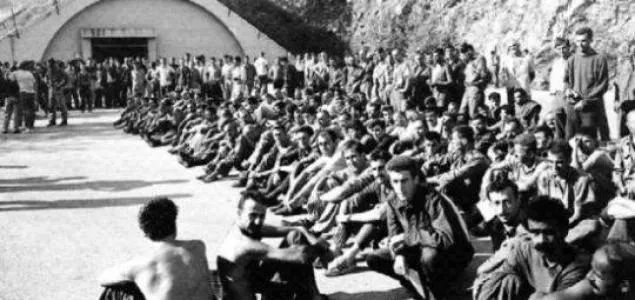
Heliodrom, south of Mostar, was a detention camp established by the criminal policy and army of so-called Herceg-Bosna in the period from 1993 to 1994. The day when Bosniaks from Ljubuški were loaded onto trucks and transported and imprisoned in the camp, from which many never returned, was August 15, reports the Patria News Agency.
The camp was located near Rodoč, in Herzegovina, which was previously used only as an HVO helipad, whose helicopter hangars and garages were repurposed into prison cells.
According to the indictment of the Hague Tribunal, HVO members began holding Bosniak men in the camp from 1993 to mid-1994. The number of prisoners was approximately around 1,800 in May 1993, falling to about 500 in June.
According to the indictment, the HVO arrested hundreds of Bosniak civilians living in western Mostar and took them to Heliodrom, and with the worsening of the Bosniak-Croat conflict, another thousand Bosniaks were arrested across Herzegovina. Although women were released, the HVO did not distinguish between civilian and military prisoners.
Prisoners were subjected to psychological and physical abuse. In the most severe cases, they were forced to walk in front of HVO forces as human shields. Guards beat them, especially if the HVO was losing on the battlefield. Some prisoners were taken for forced labor, such as digging trenches or building military fortifications, as well as collecting the bodies of dead HVO soldiers.
The current member of the Presidency of Bosnia and Herzegovina from the Croat people and leader of HDZ BiH, Dragan Čović, as the general director of the company Soko Mostar, sent a request in June 1993 to Josip Praljak, then deputy manager of the Heliodrom camp, to "for the needs of the Soko Mostar Aviation Industry, allow the exemption of ten prisoners, for the purpose of performing certain tasks."
Approval for the transfer of detainees was signed the next day by Stanko Božić, director of the Central Military Investigation Prison Mostar. As stated, "the departure of detainees for work outside the prison grounds was approved by Berko Pušić in an oral conversation with director Stanko Božić."
All this happened during the fiercest conflicts between the HVO and the Army of RBiH units in Mostar. The fact that Čović was at the head of Soko at the time speaks volumes that he was not merely a bystander in the then-called HZ HB, but was highly ranked in the hierarchy.
He remained at the head of Soko for several more years, and his influence did not diminish even after he left the director's chair.
International observers were not allowed to investigate the camp
International observers and humanitarian organizations were repeatedly denied access to complete information and all conditions of the facility. For example, on May 18, 1993, members of international organizations who visited the camp were not allowed to investigate all the rooms where the prisoners were held.
Criteria for release
According to estimates, at least 54 prisoners died in the camp, and 178 were wounded. The HVO's criteria for releasing prisoners were marriage to a Croat woman or possession of a visa and a letter of guarantee that they would leave BiH.
The State Court of Bosnia and Herzegovina has so far convicted Marko Radić, Dragan Sunjić, Damir Brekalo, and Mirko Vračević for the Heliodrom camp. They were members of the 7th HVO Brigade. They were sentenced to 25, 21, 20, and 14 years in prison.
Komentari (0)
Prijavite se za komentiranje
PrijavaJos nema komentara. Budite prvi!
Minuta
Sve →Iz drugih kategorija

High Representative Not Elected: Germans, French and British Sabotaged Americans, New Attempt at End of June

ČOVIĆ WITHOUT MERCY: How Those Who Brought Ademović to Office Created a Political Hell for Him



Sunny Saturday, quite warm



Tragedy in Albanian resort: Two minors drown












