
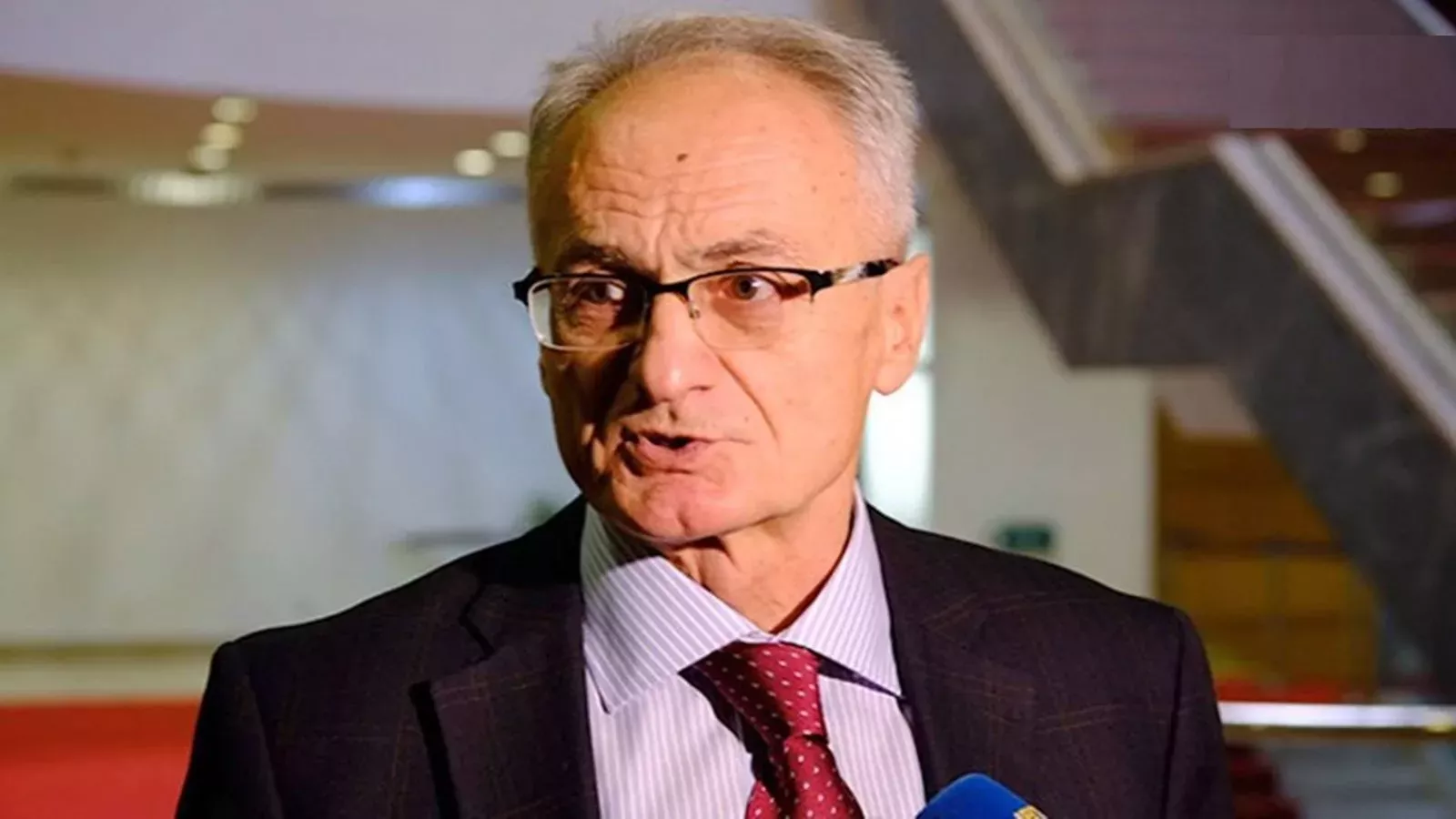
Written by: Branko Perić/Istraga.ba
We find ourselves in a state of confusion that is turning into collective concern! Friends call me and ask how Dodik's court case will end, what is happening and where we are going. As if Dodik's court case is a matter of life or death! They belong to the group of educated people who should know where the real problems of our society lie and what the solutions should be. They should believe in reason and the strength of the political leaders they have chosen. But, by all accounts, they have lost the power to understand reality and social orientation. They no longer trust their leaders. Confusion and concern are the result of lost trust in the authorities!
Our society, in the chaotic process of democratic transition and predatory privatization, has lost its social and moral foundation. Instead of creative enthusiasm, energy has been directed into the realm of politics. Party affiliation has become a business that brings unimaginable profit. This has led to moral and spiritual devastation. Today we are a society that has “spent its social and moral capital” (Emmanuel Todd).
Let us look at the frightening thirty-year results of our ruling policies: deindustrialization, corruption, the rise of mafia cartels, the cohabitation of crime and politics, political oligarchies, the collapse of democratic values, destroyed institutions, sold-off natural resources, demographic regression, the outflow of the working-age population, collapsed judicial, educational, and healthcare systems, marginalized culture, dominant politics of contestation and hatred, glorification of protectorates… There is no space for reasonable dialogue, tolerance, and political culture. Society is disintegrating in the mud of moral depravity.
Society has been brought to a state of complete economic, spiritual, and institutional collapse by the ruling policies that have been coalition partners, more or less, for thirty years. How is it possible to trust policies with such disastrous results? Another name for lost trust in the authorities is despair and lack of hope. In such a state, society falls silent. The authorities come to believe that silence and peace are signs of trust in the government. This false belief gives them even more power and seductive strength. And then, unexpectedly, a rebellion appears that spreads in all directions. This is what has been happening in Serbia for the last three months with the student protests.
Student protests are a social phenomenon that should be taken seriously and studied even more seriously. It seems that the authorities in Croatia and Bosnia and Herzegovina have become aware of this, so they recently devised and offered their citizens a boycott of retail chains, in order to direct dissatisfaction towards those whom they themselves, through their subservient policies, brought into their countries. No matter how perfidious the trick, it had initial political potential, but it will not last long. Impoverished citizens are beginning to realize that they are not able to boycott powerful monopolists because they buy what they must buy to survive. And everything they do not buy today, they must buy tomorrow. No matter how imaginative they are, citizens see that they cannot cope with the cunning of the owners of retail conglomerates who cheat them wherever they can, both on weight and quality. The deception by the authorities that they fell for could turn into a rebellion against the policies that made fools of them.
It is wrong to view the rebellion and protests of students in Serbia as an “external attack” and a “color revolution” devised by the media of foreign agencies and NGOs. External influences and NGOs have existed here for more than half a century and have probably always had some, visible and invisible, influence on shaping the government. If these influencing factors have managed to organize such massive protests, then the government is very weak and should be replaced by a better one. Of course, various political brokers, both domestic and foreign, will not miss the opportunity to use the protests for their own goals. Simply, that is a necessity of every revolution, both colored and uncolored. The government and the opposition have the greatest chances. Everything will depend on what they have learned from this rebellion and what abilities they have. Judging by the obscure and amateurish reactions, the chances are slim!
Before hasty generalizations, one should spend some time in the protest marches and listen to the energy of the young people's rebellion. They are clear that their goal is not to seize power, that there is no leader in their ranks, and that they do not want violence or the destruction of institutions. They want institutions to function, to be efficient and strong, and to act in accordance with the constitution and the law. Their demands are what the government failed to be. There is no more legitimate and clear goal. They do not want to listen every day to one man who confuses them with his words and numbers regarding matters for which he is not competent. Their demands are acceptable to everyone – to the government, to the opposition, and to those who do not think about forms of political organization. Because of this, their rebellion spills over to all citizens, and they join it. The students are no longer alone!
The student protests have succeeded because they have shaken the political power of the ruling party in Serbia. Political power has flowed to the students, but they do not want it. This has given the rebellion legitimacy and the students superiority.
Statements from government circles that they will defeat the students are a dangerous deepening of already deep social divisions. When justice and institutional accountability are demanded, no contestation is possible. These are commonplaces of responsible policies.
When laws cease to be applied, rebellion becomes law!
The authorities should know this.
Komentari (0)
Prijavite se za komentiranje
PrijavaJos nema komentara. Budite prvi!
Minuta
Sve →Iz drugih kategorija

High Representative Not Elected: Germans, French and British Sabotaged Americans, New Attempt at End of June

ČOVIĆ WITHOUT MERCY: How Those Who Brought Ademović to Office Created a Political Hell for Him



Sunny Saturday, quite warm



Tragedy in Albanian resort: Two minors drown












