
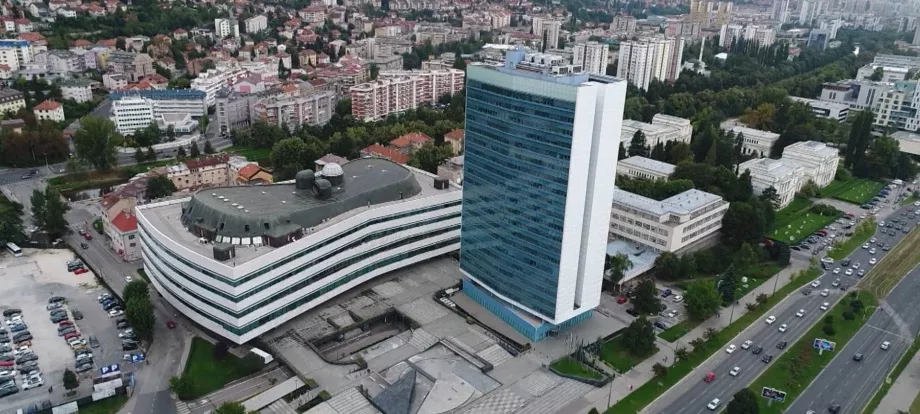
By: A. Vrabac
The issue of negotiations on amendments to the Election Law of BiH also includes limited changes to the Constitution of BiH.
While a simple majority of 22 votes is sufficient for amending the Election Law of BiH, provided there is an entity majority, a two-thirds majority of 28 representatives is necessary for amendments to the Constitution of BiH.
The SDP BiH and DF, and likely also Naša stranka, which together have a total of 10 representatives in the House of Representatives of the Parliamentary Assembly of BiH, do not wish to participate in the negotiations.
The parties that make up the government at the state level, SDA (8), HDZ BiH (5), and SNSD (5), along with their satellites (Serb Club 3), have a total of 21 representatives, meaning that seven votes are missing for the adoption of amendments to the Constitution of BiH.
The SBB, NIP, and NES, each with one representative, will participate in the talks, which is not enough.
The president of the Independent Bloc, Senad Šepić, whose party has one representative, has also been invited to the talks in Neum. The Social Democrats and the Movement for Democratic Action, as well as the DNS, each have one representative in the House of Representatives. The PDP has two and the SDS has two. Therefore, it is evident that the bloc of 10 representatives from the SDP, DF, and Naša stranka is needed for the adoption of amendments to the Constitution of BiH.
In the House of Peoples of the Parliamentary Assembly of BiH, the situation is different and it is easier to secure the necessary majority. Three votes from each of the clubs, in which the three ruling parties have a majority, are sufficient. International mediators have also emphasized the importance of the representation of parliamentary parties in the talks on the Election Law and the Constitution of BiH, and in this convocation of Parliament, there are representatives of 16 political parties.
Therefore, it is clear that an agreement cannot be reached by three parties that do not have 28 representatives, expecting support from parties that are not participating in the talks. Otherwise, the talks particularly problematize the powers and the method of electing delegates to the houses of peoples at the level of the Federation of BiH and the Parliamentary Assembly of BiH. Reducing the powers of the houses of peoples is a red line that pro-Bosniak parties cannot cross at this moment.
In the analysis prepared in 2009 by the Konrad Adenauer Stiftung foundation, "The Decision-Making Process in the Parliamentary Assembly of Bosnia and Herzegovina" from 2009, special emphasis is placed on the House of Peoples of the Parliamentary Assembly of BiH.
"Five Bosniak delegates to this House are elected by Bosniak delegates in the House of Peoples of the Parliament of the Federation of BiH. Similarly, five Croat delegates are elected by Croat delegates in the House of Peoples of the Parliament of the Federation of BiH.
Five Serb delegates are elected by the National Assembly of the RS. This method of election, i.e., linking national representation to entity affiliation, significantly undermines the representation of the interests of the entire national corpus of each constituent people.
Thus, the Parliamentary Assembly of BiH does not represent the national interests of Serbs living in the Federation of BiH, nor of Bosniaks and Croats living, i.e., registered to vote, in the Republika Srpska. Considering the national structure of BiH according to the 1991 census, it follows that almost one-third of the electorate in BiH cannot elect their representatives to this House of Parliament.
This grossly violates the principle of universal and equal suffrage, which is guaranteed by the most significant international human rights documents that, by force of the Constitution of BiH, are an integral part of our legal system. It follows that these solutions are inconsistent with the fundamental constitutional principles on human rights. Every state that signs or accedes to international conventions undertakes to harmonize its legal order with the assumed obligations. Therefore, this obvious inconsistency in the Constitution of BiH itself will have to be removed in the process of constitutional revision," the analysis states.
And now is precisely the time for BiH either to fulfill its democratic task or to continue dealing with this matter after the conducted elections and in a non-election year, when the political situation will be more relaxed than it is today.
Komentari (0)
Prijavite se za komentiranje
PrijavaJos nema komentara. Budite prvi!
Minuta
Sve →Iz drugih kategorija

High Representative Not Elected: Germans, French and British Sabotaged Americans, New Attempt at End of June

ČOVIĆ WITHOUT MERCY: How Those Who Brought Ademović to Office Created a Political Hell for Him



Sunny Saturday, quite warm



Tragedy in Albanian resort: Two minors drown












