
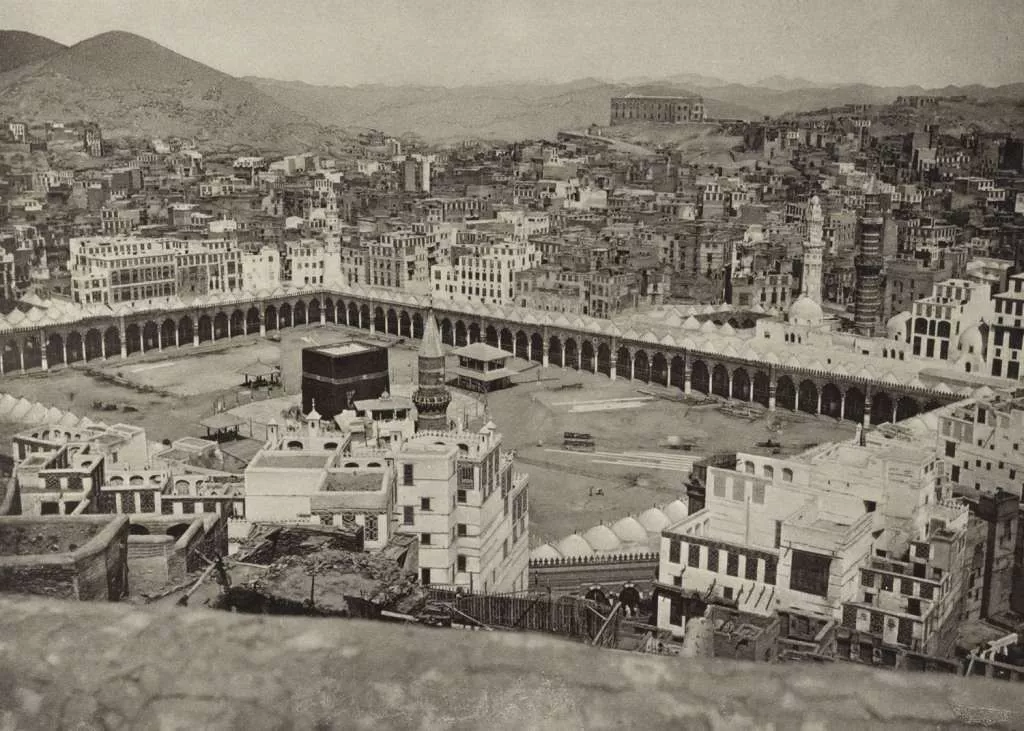
(Patria) - Tomorrow, Ramadan 20, Muslims mark the Day of the Conquest of Mecca, recalling the victorious campaign of the Prophet Muhammad, peace be upon him, who entered his native Mecca with ten thousand companions.
– There are events in history that transcend time and space. They are not just historical facts but moral lessons for humanity. One such event is Fethul-Mekke – the moment when truth, mercy, and forgiveness shone brighter than any human revenge – stated the chief imam of the Armed Forces of Bosnia and Herzegovina, Haris-ef. Hadžić, for MINA Agency on this occasion.
He reminded that the army of Muslims led by Muhammad, peace be upon him, entered Mecca in the 8th year of Hijri, and the immediate reason was the violation of the peace treaty by the Quraysh and their allies.
The Treaty of Hudaybiyyah, concluded between the Muslims led by Muhammad, peace be upon him, and the Quraysh tribes, allowed Arab tribes free choice of alliances, but it was violated when the Banu Bakr tribe, with the help of the Quraysh, attacked the Banu Khuza'ah tribe and killed twenty of their members.
Shortly before Fethul-Mekke, an event occurred that carries a powerful message for all times and for every person. Companion Hatib ibn Abi Balta'ah, out of fear for his family in Mecca, secretly sent a letter to the Quraysh to inform them about the Muslim campaign. The letter was carried by a woman, hidden in her braid. However, Allah, the Almighty, informed the Prophet Muhammad, peace be upon him, about this, so the companions, among whom was Ali ibn Abi Talib, intercepted the messenger and prevented the message from reaching Mecca.
– Hatib was not a traitor; he was a participant in the Battle of Badr, a man of great merit, whom the Prophet eventually forgave. Nevertheless, this event remains an important warning: one piece of information can have enormous consequences for the entire community – said efendi Hadžić.
He pointed out the importance of protecting confidential information.
– If it was crucial to protect confidential information in the time of caravans and secret letters, how much more important is it today, in the age of social networks, where messages, photos, and videos spread at the speed of light. Therefore, security culture today is more than ever a moral obligation of the individual. Before we publish, share, or comment on something, we should ask ourselves: can this information harm someone, reveal something that should not be public, or endanger the safety of others? – Hadžić conveyed.
He adds that history teaches us that responsibility for words and information is not just a modern rule, but a lasting ethical value.
– Sometimes one message can be heavier than a thousand words, and one post can have consequences that go beyond our intentions – emphasized Hadžić.
Speaking about the greatness and civilizational significance of the conquest of Mecca, the chief imam of the Armed Forces of BiH reminded that Mecca was the city from which the Prophet was expelled, the city where his followers were tortured, humiliated, and killed. It was the city where wars were waged against him.
– From the perspective of an ordinary person's thinking, this was a moment when many would seek revenge. The Prophet Muhammad, peace be upon him, entered Mecca with his head bowed, humbly and submissively, thanking Almighty Allah for the victory. Standing before him were the people who had persecuted him for years, and they feared the uncertainty of a possible verdict. Then, words were spoken that changed the course of history: "Go, you are free." At that moment, the victory was not just military. It was a victory of morality over revenge, mercy over hatred, and justice over injustice – conveyed Hadžić.
In and around the Kaaba, the Prophet removed the idols that surrounded this holy place, reciting a Quranic verse: Truth has come, and falsehood has vanished. With this, he not only destroyed stone idols but also the symbolism of delusion, arrogance, and injustice.
– Fethul Mekke reminds us that a person's true greatness is not in the power to punish, but in the strength to forgive. Forgiveness is not weakness – forgiveness is the pinnacle of moral strength. Fethul Mekke is therefore not just a historical event from the past. It is a lasting lesson to humanity that the true strength of society is built on justice, mercy, and forgiveness. In a time when the world often witnesses conflicts, divisions, and mistrust among people, the message of Fethul Mekke remains as strong as it was fourteen centuries ago: "The greatest victory is the victory over oneself and one's own hatred" – conveyed Hadžić.
Komentari (0)
Prijavite se za komentiranje
PrijavaJos nema komentara. Budite prvi!
Minuta
Sve →Iz drugih kategorija

High Representative Not Elected: Germans, French and British Sabotaged Americans, New Attempt at End of June

ČOVIĆ WITHOUT MERCY: How Those Who Brought Ademović to Office Created a Political Hell for Him



Sunny Saturday, quite warm



Tragedy in Albanian resort: Two minors drown












