
By: Rasim Belko
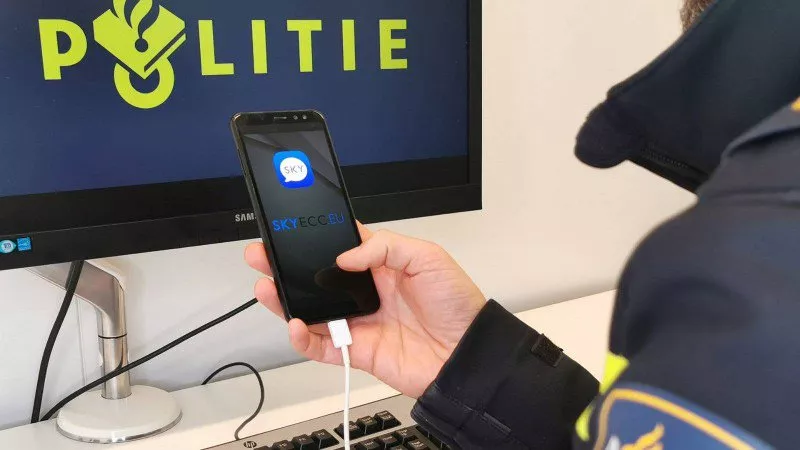
The debate about the usability of evidence collected by decrypting encrypted systems and applications like Anoma and SKY ECC continues unabated.
The Municipal Court in Tuzla, in case 03OK019233 K3, in which Beriz Kabilović and Armin Halilović were convicted of organized crime, rejected evidence obtained by decrypting the SKY application.
The explanation states: “The court considers the defense's objections to the evidence arising from the use of the Sky application to be well-founded, in the sense that the defense essentially has no opportunity to qualitatively and substantially challenge the method of collecting evidence derived from the use of the Sky application, as there is no act (in our legal system, it would be an order) based on which this evidence was obtained, regarding the evidence that arises, i.e., who collected this evidence, in what period, and by whose order, which is why the court considered that accepting such evidence would be contrary to Article 6 of the European Convention on Human Rights (ECHR) and the right to a fair trial that this provision prescribes”.
It further states that evidence obtained by intercepting Sky ECC communication constitutes electronic, or digital, evidence within the meaning of the European Convention, obtained through international legal assistance, but the question arises as to how such evidence was obtained in the requested country, the provider of international legal assistance. In this regard, it is not enough to say that the evidence was obtained through international legal assistance; it is necessary to precisely establish the source of the evidence, i.e., the method by which the document, or digital data, was obtained in that foreign country, in order to examine its admissibility as evidence in criminal proceedings and provide an opportunity for its presentation at the main trial. Otherwise, evidence obtained abroad in violation of individuals' fundamental rights could be effectively “legalized”.
The court also states: “Another important question is whether this was targeted surveillance of communications in criminal proceedings or mass surveillance, which, as a rule, is carried out by intelligence services. Even if we assume that the surveillance was initially ordered as targeted surveillance under the provisions of the Criminal Procedure Code, it undoubtedly had a mass character, considering the number of individuals whose communications were monitored and who were not under the territorial jurisdiction of the French judiciary. It is also necessary to determine whether these are proofs or data processing/traces, what protective measures have been ensured and implemented, and what are the reasons for obtaining this data, and with what suspicion, as well as the issue of transferring data to other entities and their destruction; whether the communication was monitored, who has access to such data, and whether there is access to notification mechanisms (applied to examine the legality of the measure, etc.). The fairness of the proceedings (Article 6 ECHR) requires that it be clearly specified how and on what grounds many other questions can be answered, in order to ensure respect for human rights. It is emphasized that evidence at the main trial, according to the rules of the European Court, must be presented at the main trial and subjected to criticism, because in criminal proceedings, the principle of a fair trial dictates that all evidence be presented in the presence of the accused, who must have the opportunity for contradiction, which is an important guarantee of the fairness of the proceedings”.
This is precisely what lawyer Lejla Čović recently discussed with the Patria News Agency, explaining that “these are encrypted communications that were massively hacked abroad and then provided to prosecutors in the region.
While in Western countries these messages serve as a starting point for investigations, in Bosnia and Herzegovina, according to Čović, they are often used as the main and only evidence.
“The prosecution bases indictments solely on these messages, without supporting evidence. This creates a fanfare about major investigations, while in essence, cases related to marijuana transport are mostly prosecuted, while high-level corruption is absent,” Čović explained.
The portal crimesite.com also wrote about similar problems in early October.
This portal states that in the first Sky case in the USA, Sky messages were finally dismissed as evidence.
“In the first major criminal case in the United States in which messages from the police-hacked encryption service Sky ECC were used, the prosecutor removed those messages from the file after the judge announced that they would most likely be excluded as evidence. This is evident from the court minutes that Crimesite had access to. This is a criminal proceeding in New York against former Montenegrin boxer Goran Gogić, for smuggling a huge quantity of 17 tons of cocaine.
The US authorities received Excel tables from France with messages that Gogić allegedly sent about cocaine smuggling. The prosecutor submitted to the court only two summary reports on the method of obtaining, reliability, and legal basis of the hacking operation carried out between 2019 and 2021.
The stance of courts in the European Union is similar. On August 15, 2025, the Obergericht des Kantons Zürich in Switzerland completely excluded SkyECC data as evidence. The reason is a gross violation of the principle of territoriality. French authorities used the “man-in-the-middle” (MITM) technique developed in the Netherlands, in which cryptographic keys were intercepted via invisible push messages directly from phones within Swiss territory. There was no request for international legal assistance, nor consent – it was a direct infringement on Swiss sovereignty. The result is that all related data, transcripts, and derived evidence are invalid.
This shows how countries outside the EU reject such evidence and refutes the French claim that the interception was carried out “exclusively on French servers.” In reality, hacking always affects the territory where the phone is located.
New York lawyer Joseph Corozzo, Gogić's defense attorney, has the support of Dutch lawyer Yehudi Moszkowicz regarding Sky ECC evidence.
At a hearing held on Thursday afternoon (local time), Judge Joan M. Azrack of the federal court discussed the status of Sky messages with the prosecutor. She stated that she was not yet making a final decision on their admissibility as evidence, but that she would likely exclude them – and that she no longer wished to discuss it. She sharply advised the prosecutor not to use Sky evidence, as a debate about their admissibility would create a “sideshow.”
In the end, the prosecutor agreed with the court and decided not to use Sky messages anymore.
To a further question from attorney Corozzo whether the court would ever accept evidence from Sky ECC, the judge replied that she would only consider it if witnesses from France came to explain the operation – which is not the case.
The French judicial system had previously informed the New York court that police officers or other experts could not testify about the Sky hacking. The judge wants to verify the reliability of the reports and how the police and prosecution obtained them. Dutch courts have so far been satisfied with prosecutors' explanations.
At the same time, a court in France (Cour de Cassation), the highest French court, has made two rulings this year that undermine the entire system. On June 17, 2025, the court ruled that tapping or hacking phones within an EU member state without notification or permission is illegal. Even if the interception technically goes through French servers, and the phone is temporarily outside France, the following rule applies – in EU countries, the receiving state must be explicitly notified.
This is in line with the ruling of the Court of Justice of the EU of April 30, 2024.
In summary, the judicial practice of rejecting SKY ECC and ANOM evidence is becoming increasingly common, as the presiding judges are clearly aware that such evidence can lead to convictions being overturned by higher courts. Therefore, it is possible that precisely because of this, we are seeing fewer indictments in Bosnia and Herzegovina that are exclusively based on SKY evidence.
Komentari (0)
Prijavite se za komentiranje
PrijavaJos nema komentara. Budite prvi!
Minuta
Sve →Iz drugih kategorija

High Representative Not Elected: Germans, French and British Against Americans, New Attempt at End of June

ČOVIĆ WITHOUT MERCY: How Those Who Brought Ademović to Office Created a Political Hell for Him



Sunny Saturday, quite warm



Tragedy in Albanian resort: Two minors drown












