
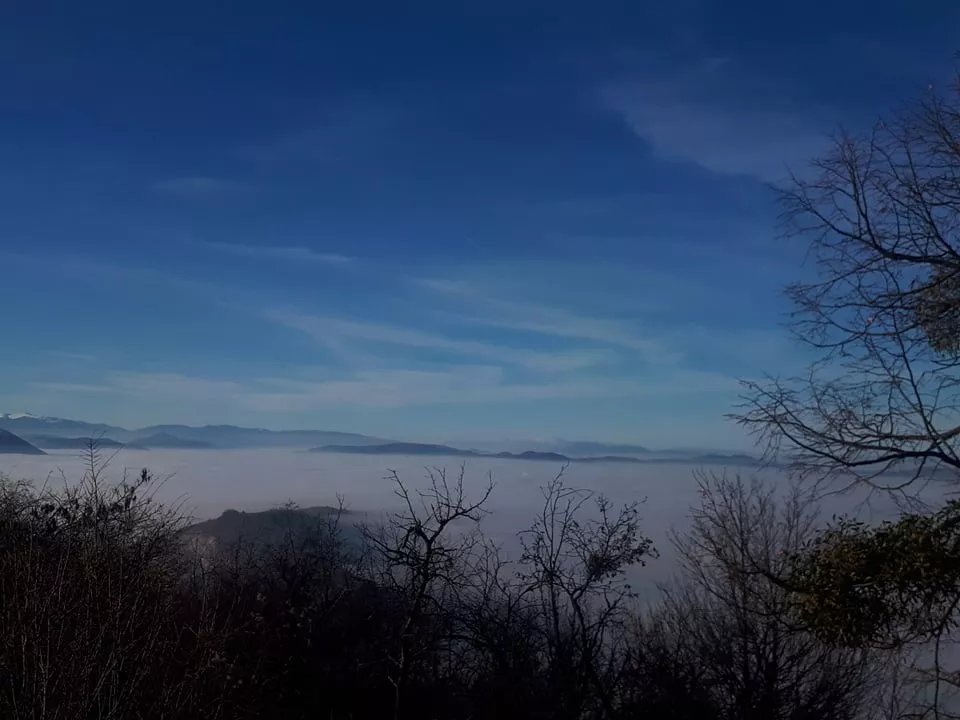
SARAJEVO, (Patria) - The Study on the Health Status of the Population, Determinants of Health and Healthcare in Sarajevo Canton in 2020, adopted by the KS Assembly on December 27 without introductory remarks by the Minister of Health of KS Haris Vranić and debate by the deputies, also lists problems with polluted air in Sarajevo. This issue becomes topical during the winter months when Sarajevo chokes in smog and dust, although polluting particles are also measured in the air during the summer months.
Analysis of the parameters monitored within the air quality monitoring indicate that PM10 and PM2.5 particles record the highest number of exceedances at all stations. PM2.5 particles constitute an average of 76% of PM10 particles on an annual level. The share changes during the year, ranging from 27% in the summer to 99% in the winter period, which indicates changes in emission sources during the summer and winter periods. PM2.5 particles can be freely called problem number 1 in Sarajevo Canton when it comes to air quality and the endangerment of human health.
The second highest number of exceedances of permissible values is hydrogen sulfide in the wider area of Ilidža Municipality. Hydrogen sulfide originates from geothermal sources in the territory of Ilidža Municipality. Measurements over three months record 39 exceedances of permissible values (allowed 7 times 5 µg/m3 during the year) for this pollutant and as many as 600 exceedances of hourly values (allowed seven times 7 µg/m3), which ranks this pollutant second in terms of the number of exceedances. An average of 4.4 µg/m3 was achieved (the allowed annual limit value is 2 µg/m3). Given the high number of exceedances in a short measurement period during 2020, which continued into 2021, it is necessary to find a technological solution for removing hydrogen sulfide from the atmosphere at emission sites.
Other monitored pollutants such as carbon monoxide, sulfur dioxide, ammonia, and nitrogen oxides do not exceed the values allowed by the regulation.
Analyses previously conducted on the content of metals, primarily arsenic, lead, nickel, and copper, which are stipulated by the Regulation, show that the content changes in the summer and winter periods, which, in addition to fluctuations in the share of PM2.5 in PM10, indicates changed emission sources of these pollutants, further suggesting that heating, i.e., the fuels used, and their quality above all, represent a serious source of problems related to air quality in Sarajevo Canton. Some parts of the Canton have problems with increased ozone concentrations during the summer months.
What is an additional problem is that one of the leading causes of mortality in KS and respiratory system diseases, but also one of the five leading diseases of the population within the general morbidity in Sarajevo Canton in 2020, are acute infections of the upper respiratory tract, hypertensive diseases, acute bronchitis and bronchiolitis, COVID-19 and otitis media and other disorders of the middle ear and mastoid.
Excessively polluted air exacerbates the symptoms of these diseases, and prolonged stay outdoors is not recommended. This particularly applies to the PM2.5 pollutant.
"Sarajevo Canton in all areas below 700 m above sea level has a serious long-term problem with this pollutant. Even during the warmer months, concentrations are significantly high, but during the winter season, there is an enormous increase in concentrations, leading to the worsening of existing diseases, especially respiratory organs, heart conditions, etc. Of course, reduced visibility also occurs, which can cause an increase in traffic accidents, property is destroyed due to soot deposition on buildings, and a number of other negative consequences that affect the quality of life of the citizens of Sarajevo Canton. All stations record exceedances of allowed tolerance values for this pollutant," the Study states.
Komentari (0)
Prijavite se za komentiranje
PrijavaJos nema komentara. Budite prvi!
Minuta
Sve →Iz drugih kategorija

High Representative Not Elected: Germans, French and British Sabotaged Americans, New Attempt at End of June

ČOVIĆ WITHOUT MERCY: How Those Who Brought Ademović to Office Created a Political Hell for Him



Sunny Saturday, quite warm



Tragedy in Albanian resort: Two minors drown












