
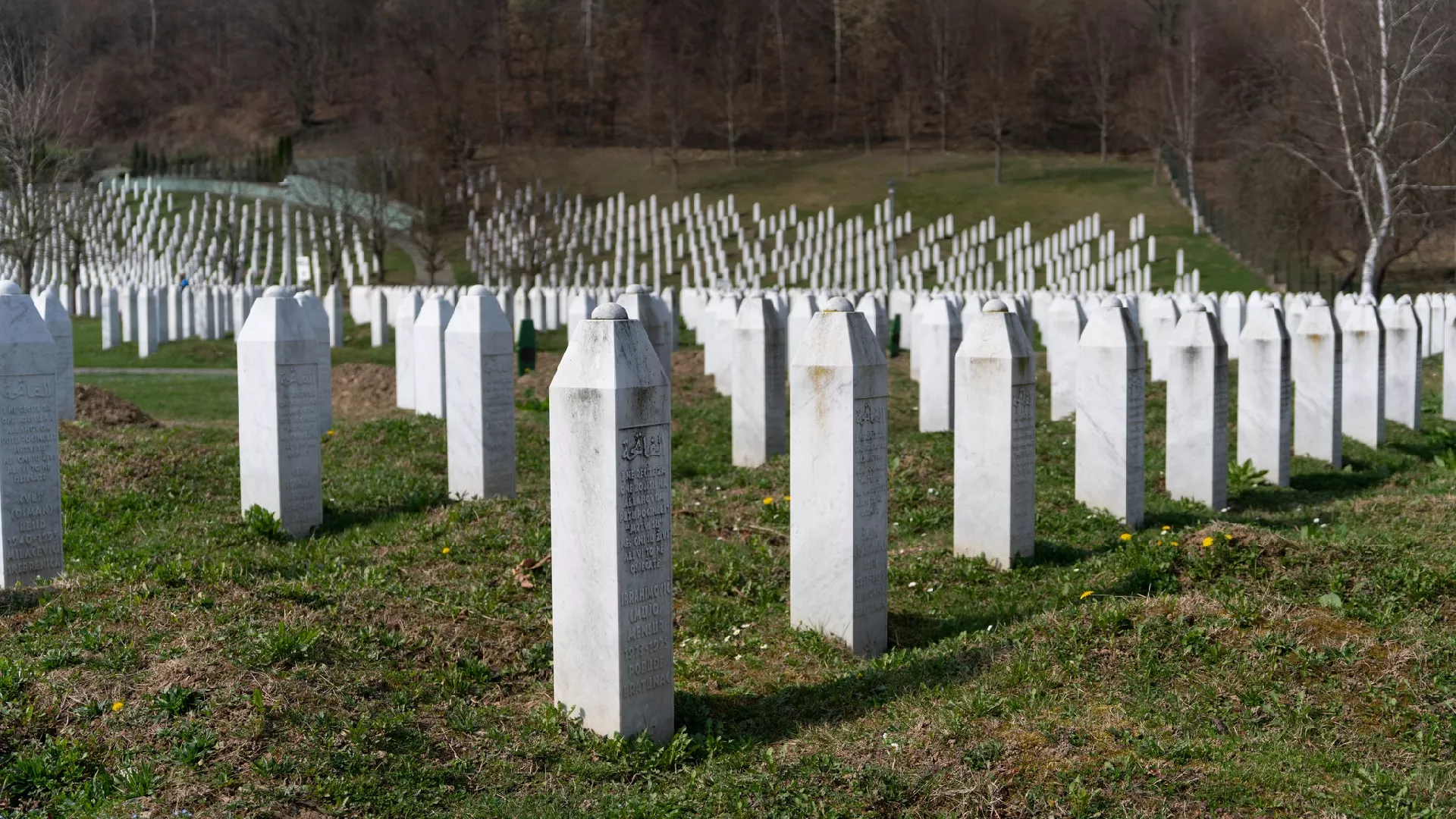
(Patria) - Any denial of the genocide in Srebrenica is unreservedly condemned, and actions that glorify those convicted of war crimes, crimes against humanity, and genocide, including those responsible for the genocide in Srebrenica, are unreservedly condemned.
This is stated in the Resolution on Srebrenica, which Radio Free Europe had access to, after it was delivered to the Ministry of Foreign Affairs of Serbia. It is not known who sent the proposal to the Ministry.
Incidentally, the High Representative in BiH, Christian Schmidt, commented two days ago on the information that the United Nations General Assembly will discuss the Resolution on Srebrenica at a session at the end of April.
The day before his meeting with the President of Serbia, Aleksandar Vučić, he told N1 that it is "not about looking back," but about ensuring that something similar never happens again in the future. He assessed that "there is enough time to discuss it".
Earlier, on March 29, Vučić himself stated that Serbia was receiving information from the UN General Assembly that this resolution would be on the agenda on April 27 as a proposal from Germany and Rwanda.
At that time, he assessed that after the adoption of such a resolution, an initiative would be launched to abolish Republika Srpska, followed by demands for war reparations from Serbia. He added that preventing the adoption of this resolution is one of the tasks he has set for the Government and himself.
Zlatko Lagumdžija, head of the Mission of Bosnia and Herzegovina to the UN, did not respond to RSE's inquiry about this document.
Representatives of associations of genocide victims told RSE that they would comment on the nature and outcome of the resolution after it is on the agenda of the UN General Assembly.
What else is in the draft Resolution?
The proposal adds that the Resolution would be adopted ahead of the 30th anniversary of the genocide in Srebrenica, which is commemorated in 2025.
In addition, the proposal calls on UN member states to preserve established facts, including through their educational systems, by developing appropriate programs, in order to prevent revisionism and the occurrence of genocide in the future.
One of the proposals is to declare July 11 as the International Day of Remembrance of the Genocide in Srebrenica, and to commemorate it every year.
The crime in Srebrenica has been designated as genocide by the International Court of Justice in The Hague.
It refers to the killing of more than 8,000 Bosniaks, as determined by the judgments of international courts, in July 1995, when the Army of Republika Srpska occupied Srebrenica.
The resolution emphasizes the importance of completing the process of searching for and identifying the remaining victims of the genocide in Srebrenica and enabling their dignified burial. It also calls for the continuation of the prosecution of perpetrators of the genocide in Srebrenica.
In addition, it calls on all states to fully respect their obligations under the Convention on the Prevention and Punishment of the Crime of Genocide, where applicable, and international customary law on the prevention and punishment of genocide, with due respect for the relevant decisions of the International Court of Justice.
The Secretary-General of the UN, as stated in the proposals, is asked to establish an information program called "Genocide in Srebrenica and the United Nations," starting with preparations for the commemoration of the 30th anniversary of the genocide, and to draw the attention of all member states, UN organizations, and civil society organizations to this resolution, in order to ensure appropriate respect.
Who was convicted of genocide?
More than 50 people have been convicted so far for genocide and crimes in Srebrenica, with sentences totaling over 700 years in prison.
Radovan Karadžić, the first president of the Bosnian entity Republika Srpska, was finally convicted in The Hague to life imprisonment for the genocide in Srebrenica, as well as for crimes against humanity and violations of the laws and customs of war in other parts of BiH.
For genocide, the former commander-in-chief of the VRS, Ratko Mladić, was also sentenced to life imprisonment at the same court.
In addition to them, Ljubiša Beara, former head of security of the VRS Main Staff, Zdravko Tolimir, former assistant commander for intelligence and security affairs of the VRS Main Staff, and Vujadin Popović, chief of security of the VRS Drina Corps, were also convicted.
Official Belgrade has for years opposed the adoption of resolutions or declarations that would label the crime in Srebrenica as genocide. Serbian officials say that a terrible crime occurred in Srebrenica, without acknowledging that it was genocide.
Nine years ago, Russia blocked the adoption of a resolution condemning the genocide in Srebrenica in the UN Security Council, which was proposed by Great Britain and supported by the US and EU countries. Serbia also lobbied against the adoption of that resolution at the time.
In March 2010, during the previous government, the National Assembly of Serbia adopted a Declaration condemning the crime in Srebrenica. In that document, the crime committed in the manner established by the judgment of the International Court of Justice is condemned, while the term genocide itself is not mentioned in the Declaration.
Komentari (0)
Prijavite se za komentiranje
PrijavaJos nema komentara. Budite prvi!
Minuta
Sve →Iz drugih kategorija

High Representative Not Elected: Germans, French and British Sabotaged Americans, New Attempt at End of June

ČOVIĆ WITHOUT MERCY: How Those Who Brought Ademović to Office Created a Political Hell for Him



Sunny Saturday, quite warm



Tragedy in Albanian resort: Two minors drown












