
By Amra Vrabac
After a secret meeting in Bakinci on January 18, the five party leaders forming the state-level government will meet in Sarajevo on Thursday to discuss laws and obligations that the BiH government must adopt and fulfill on its EU path, and before the European Council session on March 21, when a decision will be made on accession negotiations.
Even after the last meeting, from which a document with listed obligations, agreed laws, and key changes was leaked, tensions have not subsided, and the new meeting has been announced with turbulence.
Dragan Čović reported on tomorrow's state coalition meeting, and he did not exude excessive optimism today, given that all deadlines he set for the coalition's agreement over the past year have expired, and there are no results. He also came under fire from the US administration for the Southern Interconnection project. Today, he set a new deadline of two to three weeks, i.e., the end of February, for resolving issues such as the Election Law, which includes ensuring "legitimate representation" but without changing the BiH Constitution, for which they do not have a two-thirds majority in the House of Representatives of the BiH Parliament. The issue of foreign judges in the Constitutional Court of BiH, which is also a demand of Milorad Dodik, and laws that the EU has highlighted as priorities: the Law on Prevention of Money Laundering, the Law on Courts, and the Law on Conflict of Interest.
Čović did not explain today, and indeed did not allow more than two questions from journalists after his view of the political situation, why the urgent procedure for the Law on Prevention of Money Laundering was rejected in the House of Peoples of the BiH Parliament and why he refused for the Collegium to withdraw and agree on that law.
Only Konaković from the 'Trojka' commented after the fiasco in the House of Peoples of the BiH Parliament, stating that he was surprised why that law was not adopted. When you enter into government with Dodik and Čović, you don't have the luxury of expecting anything from people who have been present in BiH's political life for 25 years and who actually elected you to form a government with them. Due to Konaković and Čović's association, it is possible that he caught the HDZ's virus of optimism, but political reality shows something completely different.
The announcements and statements about tomorrow's meeting that we heard today from Mostar and Banja Luka are not optimistic. Both Čović and Dodik are coming to the meeting with their demands, in line, as they emphasize, with the agreement from Bakinci. Both remind the 'Trojka' of the audio recording from the meeting and the agreement reached.
The 'Trojka' parties have not yet taken a unified stance on certain issues and legal solutions. Naša stranka (Our Party) concluded after a session of the party's Presidency that there will be no negotiations on the Election Law until BiH obtains accession negotiations. Given the criticisms made by US diplomat James O'Brien, the Constitutional Court of BiH should not be part of the agreement. However, Konaković, who had a special meeting with him, certainly knows more about the details.
O'Brien pointed out that the Bakinci agreement is flawed and warned that there should be no further ethnic divisions or vetoes. Today, the statement of Nerim Dizdar, the current Minister of Displaced Persons and Refugees in the FBiH Government, and a member of the working group working on amendments to the Election Law, was published in the media. The demands of the HDZ are known, as is their proposal that the BiH Presidency member from the Croat people be elected in such a way that the candidate must have the highest number of votes from cantons with a majority Croat population. In practice, this means introducing a new electoral unit.
"The 'Trojka' parties have been clear that the primary goal of discussions on amending the Election Law is the implementation of the 'Sejdić-Finci' judgment and the elimination of discrimination. We will certainly not agree to a solution that would create multiple electoral units in FBiH for the election of Presidency members," said Dizdar.
When the 'Trojka' tried to hold a meeting on constitutional changes on January 27, inviting all parliamentary parties, only the coalition partners responded, who also used that opportunity to tell them that it was time to implement the Bakinci agreement and that there was no backing down.
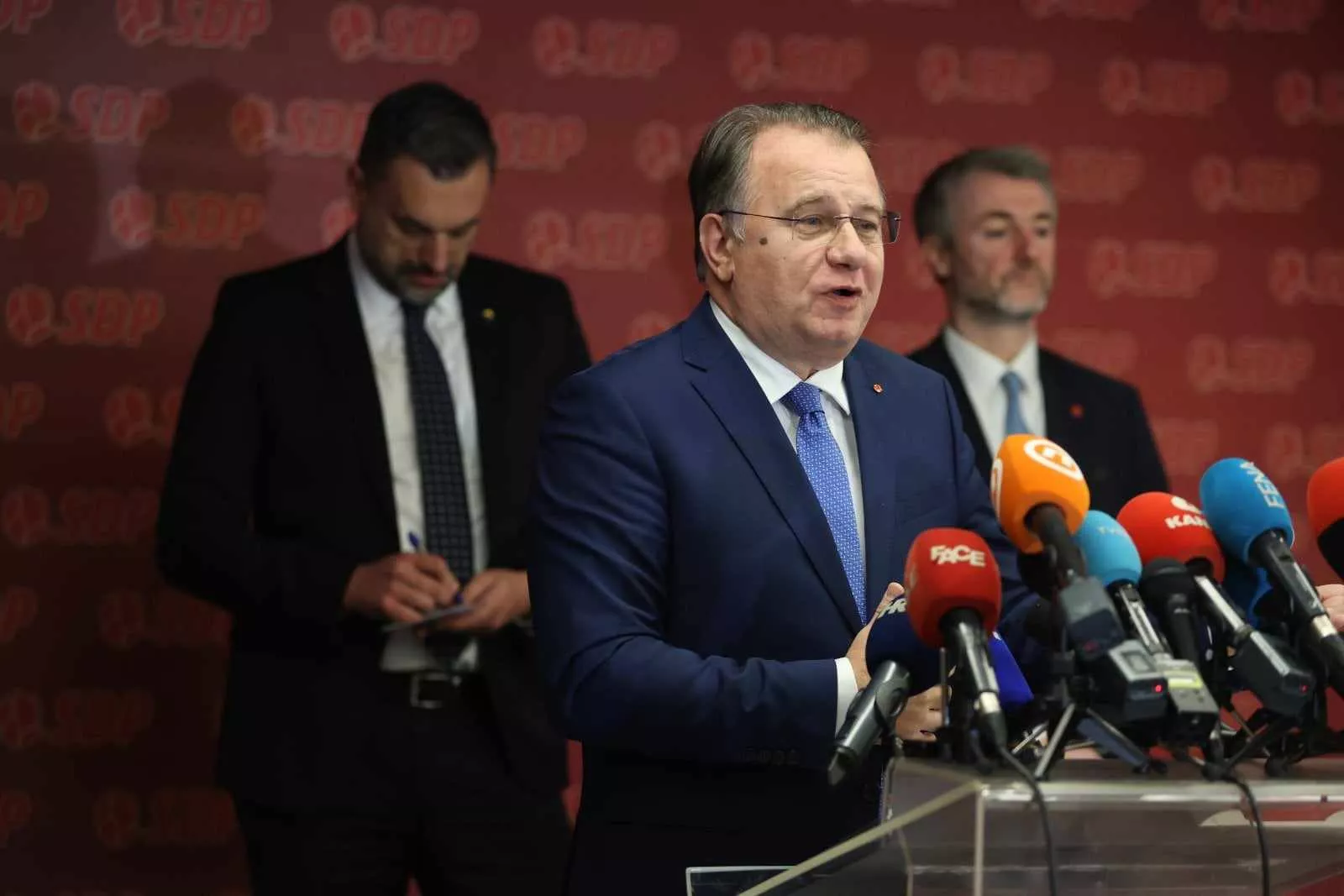
The head of SDP BiH, Nermin Nikšić, known for compromise, has not yet revealed what the 'Trojka' has gained from compromise, except for one or two ministerial positions in the BiH Council of Ministers. However, he did reveal that he is committed to compromise.
"We will continue to move towards BiH's Euro-Atlantic future, and for that, we are prepared to reach compromises. This in no way means that we will agree to anyone's blackmail or proposals that would harm citizens or peoples," Nikšić wrote on social media.
He cannot reach a compromise with Dodik on the NATO path because Dodik exclusively advocates for military neutrality, following Serbia's stance.
After Konaković's statements today, Dodik said that there will be no agreement on the three key European laws until the issue of foreign judges in the Constitutional Court of BiH and the status of the High Representative are resolved.
At this moment, BiH's European path is becoming more distant, and there are more problems, obligations, and demands.
Komentari (0)
Prijavite se za komentiranje
PrijavaJos nema komentara. Budite prvi!
Minuta
Sve →Iz drugih kategorija

High Representative Not Elected: Germans, French and British Against Americans, New Attempt at End of June

ČOVIĆ WITHOUT MERCY: How Those Who Brought Ademović to Office Created a Political Hell for Him



Sunny Saturday, quite warm



Tragedy in Albanian resort: Two minors drown












