
Written by: Dean Džebić
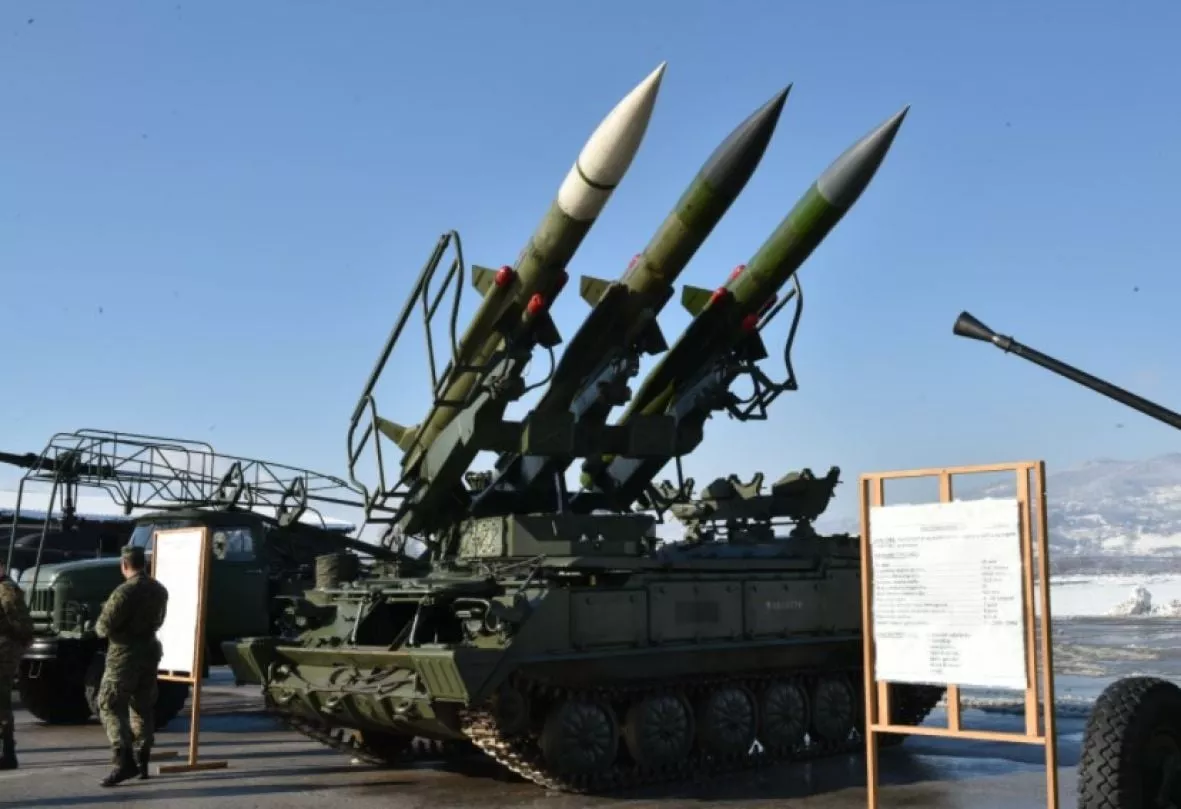
The American "Reaper," the tactical unmanned aerial vehicle MQ-9, was shot down yesterday according to available data and field photographs by a Houthi crew using the Russian air defense system (ADS) 2K12 KUB-M Kvadrat (NATO SA-6 GAINFUL). According to Houthi sources, the American drone violated the airspace controlled by Houthi forces and was subsequently shot down. The Reaper, as one of the highest quality drones, is also among the most expensive, with its price estimated at around 30 million US dollars, which further increases the cost of this Houthi move in geometric progression.
The Reaper was precisely used during the operation to eliminate Iranian Revolutionary Guard General Qasem Soleimani, which further ties this drone to the Houthis, who have shot down as many as two MQ-9s since 2015. Both hits, including this one from previous days, were achieved by the Houthis with the Kub from one of the three air defense brigades they possess: the 110th Air Defense Brigade, which defends the international airport in Sana'a, while the 140th and 160th Air Defense Brigades defend the capital city of Sana'a.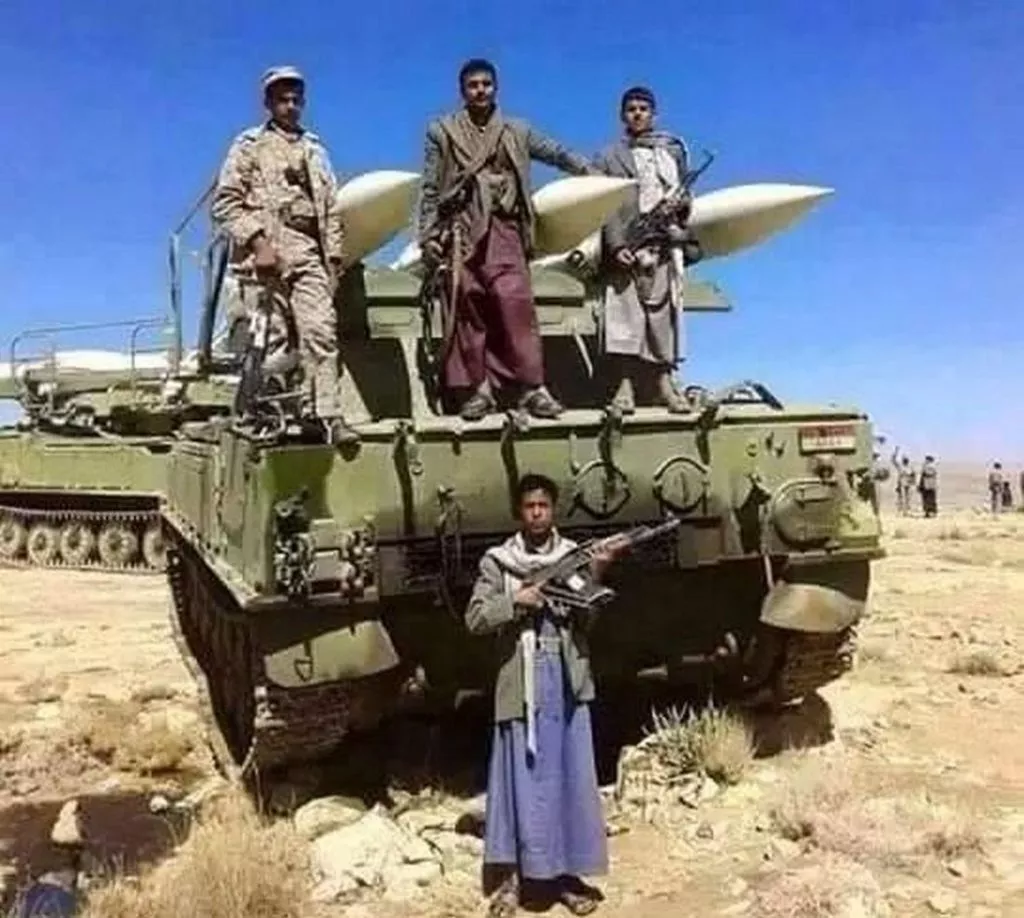
The 2K12 KUB-M/Kvadrat system as such belongs to the category of short-range systems, up to 25 kilometers for territorial air defense. As a territorial air defense system with a missile whose maximum speed reaches Mach 2.8 within a range of up to 24 kilometers, it represents more than a respectable machine. For example, within a range of 15 to 20 kilometers, when targeting an aircraft, the pilot must be more than alert to avoid encountering missiles capable of splitting a fighter aircraft in two. At ranges up to 20 kilometers, the system has a hit probability coefficient of 0.7, meaning that out of ten launched missiles, as many as seven will hit their target.
The Kub as such represents a system with limited modernization capabilities, given that the M1, M2, and M3 versions, as well as further automation, led to a new system such as the Buk. At the firing position, the battery consists of three self-propelled launchers as tracked vehicles of the 2P25M1 type, each with three missiles guided by semi-active radar homing. The system has a separate acquisition and surveillance radar 1S91 with a range of up to 75 kilometers, along with additional vehicles for reloading and transporting missiles, generators, and other equipment. The composition of the battery varies from variant to variant and from user to user.
Given that the Soviet Union produced about 500 launchers and up to 10,000 missiles, the number of users is enormous, so the missiles of this air defense system remain highly effective and sought-after goods. Like most combat systems, it first confirmed its demand in the Middle East, where during the Yom Kippur War of 1973, it inflicted the greatest losses ever suffered by the Israeli Air Force (IAF).
Namely, on the other side of Sinai, ready and waiting for the IAF attack, besides a diverse and highly integrated air defense, Egypt also had 17 batteries of the 2K12 KUB/Kvadrat system, each with three launchers. With the support of other troop protection systems and anti-aircraft artillery, the Kub, according to American data, shot down between 30 and 40 IAF aircraft, instilling fear among Israeli pilots who dubbed it the "Three Fingers of Death" due to the arrangement of missiles on the launcher.
However, five years later in 1982, the IAF would take revenge on the KUB system in the Beqaa Valley, i.e., Lebanon, when during a SEAD (Suppression of Enemy Air Defenses) operation, they destroyed 17 out of 19 2K12 KUB-M/Kvadrat systems in ten minutes without the IAF suffering a single loss.
The Kub, as the Three Fingers of Death, would operate very effectively in the Iran-Iraq War, where it also proved its capabilities, while in Iraq in 1991, it would also shoot down an American F-16 fighter. But the true fame in popular culture for this air defense system would come precisely in Yugoslavia, where it would become a counterpart to the feat of the U-2 spy plane. The Kub systems entered the JNA in the second half of the 1970s, driven by the need to compensate for the shortcomings of the existing S-125 Neva, and about 17 mobile systems were procured, deployed in units that would later undergo reorganizations.
During the period of dissolution, a good part of the systems located on the territory of Bosnia and Herzegovina and Croatia ended up in the hands of the Army of Republika Srpska. One of the units that operated the 2K12 KUB-M/Kvadrat system was the 1st Medium Self-Propelled Battery (SSRB) 155, of the VRS Air Defense Missile Brigade, which from an ambush successfully hit an American F-16C fighter with two missiles in the area of Bosanski Petrovac.
Namely, the duty pair (two fighter aircraft) was overflying the area of Western Bosnia in June 1995 with the aim of enforcing the no-fly zone over Bosnia and Herzegovina. During one of the passes, in a well-prepared ambush, Captain Scott Francis O'Grady was shot down at a distance of 15 kilometers and an altitude of about 5 kilometers, whereupon he ejected from the aircraft and began his epic ordeal, which would later be adapted for the screen.
This shootdown significantly determined the actions of the US Air Force in the areas of Bosnia and Herzegovina and Serbia. During the shootdown, the American pilots entered quite nonchalantly, which backfired on them, so this shootdown essentially initiated, in a way, the SEAD operation within the NATO operation "Deliberate Force." Thus, the flight ceiling was changed, as was the attack model, given that the US Air Force had been quite burned, and they proceeded with electronic jamming, even more detailed reconnaissance, and especially the destruction of the radar and surveillance infrastructure of the RV PVO VRS units.
During the bombing campaign against the Federal Republic of Yugoslavia, i.e., NATO operation "Allied Force," the Serbian air defense did not shoot down anything with the Kub systems except for one of its own MiG-29 aircraft in a friendly fire incident. Today, the use of this system is very significant and numerous in several countries; currently, the 2K12 KUB-M/Kvadrat represents a key air defense asset for Serbia and Bosnia and Herzegovina, with the company "Kosmos" operating in the RS, capable of overhauling and maintaining these systems. And this renewed shootdown of the American MQ-9 has shown that, as street slang puts it: "There's no punch without the old one."
Komentari (0)
Prijavite se za komentiranje
PrijavaJos nema komentara. Budite prvi!
Minuta
Sve →Iz drugih kategorija

High Representative Not Elected: Germans, French and British Sabotaged Americans, New Attempt at End of June

ČOVIĆ WITHOUT MERCY: How Those Who Brought Ademović to Office Created a Political Hell for Him



Sunny Saturday, quite warm



Tragedy in Albanian resort: Two minors drown












