
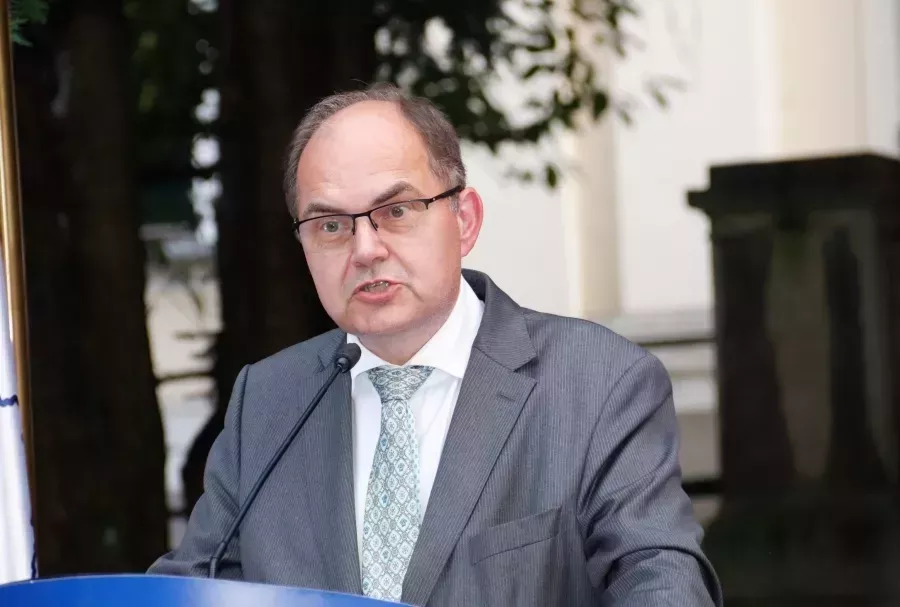
High Representative Christian Schmidt submitted a report for Bosnia and Herzegovina to the UN Security Council. In short, Schmidt complained to the UN that the OHR lacks funds, praised his imposition of the FBiH Constitution, accused SDA and DF cadres of endangering the work of the Commission for the Preservation of National Monuments, and stated that HDZ is blackmailing regarding amendments to the Election Law. At the same time, he did not mention the Kovačević ruling, while reiterating the necessity of implementing the Sejdić-Finci ruling, writes Istraga.ba.
You can read the full report here, and below are the most important details.
Local Elections
Despite numerous challenges arising from the changes introduced by my Decision on the Adoption of the Law on Amendments to the Election Law of Bosnia and Herzegovina, the Central Election Commission of Bosnia and Herzegovina successfully prepared and conducted the 2024 Local Elections, implementing the relevant laws in an independent, professional, and efficient manner. The elections were held in a peaceful atmosphere and without serious incidents.
According to preliminary analyses by the CEC and relevant observer missions, the pilot projects were successful. Overall feedback was very positive from various sides, citizens, election administration, and observer missions deployed on election day.
According to preliminary, unofficial, and unconfirmed results, ethnic parties retained their dominance in the country. Within this framework, SDA, SNSD, and HDZ won the majority of mayoral seats and achieved significant results in local councils and assemblies. However, in urban centers such as Sarajevo, Banja Luka, Tuzla, Zenica, Bijeljina, Bihać, some of these parties lost significant mayoral seats to opposition parties.
European Path and Growth Plan
The progress BiH made in European integration in the previous period after the European Union's decision to open accession negotiations and the momentum created at that time did not prevail in the reporting period. No progress was recorded in the adoption of relevant legislation during the reporting period. There was no agreement on the Law on the Court of Bosnia and Herzegovina, the Law on Border Control, the Law on Personal Data Protection, and the new Law on the High Judicial and Prosecutorial Council.
Although the Reform List for the period 2024-2027, which was necessary for the implementation of the Western Balkans Growth Plan, was ready by April 30, 2024, the Working Group informed on July 24, 2024, that the Draft Reform Agenda was not adopted by the representatives of four cantons led by SDA, who did not give their consent to the proposed draft document, despite the extended deadline by the European Commission and numerous attempts to harmonize views. Previous consensus on the Growth Plan was not reached with Republika Srpska on several issues, including the appointment of judges to the Constitutional Court of Bosnia and Herzegovina and compliance with its decisions.
Implementation of European Court of Human Rights rulings and HDZ obstruction
The commitment to reforming the BiH Constitution to implement the rulings of the European Court of Human Rights in the Sejdić-Finci group of cases has not yielded results. Political parties have not been willing to act despite repeated calls from the International Community and myself as High Representative to political actors to ensure full equality of all citizens and eliminate discrimination.
Specifically, HDZ BiH continues to link and condition any agreement on amendments to the BiH Constitution and the BiH Election Law aimed at resolving the European Court of Human Rights rulings in the Sejdić-Finci group of cases with the need to ensure the equality of the three constituent peoples, in which each constituent people is represented by "legitimate" representatives.
Secessionist policy in RS and pressure on the Constitutional Court of BiH
The authorities of Republika Srpska have continued to take active steps towards establishing a parallel legal and institutional framework outside the state's constitutional, legal, and institutional framework and undermining institutions at the state level.
The refusal of the National Assembly of Republika Srpska to appoint replacements (judges of the Constitutional Court of BiH) is not only part of a deliberate policy of blockade to put pressure on the Court and its ability to function but also an instrument of pressure on other political parties to accept the adoption of a state law that would abolish the presence of foreign judges in the Court. International judges are key to upholding the BiH Constitution and the Court's ability to overcome political obstacles and continue its work.
US Sanctions
Sanctions have had a direct significant impact on blacklisted Republika Srpska officials and affiliated companies. The political leadership in Republika Srpska is in public conflict with the banking sector of the RS entity because it is obliged to monitor OFAC. During the reporting period, the National Assembly of Republika Srpska adopted laws that would allow certain blacklisted officials to circumvent sanctions. This legislative response takes into account the ongoing use of legal mechanisms by Republika Srpska leaders to protect themselves from accountability.
I am pleased to report that the amendments (technical changes to the BiH Election Law) have received broad public support. There have been no complaints or objections to the content of the Amendments, which strictly adhered to the recommendations of the relevant international organizations.
Law on the Court of Bosnia and Herzegovina
There was no agreement on the seat of the Appellate Court (Court of Bosnia and Herzegovina). I have serious reservations about the proposals to move the Appellate Chamber to Banja Luka.
The Court of Bosnia and Herzegovina is the foundation of the division of competencies between the state of Bosnia and Herzegovina and its entities, with its jurisdiction over the entire territory of the country, and its criminal jurisdiction over offenses prescribed by entity laws when they have consequences for or threaten the values of the entire state or are otherwise of an inter-entity nature, represents the state's ultimate responsibility in defending its constitutional values and in ensuring that it functions according to a timely order, as required by the Constitution. The new Law on Courts of Bosnia and Herzegovina must not reduce the Court's jurisdiction or its functionality.
Law on the High Judicial and Prosecutorial Council
The current law (Law on the High Judicial and Prosecutorial Council) is insufficient because it makes the application of laws at the state level dependent on legislation at the entity and Brčko District levels, which can directly contradict the state's obligations and thus render the state law invalid, creating the possibility of different legislative treatment for judges and prosecutors depending on which entity they reside in.
Dodik's Trial
As stated in my previous reports to the UN Security Council, the President of RS, Milorad Dodik, has repeatedly stated that he does not recognize me as High Representative and does not consider my decisions as High Representative to be binding. His defiant stance and his illegal disregard for my decisions led to his indictment on September 11, 2023, along with the acting director of the Official Gazette of Republika Srpska, and their subsequent prosecution before the Court of Bosnia and Herzegovina. Dodik's trial continues in the Court of Bosnia and Herzegovina; he regularly appears at the trial despite the Court of Bosnia and Herzegovina being declared unconstitutional.
Srebrenica Resolution
Members of the Presidency continued to represent and express different views on several issues, including the implementation of the General Framework Agreement for Peace, the constitutional and legal order of Bosnia and Herzegovina, statehood issues, state property, NATO integration, the mandate and role of the High Representative, the Russian aggression against Ukraine, the genocide in Srebrenica and its continuous denial by the authorities of Republika Srpska, the adoption of the UN Resolution on Srebrenica, and the All-Serbian Assembly.
Both the Chairman of the Presidency, Denis Bećirović, and the member of the Presidency, Željko Komšić, at the end of April 2024, at the UN headquarters in New York, together with the Permanent Representative of Bosnia and Herzegovina to the UN, Zlatko Lagumdžija, launched an intensive diplomatic campaign to facilitate the adoption of the Resolution on Srebrenica, reminding that the denial of genocide and the glorification of convicted war criminals constitute an attack on the victims of genocide and their dignity, and that the Resolution can help reconciliation within Bosnia and Herzegovina, as well as the region. Chairman of the Presidency Bećirović was on a series of bilateral visits precisely to raise awareness about the importance of adopting the Resolution on Srebrenica at the UN.
Shortly after the adoption of the Election Integrity Package, which amended the Election Law of Bosnia and Herzegovina, Chairperson Krišto initially showed displeasure, claiming that this intervention disrupted good cooperation and synergy among coalition members at the state level. No evidence for this claim was recorded.
The House of Representatives of Bosnia and Herzegovina held four regular and two emergency sessions during the reporting period, while the House of Peoples of Bosnia and Herzegovina remained blocked and held only two emergency sessions. As a result, the legislative output of the Parliamentary Assembly of Bosnia and Herzegovina was severely limited, with a total of three laws adopted, one of which is the State Budget for 2024, and the others being amendments to the Law on the High Judicial and Prosecutorial Council and amendments to the Law on Public Procurement.
The House of Peoples of Bosnia and Herzegovina has not met regularly since March 18, 2024, when representatives of the Bosniak Caucus left the session in protest against the inclusion of the unconstitutional SDS proposal for the Law on the Constitutional Court on the agenda. The Bosniak Caucus conditioned their return to regular sessions on the removal of the controversial proposal from the agenda. The proposer eventually withdrew the proposal.
My decision of April 27, 2023, unblocked the appointment of the Government of the Federation of Bosnia and Herzegovina and helped overcome the continuous political deadlock in the entity.
The lack of agreement among the members of the Commission for Elections and Appointments in the House of Representatives of the Parliament of the Federation of Bosnia and Herzegovina on whether to propose only the highest-ranked candidate or the entire list of successful candidates to the House of Representatives of the Federation of Bosnia and Herzegovina for final voting has prolonged the appointment for over a year. Finally, the House voted for only one candidate, and on May 29, 2024, Marin Vukoja was appointed as a judge of the Constitutional Court of Bosnia and Herzegovina by a majority vote.
Although the procedure for filling the vacancy in the Court was initiated on June 27, 2022, the Constitutional Court of the Federation of BiH repeatedly reminded the House of Peoples of the urgency of filling the vacancy. The inaction of Tomislav Martinović (Croatian Democratic Union of Bosnia and Herzegovina – HDZ BiH), the Speaker of the House of Peoples, prevented the House from fulfilling its constitutional duty to appoint a replacement.
Vareš Case and Adriatic Metals
As previously reported, on November 15, 2023, the Government of the Federation of Bosnia and Herzegovina adopted the Decision on changing the purpose of forest land and temporary use of forest land for other purposes ("Decision on Forest Land"), which allows forest land to be temporarily used for purposes other than forest management, such as for the extraction of minerals and other natural resources, during the concession agreement period. The Government was supposed to fill an existing legal gap caused by the long-term absence of a Law on Forests at the Federation level, while at the same time trying to respect the Prohibition of Disposal of State Property and enable the realization of important investment projects. After the Constitutional Court made a ruling that the decision was found to be inconsistent with Articles I/1, I/2, and VI/5 of the Constitution of Bosnia and Herzegovina, and was declared null and void. The Government of the Federation of Bosnia and Herzegovina annulled the contested decisions on August 14, 2024, and forwarded them to the company "Adriatic Metals" for action in accordance with the law.
Federal USKOK
While the Government of the Federation of Bosnia and Herzegovina adopted a decision on premises where a special department could operate at an emergency session on October 2, the Federal Ministry of Justice, led by the Croatian Democratic Union of Bosnia and Herzegovina (HDZ BiH), announced its intention to amend the law in a way that would weaken special departments by reducing the scope of crimes these departments would deal with, especially regarding corruption offenses in the canton. This would prevent special departments from addressing a significant potential source of corrupt practices.
Mostar
The controversy surrounding the construction of the Mevlana Intercultural Center at a disputed location in Mostar continues. The Mevlana Intercultural Center in Mostar is seen by the Croatian political group, including the Croatian Democratic Union of Bosnia and Herzegovina (HDZ BiH), as a strategic move to establish a Bosniak presence in the predominantly Croatian western part of the city.
Obstruction from RS
By rejecting laws, policies, and decisions at the state level, the authorities of Republika Srpska present themselves as defenders against alleged external threats and protectors of Serbian interests in Bosnia and Herzegovina. The intention of this narrative is to gain exclusive political and economic power within the entity and reduce state control. Such defiance and rhetoric distract voters from the failures of the authorities of Republika Srpska.
The practice of inappropriate political interference in police operations has not decreased during this reporting period.
Cultural Institutions
These institutions, established before the signing of the Dayton Peace Agreement, perform public interest tasks for the state and its citizens under the laws of the (Socialist) Republic of Bosnia and Herzegovina. However, the current state of their management structures is alarming and poses an immediate threat to their functioning in the near future.
Seven cultural institutions of special importance for Bosnia and Herzegovina are the National Museum of Bosnia and Herzegovina; the Historical Museum of Bosnia and Herzegovina; the National and University Library of Bosnia and Herzegovina; the Museum of Literature and Theatre Arts of Bosnia and Herzegovina; the Library for the Blind and Visually Impaired of Bosnia and Herzegovina; the Film Archive of Bosnia and Herzegovina; and the Art Gallery of Bosnia and Herzegovina.
Since the signing of the Dayton Peace Agreement, the legal status of these cultural institutions has been disputed, with parties based in Republika Srpska questioning the validity of the laws by which they were established, opposing their registration as state-level institutions, and challenging their financing from the budget of Bosnia and Herzegovina. As a result, these institutions operate without permanent management – directors, executive and supervisory boards, relying on temporary appointments by the Government of the Federation of Bosnia and Herzegovina to avoid closure. This has limited their ability to perform important legal, administrative, and logistical tasks essential for their smooth functioning.
The situation is most critical at the National and University Library, which has no director or any other authorized person. The previous director retired on September 6, 2024, leaving employees in a very difficult position without a responsible person to perform and authorize the most basic tasks essential for its functioning. On October 9, 2024, the staff stopped providing services to the public, and the Library ceased operations.
As a result of a joint letter from the international community to the Parliament of the Federation of Bosnia and Herzegovina dated February 27, 2024, expressing concern that the Radio and Television of the Federation of Bosnia and Herzegovina has been operating with only one of the four members of its Supervisory Board for over 10 years, and urging the Parliament to fulfill its obligation and appoint board members so that this body, part of the public RTV system board, can function properly, the Parliament of the Federation announced a competition for four members of the Supervisory Board of the Radio and Television of the Federation of Bosnia and Herzegovina on July 1, 2024. Interviews with candidates for members of the Supervisory Board of the Radio and Television of the Federation of BiH were canceled on October 2, 2024, due to a lack of quorum in the Joint Working Group for Appointments of the Parliament of the Federation of Bosnia and Herzegovina. Attempts to schedule a new interview date are ongoing.
The independence of the Commission for the Preservation of National Monuments is threatened because two of its members are active in political parties and have been elected to cantonal assemblies as such. (Faruk Kapidžić, Sarajevo Canton Assembly and Zoran Mikulić, Herzegovina-Neretva Canton Assembly).
OHR Lacks Funds
Although the Office of the High Representative has faced a significant reduction in its budget and staff over the past few years, its remaining tasks have not proportionally decreased. The organization's current annual operating budget is €5.8 million. Budget collection remains a challenge, and approximately €600,000 of the budget is expected to remain uncollected in the current operating period. As previously stated, the Russian Federation suspended its contribution to the Office's budget in February 2022, and this remains its position. The Office employs 75 local and 20 international staff, 16 of whom are deployed in Sarajevo, regional, and field offices.
To achieve progress in the 5+2 Agenda, it is imperative to maintain a strong and effective Office of the High Representative. Its ability to fulfill its assigned responsibilities depends heavily on the allocation of necessary resources. The current financial situation is not commensurate with the goals set by the Peace Implementation Council Steering Board and could jeopardize the achievement of the OHR's stated mandate.
Komentari (0)
Prijavite se za komentiranje
PrijavaJos nema komentara. Budite prvi!
Minuta
Sve →Iz drugih kategorija

High Representative Not Elected: Germans, French and British Sabotaged Americans, New Attempt at End of June

ČOVIĆ WITHOUT MERCY: How Those Who Brought Ademović to Office Created a Political Hell for Him



Sunny Saturday, quite warm



Tragedy in Albanian resort: Two minors drown












