
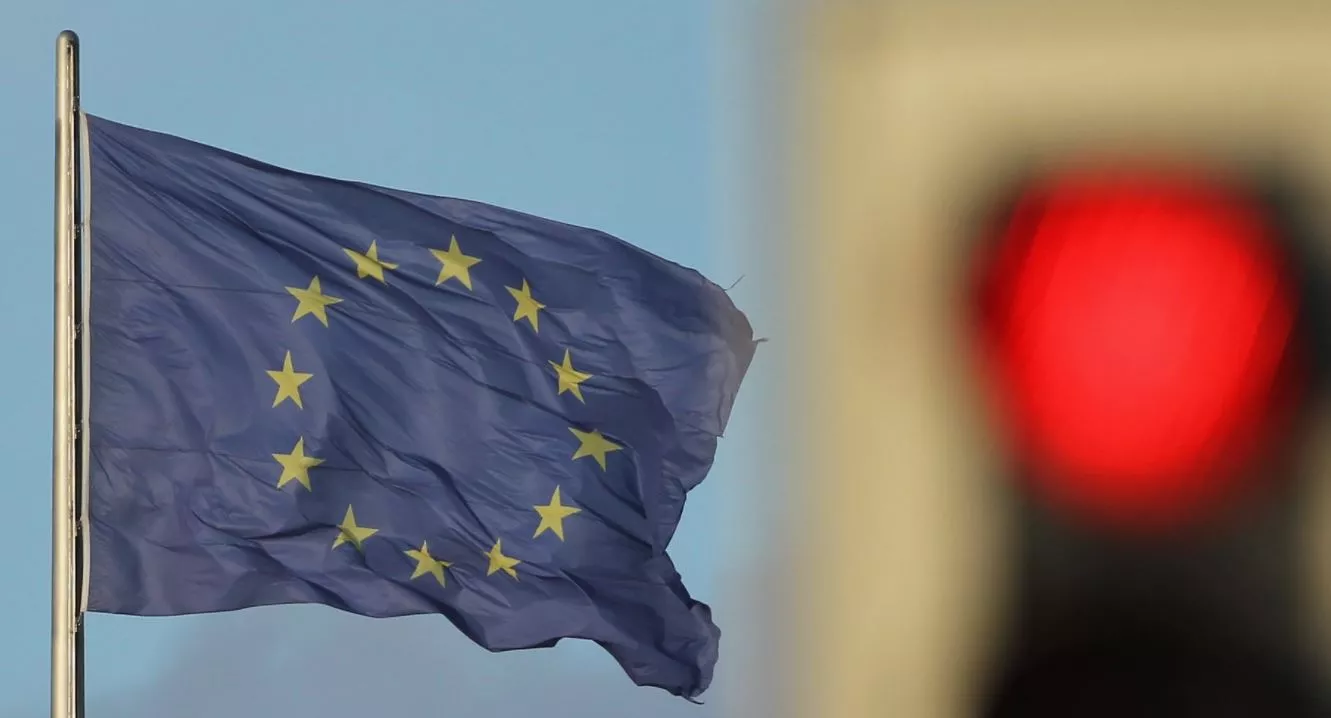
SARAJEVO, (Patria) - On Monday, November 15, a session of the EU Council for Foreign Affairs will be held, where the situation in BiH will be discussed. The Assistant to the UK Foreign Secretary, James Cleverly, announced yesterday in a debate in the British Parliament that the Foreign Secretary will also seek a discussion in NATO on the situation in BiH.
The Special Envoy of the US President for the Western Balkans, Gabriel Escobar, at the end of his visit, announced sanctions against officials in BiH.
In an interview for BHRT, Escobar said after his visit to Banja Luka that he does not speak openly about sanctions because he does not want people to spin them.
"I do not want it to be said that the Republika Srpska will be sanctioned, because the people in this region have suffered enough," he stated.
The uttered sentence that 'sanctions are on the table' translated means that all schemes have been made and the picture has been rounded off regarding potential individuals, but also companies that, by supporting policies that undermine the Dayton Peace Agreement, have worked in their favor.
This is not exclusively about public enterprises, but also private ones, and the schemes of 'tender grandmasters' are also on the table.
But what are EU sanctions?
Restrictive measures or "sanctions" are an important tool of the EU's Common Foreign and Security Policy (CFSP). The EU uses them as part of an integrated and comprehensive policy approach that includes political dialogue, complementary efforts, and the use of other instruments at its disposal.
Sanctions aim to bring about a change in the policies or behavior of those to whom they are applied, with the goal of promoting CFSP objectives. They can be applied to governments of non-EU countries due to their policies, entities (enterprises) that provide the means for implementing the policies being sanctioned, groups or organizations such as terrorist groups, and individuals who support the policies being sanctioned, who are involved in terrorist activities, etc.
They are designed to minimize, to the greatest extent possible, negative consequences for those who are not responsible for the policies or activities that led to the adoption of sanctions. The EU makes a particular effort to mitigate as much as possible the consequences for the local civilian population or legitimate activities in or with the country concerned.
All restrictive measures adopted by the EU are fully in line with obligations under international law, including those relating to human rights and fundamental freedoms. In 2004, the Political and Security Committee established some basic principles for the use of sanctions, their implementation, and the measurement and monitoring of their impact.
These basic principles are included in the "guidelines on the implementation and evaluation of restrictive measures" first adopted by the Council in 2003, and reviewed and updated in 2005, 2009, 2012, and 2017.
The main objectives of adopting sanctions are to protect the EU's values, fundamental interests, and security, preserve peace, strengthen and support democracy, the rule of law, human rights, and the principles of international law, and prevent conflicts and strengthen international security.
What does the resolution on joint EU-US cooperation envisage?
Incidentally, the European Parliament resolution of 6 October 2021 on the future of EU-US relations calls for enhanced coordination regarding the use of restrictive measures, including sanctions in the field of human rights, and encourages the Council to include a corruption component in the EU's global human rights sanctions regime; it calls on the EU and the US to coordinate their sanctions policies whenever possible and useful.
This resolution envisages closer cooperation between the EU and the US and considers that the EU should cooperate more with the US and renew the strategic partnership regarding the countries of the Eastern Partnership and the Western Balkans in order to build resilient, prosperous, and democratic multi-ethnic societies there capable of resisting the disruptive influence of both local and external authoritarian forces; it recalls that the stability of the Western Balkans and the Eastern Partnership countries is a matter of peace and security for that region and the EU.
"The significantly increased coordination of the US with the EU in providing support to the Western Balkan countries on their path towards European integration and EU membership is welcomed; it considers that regular institutionalized coordination between the Foreign Affairs Council and the US Secretary of State in this regard and regarding other foreign policy issues would improve transatlantic dialogue and cooperation on foreign policy issues of common interest and encourage further convergence of political views at the transatlantic level; it recalls its proposal to create a transatlantic political council for systematic consultation and coordination on foreign and security policy, led by the Vice-President of the Commission / High Representative and the US Secretary of State and based on regular contact with political directors; it calls for strong EU leadership and effective coordination with the US to counter initiatives aimed at redrawing borders and similar subnational initiatives to deepen ethnic division and segregation, as well as the issue of Chinese investments and financing throughout the region and their impact on democratic governance and the environment; it emphasizes the importance of close cooperation and coordination between the EU and the US in combating state capture, corruption, organized crime, external interference, and attacks on media freedom, and promoting the rule of law, thorough reforms, good neighborly relations, and reconciliation, and the goal of Euro-Atlantic integration," the Resolution states.
Considering all the above, it can be concluded that the next steps regarding sanctions will depend on what Escobar recorded after his visit to BiH, as well as the arrival in BiH of Derek Chollet, who is in charge of special tasks for US Secretary of State Antony Blinken.
Incidentally, US diplomat James O'Brien, in charge of the sanctions process, was in Brussels in recent days.
Komentari (0)
Prijavite se za komentiranje
PrijavaJos nema komentara. Budite prvi!
Minuta
Sve →Iz drugih kategorija

High Representative Not Elected: Germans, French and British Sabotaged Americans, New Attempt at End of June

ČOVIĆ WITHOUT MERCY: How Those Who Brought Ademović to Office Created a Political Hell for Him



Sunny Saturday, quite warm



Tragedy in Albanian resort: Two minors drown












