
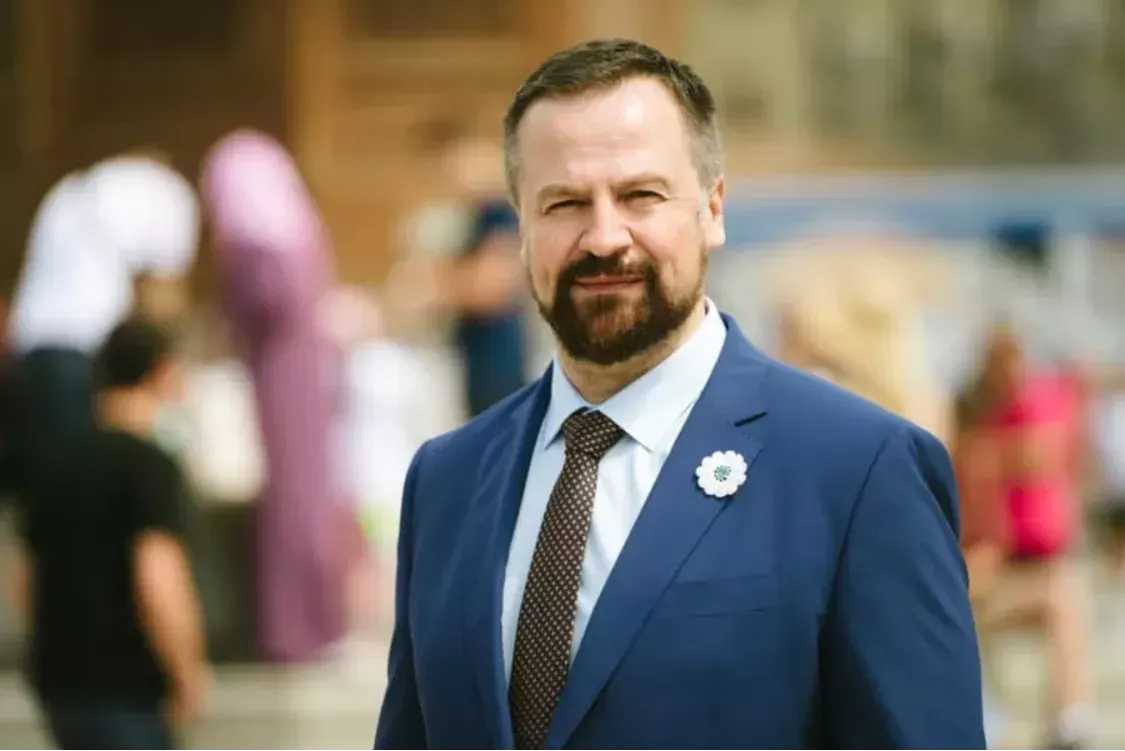
By Muamer Bandić
How did we Bosniaks, people who love this country, who against all odds managed to survive the war that caught us completely unprepared and defend the state, end up in such a situation, becoming political marginals in our own country during peacetime? And in a country where, according to the last census in 2013, we make up just over half of the population. If we look at the election results from the last General Elections in 2022, we can similarly claim that about half of the votes came from the Bosniak electorate.
Absence of vision, goals, and unity in Bosniak politics
First, I would place the complete absence of clear and systematized national ideas and goals, as well as a clear ideological narrative lost between the importance and role of Islam in our daily lives and a clear vision of the state of Bosnia and Herzegovina, as a possible cause of this situation. On the BiH political scene, we have a broadly dispersed group of political parties that are roughly divided into those that adhere more or less to Islam and Islamic tradition. And this would be the most superficial and fictional division in our case between the Bosniak right and left.
Of course, if we were to delve into the actual policies of the parties we perceive as right or left, we would see that it is difficult to speak of a right or left in the European political context, but rather of populist political ideas, leaning slightly more towards the religious tradition of Bosnia and Bosniaks (fictional right) and slightly more towards secular, modern political ideas (fictional left).
Interestingly, in both cases, the nominal political goal is the same: a sovereign and independent Bosnia and Herzegovina, a state of equal citizens and peoples. However, in today's political reality, the greatest intolerance and hostility is precisely between these pro-Bosnian political entities. Moreover, it is far greater than towards the open enemies of our common state. Why is that so? The answers to this question are very simple: 1. because they are fighting for the same voters; 2. because they are fighting for political positions that, in our distorted, ethnically-based political system, belong to Bosniaks; 3. because only among Bosniaks in BiH is there true political plurality.
The completely homogenized Croatian and Serbian political agents skillfully exploit this situation, and through political bargaining, they have skillfully created a situation where they are the ones who choose suitable Bosniak representatives in power, regardless of how many votes each received. In doing so, the suitable ones get nothing but a few well-paid positions, have no vision of what to do there, nor the political power to change anything or any red lines they won't cross.
As we have seen, they are even willing to sit at a table with an open denier of genocide while he curses their dead, and then talk about cooperation and a European future. The question arises whether these suitable Bosniaks are traitors willing to trade national interests for a position, or if they are such egoistic and arrogant people, so preoccupied with their personal interests that they do not even understand what is happening around them, thus so readily accepting the assigned role of useful idiots?
Negative selection
If we look back at our post-war period, it can be said that the political scene for the past 30 years has been dominated by the "right" political current (SDA), with a few electoral flashes from the "left" (SDP). Therefore, this second possible cause of today's political situation falls more on the shoulders of the right, i.e., SDA, as the strongest party among Bosniaks, than the left.
And that second cause of this situation is the continuous negative selection of cadres both within SDA and SDP, as the two strongest ideological opponents among Bosniaks, where for decades suitable, rather than capable, people have been favored. So today, instead of a new generation of young, smart, capable, and pro-European cadres who would lead these parties and manage political processes in BiH, we have been watching the same old, worn-out, and empty populists for three decades, and we have parties that are mere statist actors in the political life of Bosnia and Herzegovina. And then we all wonder why citizens are no longer interested in politics, why our youth are leaving, and why our political strength is so fragmented that only a small number of political parties, dependent on Bosniak votes, barely cross the cantonal borders where they originated.
This same negative selection is responsible for the chronic dysfunctionality and impotence of our state institutions today, because for decades incapable people have been appointed to lead these institutions, who were concerned with themselves, not their jobs: building and strengthening the institutions they lead. Meanwhile, the enemies of this state have managed to seize key positions within the system and have closed off any possibility of institutional action against their destructive policies. So today, faced with open secessionist actions, we can only pull the sleeve of the High Representative and beg international actors to do something, so that society does not sink into complete anarchy.
Ignorance or betrayal?
Thus, politically disoriented and fragmented, we face the current political moment in which Croatian and Serbian agents, in a synchronized and joint effort, are attacking the Constitutional Court, the last institution of Bosnia and Herzegovina over which they do not have political control. The goal of Croatian policy is to change the election law, which would make Bosnia and Herzegovina the only country in the world with an ethnically based electoral system, thereby legalizing the existing apartheid, while the goal of Serbian policy is to take over state property by the entities, so that the Republika Srpska entity would take over the most important attribute of BiH's statehood, its property.
While this process is underway, the imposed representatives of Bosniaks are writing letters, talking about cooperation and European integration, cynically laughing in our faces, openly lying to the people, and it seems to me they do not grasp the seriousness of the situation we are in amidst the current geostrategic realignments on the world political stage. In the last such realignments (World War II and the fall of communism), Bosniaks lost, on both occasions, approximately 10% of their population. Judging by the current political relations and disunity among Bosniaks, it is an understatement to say that we are again unprepared, divided, and disoriented. Moreover, we are once again showing that we are our own worst enemies.
I don't know how else to explain that someone cooperates with and finds justifications for undisguised ideologies of evil, which for the umpteenth time are attacking our homeland and our existence? I don't know if we should openly call these useful pawns of our enemies traitors, so that they open their eyes and realize what kind of world we Bosniaks live in? And it is completely irrelevant to our current marginalized political status whether they are traitors or if "political prostitution" with ideologies of evil is merely a result of ignorance, because the results are ultimately the same: weak Bosniaks and a weak state of Bosnia and Herzegovina!
Komentari (0)
Prijavite se za komentiranje
PrijavaJos nema komentara. Budite prvi!
Minuta
Sve →Iz drugih kategorija

High Representative Not Elected: Germans, French and British Sabotaged Americans, New Attempt at End of June

ČOVIĆ WITHOUT MERCY: How Those Who Brought Ademović to Office Created a Political Hell for Him



Sunny Saturday, quite warm



Tragedy in Albanian resort: Two minors drown












