
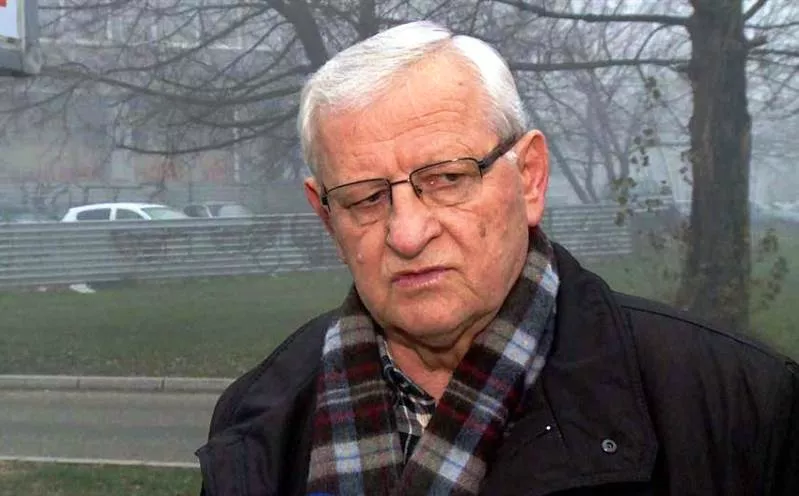
SARAJevo, (Patria) - Academician Dr. Mirko Pejanović, Professor Emeritus at the University of Sarajevo and former member of the Presidency of the Republic of Bosnia and Herzegovina (1992-96), on the occasion of the 29th anniversary of the independence referendum and March 1st, Independence Day of Bosnia and Herzegovina, writes about the importance of this historical event in his article “Referendum on Independence: A Turning Point in the Historical Development of Bosnia and Herzegovina's Statehood”. We are publishing his article in full:
Bosnia and Herzegovina restored its statehood at the end of World War II at the First Session of ZAVNOBiH in Mrkonjić Grad in 1943.
From 1945 until 1990, Bosnia and Herzegovina developed its state capacities, like other Yugoslav republics.
During 1990, the first multi-party elections were held in Bosnia and Herzegovina, and a peaceful transition from one-party to multi-party rule was carried out. The majority in the multi-party parliament of Bosnia and Herzegovina was won by the Party of Democratic Action (SDA), the Croatian Democratic Union (HDZBiH), and the Serb Democratic Party (SDS). These parties established multi-party government in 1991, thus taking responsibility for the future social development of Bosnia and Herzegovina.
When the discussion on the political future of Bosnia and Herzegovina opened in the Assembly of Bosnia and Herzegovina during 1991, in the historical context of the dissolution of the Yugoslav federation, a full inter-party consensus on the state-legal status of Bosnia and Herzegovina could not be established between the three ruling parties: the Party of Democratic Action, the Serb Democratic Party, and the Croatian Democratic Union.
The Serb Democratic Party, then led by Radovan Karadžić, did not respect the historical development of Bosnia and Herzegovina's statehood up to that point. This party considered Bosnia and Herzegovina an administrative creation that could not be a sovereign state outside of Yugoslavia in any form. The Serb Democratic Party was implementing Milošević's plan to create Greater Serbia.
In such socio-historical circumstances, the Party of Democratic Action and the Croatian Democratic Union, along with five opposition parties: SK – Social Democratic Party, Alliance of Reform Forces, Liberal Party, Democratic Socialist Alliance, and the Muslim-Bosniak Organization, initiated a decision in the Assembly of Bosnia and Herzegovina, based on the opinion of the Arbitration Commission of the European Community, known as the Badinter Commission, to conduct a citizens' referendum.
The decision on a republican citizens' referendum was made in the BiH Assembly on January 25, 1992, with the aim of allowing citizens to freely and democratically express their will on the sovereign and independent status of the state of Bosnia and Herzegovina. The citizens' referendum was held on February 29 and March 1, 1992.
64% of citizens registered on the state voter list participated in the referendum. Of all citizens who participated in the referendum, 99% voted in favor of the referendum question.
The referendum question was: “Do you support a sovereign and independent Bosnia and Herzegovina, a state of equal citizens, the peoples of Bosnia and Herzegovina – Muslims, Serbs, Croats, and members of other peoples living in it?” The question was formulated in full accordance with the principles of the First Session of the State Anti-fascist Council of the National Liberation of Bosnia and Herzegovina. This reaffirmed the idea of ZAVNOBiH, according to which Bosnia and Herzegovina, with its multi-ethnic structure, is a state of its citizens and, at the same time, a state of its equal peoples.
The highest turnout of citizens in the referendum was in multi-ethnic Bosnian-Herzegovinian cities. In these cities, Croats, Bosniaks, Serbs, and others living in Bosnia and Herzegovina participated in the referendum proportionally to their numbers. The will of the citizens of BiH expressed in the referendum marked a turning point in the historical development of Bosnia and Herzegovina's statehood towards gaining sovereign and independent status.
After the results of the citizens' referendum were confirmed in the report of the Republican Commission for the Implementation of the Referendum, as well as in the report of the Observation Mission of the European Parliament, international recognition of Bosnia and Herzegovina followed.
The countries of the European Community recognized Bosnia and Herzegovina on April 6, 1992. Subsequently, the United States of America and other countries of the world did the same.
A special event was Bosnia and Herzegovina's admission to membership in the United Nations on May 22, 1992. With this act, Bosnia and Herzegovina gained its international legal subjectivity and became a subject of international law.
Bosnia and Herzegovina did not have the historical fortune to implement the referendum results in peace. But it had the fortune that the defense of Bosnia and Herzegovina during the aggressive war against the independent state of Bosnia and Herzegovina was led by a patriotic, multi-ethnic, and politically united Presidency of the Republic of Bosnia and Herzegovina.
The three-and-a-half-year war was stopped by the Dayton Peace Agreement in 1995. With this peace agreement, the great powers of the world and the European Union confirmed the international legal subjectivity and integrity of the state of Bosnia and Herzegovina.
Based on the implementation of the Dayton Peace Agreement, with the help of the international community and the European Union, Bosnia and Herzegovina is undergoing the historical process of integration into the European Union and NATO in the first two decades of the 21st century.
For Bosnia and Herzegovina, the issue of all issues is the acceleration of integration into the European Union, so that it can be admitted to the European Union by the end of the third decade of the 21st century. Over 75% of citizens in both Bosnian-Herzegovinian entities want this.
If a citizens' referendum on Bosnia and Herzegovina's membership in the European Union were to be held in a few years, citizens would certainly turn out for the referendum and support EU membership. They are aware that EU membership brings the rule of law, security, and economic prosperity.
Let us wish Bosnia and Herzegovina new successes on the path to integration into the European Union.
Happy Independence Day of the state of Bosnia and Herzegovina!
Komentari (0)
Prijavite se za komentiranje
PrijavaJos nema komentara. Budite prvi!
Minuta
Sve →Iz drugih kategorija

High Representative Not Elected: Germans, French and British Sabotaged Americans, New Attempt at End of June

ČOVIĆ WITHOUT MERCY: How Those Who Brought Ademović to Office Created a Political Hell for Him



Sunny Saturday, quite warm



Tragedy in Albanian resort: Two minors drown












