
There are sufficient legal, political, scientific research, as well as moral and human arguments to launch an initiative for a referendum on the secession of Srebrenica from the smaller BiH entity, announced the Institute for Research of Genocide, Canada, reports the Patria News Agency.
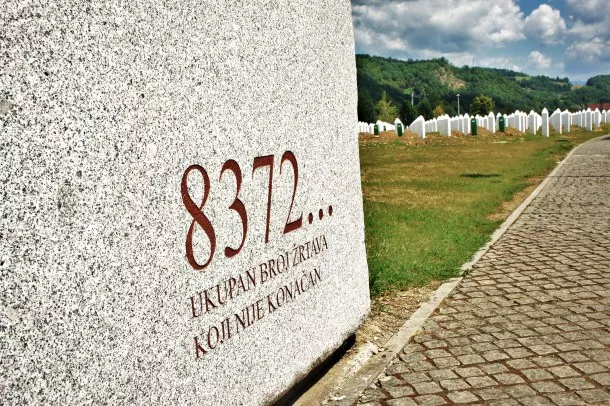
In July 1995, the UN safe zone of Srebrenica became the largest killing field in Europe after World War II, where over 8,000 men, women, and children were brutally murdered.
After that, through the Dayton Agreement, the perpetrators of genocide were rewarded with 49 percent of the territory of Bosnia and Herzegovina, the so-called "Republika Srpska", which also included and placed Srebrenica under their so-called sovereignty, thus rewarding the aggressors with authority over the victims of genocide in Srebrenica.
The Dayton Agreement and the so-called "Republika Srpska" established by that agreement were built on the genocide committed in Srebrenica. Without the genocide in Srebrenica, there would be no Dayton Agreement, and therefore that agreement is illegal and invalid. The so-called "Republika Srpska", formed by the Dayton Agreement, is therefore a genocidal creation without any legal basis.
Since they are based on genocide, the researchers of the International Expert Team of the Institute for Research of Genocide, Canada, reject both the agreement and the so-called "Republika Srpska".
According to the Charter of the United Nations, they were obliged to protect their member, the Republic of Bosnia and Herzegovina, from aggression and genocide, not to reward the perpetrators of genocide with the territory of the victim state of aggression.
International and national courts have legally ruled on the genocide in Srebrenica. The US Congress and Senate, the Canadian Parliament, the Australian Parliament, the European Parliament, and the parliaments of more than 20 countries have politically confirmed the genocide in Srebrenica through their decisions.
Research teams from the most renowned world research institutions have scientifically proven the genocide in Srebrenica. The Chief Prosecutor of the Hague Tribunal, Carla Del Ponte, and the President of that court, Judge Theodor Meron, confirmed that genocide occurred in Srebrenica during their appearances before the UN Security Council, just under a month before the tenth anniversary of the 1995 Srebrenica genocide.
On February 27, 2007, the International Court of Justice delivered its decision in the case of Bosnia and Herzegovina v. Serbia, in which the International Court of Justice ruled: "That Serbia violated its obligation to prevent genocide, which it was obliged to do under the Convention on the Prevention and Punishment of the Crime of Genocide, relating to the genocide committed in Srebrenica in July 1995."
The court confirmed that the army and police of the so-called "Republika Srpska" committed genocide and that Serbia had an obligation to prevent it. The surviving victims, descendants of victims, and witnesses of the genocide continue to be oppressed by the aggressors and perpetrators of genocide in Srebrenica and Bosnia and Herzegovina.
Genocide researchers, members of the International Expert Team of the Institute for Research of Genocide, Canada, believe that no one can dispute the right of the municipality of Srebrenica to call a referendum on secession from the constitutional-legal system of the smaller Bosnian-Herzegovinian entity created by the legalization of the results of aggression and genocide.
This right is guaranteed to Srebrenica primarily by the judgment of the International Court of Justice against Serbia and the genocidal creation of Republika Srpska, the judgments of the Hague Tribunal, the decisions of the parliaments of the world's most influential countries, research teams from the most renowned research institutions in the world, and the Law on Local Self-Government, which grants municipalities the right to a referendum on issues concerning local communities.
As genocide researchers, we believe that there are sufficient legal, political, scientific research, as well as moral and human arguments to launch an initiative for a referendum on the secession of Srebrenica from the smaller BiH entity, according to the statement from the Institute for Research of Genocide, Canada, signed by Emir Ramić.
Komentari (0)
Prijavite se za komentiranje
PrijavaJos nema komentara. Budite prvi!
Minuta
Sve →Iz drugih kategorija

High Representative Not Elected: Germans, French and British Sabotaged Americans, New Attempt at End of June

ČOVIĆ WITHOUT MERCY: How Those Who Brought Ademović to Office Created a Political Hell for Him



Sunny Saturday, quite warm



Tragedy in Albanian resort: Two minors drown












