
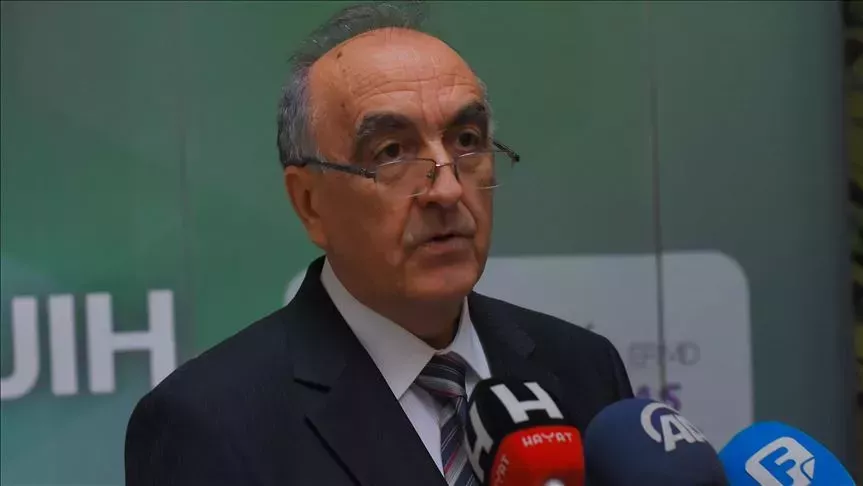
By: Enver Halilović
Fundamental theoretical doctrinal postulates of all ethno-nationalisms in Bosnia and Herzegovina and towards it are: (1) Bosnia and Herzegovina is a tri-national state; (2) a nation is an ethnic category; (3) Bosnia and Herzegovina as a tri-national state is possible only as some form of territorial federation of nations. These are the crucial ideological postulates of all forms and types of ethno-nationalisms in Bosnia and Herzegovina. They permeate each other and are ideologically and politically demanding.
Ethno-nationalism is a political form of ethnocentrism. The political goal of every ethnocentrism is the unification of a nation into one state, the absolutization of the ethno-political goal. The ethno-national political goal justifies the use of all means in its achievement.
Ethnocentrists perceive national ethno-characteristics as some form of their unchangeable natural, biological properties, timeless, mutually exclusive, irreconcilable with the ethno-characteristics of another nation. The characteristics of a nation are the result and expression of its own ethnogenesis, which has not had and does not have any historical influence or any extra-national contribution. Ethnocentrism is one of the fundamental conservative populist and ethno-statist ideologies of the modern era.
All forms of intra-Bosnian ethno-nationalisms are of the same profile with significant differences in content and intensity. Their ultimate practical political goal and outcome is the disappearance of the state of Bosnia and Herzegovina. They say: the state of Bosnia and Herzegovina is a tri-national state; the nations of Bosnia and Herzegovina are Bosniaks, Serbs, and Croats; the state of Bosnia and Herzegovina, at this moment, should be constitutionally and politically organized on a federal administrative ethno-territorial principle: a republic, a sub-state, an entity, the future will do its part to annex these ethno-territorial units to their motherlands and thus achieve the ultimate goal of pan-national unification, i.e., consolidation. With the annexation of the Croatian and Serb federal units to Croatia and Serbia, a part of Bosnia remains for Bosniaks.
Are the three ethnic groups, three communist-Dayton peoples, Bosniaks, Croats, and Serbs, called nations? It is very unlikely that the aforementioned three concepts, ethnic group, people, nation, which are completely different in content, are identified and used as synonyms. The state of Bosnia and Herzegovina is called a multinational, more precisely, a tri-national state. The ethnic groups of Bosnia and Herzegovina, its peoples, are treated and called nations. The ultimate strategic goal of all ethno-national ideologies in Bosnia and Herzegovina is the creation of their own national state without other nations or with a number of members of another nation that is politically irrelevant and negligible.
The three constitutional, constituent groups of one, common people (Bosnians), Bosniaks, Bosnian Serbs, and Bosnian Croats, have ethnocentric ideologies of varying degrees of development and political articulation, which is a result of different historical and current political influences. At the lowest level is, if it exists at all, Bosniak ethnocentrism. Bosniaks, for now, do not even have a formulated thought, a project of their own state that would include any territory without Bosnian Serbs and Bosnian Croats. Unlike them, pan-Serb and Croatian ethnocentrists have a historically enduring ideology of "their" territories in Bosnia where there are no Bosniaks, but also no Bosnian Croats in the territory of Bosnian Serbs, and vice versa. The current political situation in Bosnia and Herzegovina is a consequence of this ideology.
The current government of Republika Srpska has entered into a general conflict with Bosnia and the democratic international community, on the project of ethnocentric Serbian ideology of irredentist secessionism, the separation of RS as a Serb state from Bosnia and Herzegovina and its annexation to the Republic of Serbia. Annexation to Serbia is the second step, it is less publicly politically, declaratively, exposed, due to the expected political resistance from the world towards this step. Pan-Serb ethnocentrism in Bosnia and Herzegovina operates on the demand to restore the status of RS in BiH in accordance with the Dayton Constitution of BiH. When this goal is achieved, a prerequisite is created for some form of its annexation to Serbia.
Bosnian Croats are, in ethnocentrism, halfway between Bosniaks and Bosnian Serbs. They, formally constitutionally, at this moment, administratively do not have their own entity, but they have a very influential party ethno-political autonomy, both in the Federation of BiH and at the level of state institutions and bodies. At this moment, they are trying to transform party ethno-party autonomy into administrative ethno-territorial autonomous federal unit. The first step of their ethnocentrism in Bosnia/Bosnia and Herzegovina is the creation of such an entity, the creation of an entity that Bosnian Croats had under the name of the wartime para-state Herceg Bosna. Therefore, for a long time, the pan-Croatian political demand has been to change the election law of Bosnia and Herzegovina for the Presidency of BiH and the House of Peoples on the principle of so-called legitimate representation, so that a Croatian entity/republic/sub-state can be legitimately formed in the state of BiH.
Their political separatism, which will start with ethnically separate voter lists, should lead to the creation of a Croatian national territorial, administrative-political, entity/Croatian republic/sub-state in Bosnia and Herzegovina, which in the second step, after political and international affirmation, will somehow be annexed to the Republic of Croatia.
This study presents the undeveloped idea of a civic constitutional order of Bosnia and Herzegovina as an alternative democratic response to the undemocratic anti-Bosnian projects of Serb-Croatian ethnocentrism in and towards Bosnia and Herzegovina.
I. Federalism Towards the Disappearance of Bosnia
1. Nations in Yugoslavia and constituent-constitutional ethnic communities, peoples, in Bosnia and Herzegovina are not the same
The starting theoretical postulate of all doctrinal and politically ethnocentric ideologies in and against BiH is that Bosnia and Herzegovina is a tri-national state, of Bosniaks, Serbs, Croats. With this postulate, Croatian doctrinal ideologues claim that Bosnia and Herzegovina is a specific case compared to other states formed by the disintegration of Yugoslavia on two principles. First, because it is allegedly the only state among the former Yugoslav republics that is ethnically non-mononational. Second, because in terms of political organization, it is the only federation. All other states, republics of former Yugoslavia, including Kosovo, are, in terms of the relationship between nation and state, ethnically mononational states, and in terms of state organization, unitary states, only Bosnia is not ethnically mononational, but tri-national, and only it, because it is not ethnically mononational, is not unitarily politically organized. Here are the formulations of Bosnian specifics compared to other republics of socialist Yugoslavia: (1) "Bosnia and Herzegovina is not a nation-state, but a three-nation state." (2) "There are good reasons to consider it (BiH, added E.H.) an undissolved residue of the disintegrated federation, i.e., a preserved federal relic"** of socialist Yugoslavia.
On the theoretical postulate of Bosnian-Herzegovinian tri-nationality, Croatian federalist separatists derive the political demand for a territorial federal/consociational political and constitutional organization of Bosnia and Herzegovina and present it as practically necessary and mandatory. On this basis, pan-Croatian separatist political practice arises, both from the authorities of the Republic of Croatia and from the nominal representatives of Croatian political parties in BiH, blackmail and threats (a) to the survival of Bosnia and Herzegovina as a state and (b) to its entry into full membership in the EU. If Bosnia does not change the election law to enable the political visibility of the tri-national composition of Bosnian society, there will be no constitutional changes or social progress. Dayton's Bosnia and Herzegovina should be territorially and politically transformed into a pure federal state of three nations.
The theoretical identification of the alleged tri-nationality of Bosnia and Herzegovina with the multinationality of Yugoslavia is completely incorrect, both in historical and legal-political terms. There are significant ethno-historical and political differences between the ethnic groups in BiH, which Croatian and other national ideologues call nations, and the nations of Yugoslavia, which prevent their coherent theoretical or practical political identification. There are at least four significant differences between the nations of Yugoslavia and the ethnic groups in BiH, which all its ethnocentrists call nations. The first significant difference between Yugoslav nations and ethnic groups that all ethno-national politicians call nations is in the form of their political existence in Yugoslavia and in Bosnia and Herzegovina. Yugoslav nations had a republican form of statehood; ethnic groups in Bosnia, which ethno-nationalists call nations, do not have a republican political-state form of existence, nor can they have one, considering their mutual ethnic and historical political differences. Bosnian ethno-nationalists call ethnic groups nations not because they truly are, but to enable them, under that name, some form of national administrative-territorial political organization in the form of an entity/republic/federal unit and the like.
The second significant difference between Yugoslav nations and Bosnian ethnic groups, which all national ideologues call nations, is that the nations of Yugoslavia entered it as ethno-territorial particularities. They did not arise from the political ethno-cultural fragmentation of Yugoslavia, as the constitutional-constituent ethnic communities, "peoples" and "nations" in Bosnia and Herzegovina arose. Before being incorporated into Yugoslavia, Yugoslav nations had some form of ethno-territorial political, state existence. All of them had some level/degree of statehood before entering or being incorporated into the Kingdom of Serbs, Croats, and Slovenes, later the Kingdom of Yugoslavia. Some had stronger, some weaker political autonomy within the states in which they existed until then, within the Austro-Hungarian or Ottoman empires. Serbia was even a sovereign nation-state.
Ethnic groups in Bosnia and Herzegovina, throughout history, whether called peoples or nations, have never had separate ethno-territorial political forms of statehood. Republika Srpska, which sounds similar in name to the form of existence of Yugoslav nations, is a product of violence, created on ethnic cleansing and genocide, and does not have the political significance that the republics of Yugoslavia had. It is an administrative unit of the unitary state of Bosnia and Herzegovina. It does not have, in any sense, neither constitutionally nor historically, politically-state significance, like the republics of Yugoslavia.
The formation of RS in Dayton did not change the unitary character of Bosnia and Herzegovina under which it became an international member of the UN before the creation of RS.
The third significant difference between the nations of Yugoslavia and the constituent-constitutional cultural communities in Bosnia and Herzegovina, which are often colloquially called nations, is that the nations of Yugoslavia were originally mutually ethnically and historically, historically-ethnogenetically, different, while the ethno-cultural groups of Bosnia and Herzegovina, regardless of what they are called, are ethnically and historically ethnogenetically the same, unique. Yugoslav nations are originally ethnically different, they arose and historically developed ethnogenetically and politically through different state-political forms of states, or statehood, within the frameworks in which they existed and developed, Raška, Bosnia, Dalmatia, Slavonia, Croatia, Slovenia, Carinthia, Duklja, Zeta, Montenegro, Kosovo, etc.
They arose and developed historically from mutually different ethnic groups within the aforementioned mutually different states. In contrast, the ethnic groups of Bosnia/Bosnia and Herzegovina, which are today called Bosniaks, Serbs, Croats, do not have original ethnic or historical ethnogenetic differences. All have, in principle, one, Bosnian/Bosniak ethnic basis***.
All three are factions of one people, Bosnians, Bosniaks. Their internal cultural diversification, created on religious grounds, forced from outside, from Serbia and Croatia, and, fundamentally, has remained so to this day. On the other hand, they have a common-unique political history of Bosnian statehood spanning a decade of centuries. They have never had separate forms of state or statehood political particularity among themselves. They have always existed within a common form of statehood, whatever and however much it was.
They have never been under foreign rule separated from each other. They do not have that even today, despite the Dayton division. They do not exist as nations in any respect at this moment, and therefore cannot be justifiably theoretically called nations. The reason for calling them nations is to ethno-territorially federalize the state on this basis, so that in the further historical-ethnogenetic process they can truly grow into independent nations.
Through extra-Bosnian political processes, political educational and other activities from Serbia and Croatia, the Srbization of Bosnians/Bosniaks Orthodox/Bosnian Orthodox and the Croatization of Bosnians/Bosniaks Catholics/Bosnian Catholics have been carried out. Fundamentally, three cultural groups of Bosniaks have been created with different names, Bosniaks, Serbs, Croats, who, from the time of communism onwards, have had the political status of peoples of a single common socialist republic of Bosnia and Herzegovina, within Yugoslavia, now a common internationally recognized independent sovereign state of Bosnia and Herzegovina. Let them call themselves whatever they want today, but political demands cannot be made based on names.
In Bosnia and Herzegovina, three ethnic communities have been formed under the influence of inter-religious processes, within Bosnia itself, and of Greater Serbian and Greater Croatian hegemonic ideologies, the policy of Srbization and the policy of Croatization of Bosnians of Orthodox and Bosnians of Catholic faith. All Bosnian constitutional-constituent communities, Bosniaks, Bosnian Serbs, Bosnian Croats, have one, not three, ethnobiological bases. All Bosnian ethno-nationalists strive to give the formed ethno-cultural communities of Bosnia and Herzegovina a political form of mutual particularity, calling them nations, giving them the possibility of special statehood organization and existence as entities/republics, first within Bosnia and Herzegovina, and finally as independent states or states that will be annexed to their "mother states", Serbia and Croatia.
Therefore, neither conceptually, by properties, nor politically, by the form of social existence, ethnic diversity, and degree of sovereignty, can the nations of Yugoslavia and the ethnic groups of Bosnia and Herzegovina, which are called nations, be identified in any way, nor can they be placed in the same historical-political plane by any logical-methodological analogy, and consequently, one cannot coherently, theoretically or politically, speak of the federalism of Yugoslavia and Bosnia and Herzegovina on the same, so-called multinational basis.
(to be continued)
_________________________________________________________________
* Ugo Vlaisavljević, Mythos and misconceptions about post-comunist and post war Bosnia and Herzegovina, https://researchgate.net/publication/355941240, "Bosnia and Herzegovina is not a nation-state, but three-nation state", p. 34.
** Ibid, "Rhere are good reasons to consider it an undissolved residue of the disintegrated federation, i.e. preserved federal relic", p.1
*** Ilija Garašanin and Vuk Stefanović Karadžić, creators of Serbdom, all current ethnic groups, peoples of Bosnia and Herzegovina, whom ethno-nationalists name nations, are called Bosniaks, and they see exclusively and only religious differences among them: Bosniaks of the Turkish faith, Bosniaks Muslims, Bosniaks Orthodox Christians, and Bosniaks Catholics. Here is a quote from Vuk's Writings: "When the Serbian armies, by Karađorđe's order, return across the Drina, the Bosniaks (of the Turkish faith) immediately begin to gather towards the Drina, towards Jadar, and when they all gather, they cross the Drina and surround Loznica, and thus squeeze it so that it was in great trouble", Vuk's Writings, Belgrade, 1964, p. 117.
Komentari (0)
Prijavite se za komentiranje
PrijavaJos nema komentara. Budite prvi!
Minuta
Sve →Iz drugih kategorija

High Representative Not Elected: Germans, French and British Against Americans, New Attempt at End of June

ČOVIĆ WITHOUT MERCY: How Those Who Brought Ademović to Office Created a Political Hell for Him



Sunny Saturday, quite warm



Tragedy in Albanian resort: Two minors drown












