
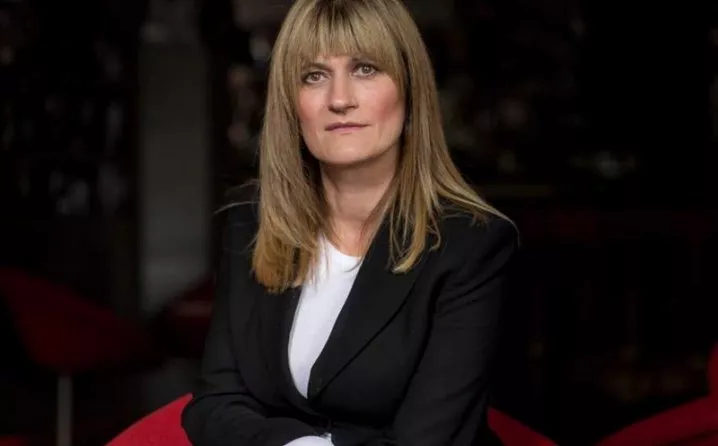
On Monday, September 19, 2016, a promotion of the book "The Criminal Proceedings Against Slobodan Milošević: An Unfinished Trial" (Prosecuting Slobodan Milošević: An Unfinished Trial), by Dr. Nevenka Tromp, will be held in the ceremonial hall of the University of Sarajevo, starting at 11:00 AM, reports the BH news agency Patria.
The book will be discussed by the author Tromp, former chief prosecutor in The Hague Geoffrey Nice, lawyer Vasvija Vidović, and the dean of the Faculty of Political Sciences in Sarajevo Šaćir Filandra. Nice arrived in Bosnia and Herzegovina on Saturday and visited the Museum of Crimes Against Humanity and Genocide in Sarajevo's Ferhadija street at 6 PM.
Dr. Nevenka Tromp has been teaching at the University of Amsterdam since 1992. From 2000 to 2012, she worked at the International Criminal Tribunal for the former Yugoslavia in the Prosecution team, investigating political and military leadership. Dr. Tromp worked on historical and political themes in the Slobodan Milošević case from 2000 until his death in March 2006. After his death and considering that the trial concluded without a verdict, the book's author decided to use the extensive archive left behind by this unfinished trial and, based on evidence, witness statements, audio and video recordings, reconstruct a historical narrative dealing with the role of Slobodan Milošević and Serbia in the breakup of Yugoslavia and the subsequent wars.
Contrary to the common belief that the ICTY archive in The Hague is inaccessible to the public, this book shows that the vast majority of materials are publicly available. However, due to the extensiveness of the evidence and other legal submissions, mostly available through the Tribunal's electronic archive, academic research is limited as there are no adequate precedents for navigating the sea of material generated within the trial of a single defendant. Milošević's trial archive represents a unique historical source because it includes documents from the state archives of Yugoslavia and Serbia that would have remained hidden from the public for 50 years or more without this trial. Thus, many documents from Belgrade archives – though not all, due to the authority of this UN court – have become publicly accessible.
Another important element is that Milošević, representing himself, commented on many historical events during the trial, leaving behind a significant body of words for studying his publicly proclaimed goals, as well as those that were real but hidden from the public.
The author of this book presents a methodology for using the archive of mass atrocity trials as a significant source for writing about a historical period, also using her knowledge as a guide: how to utilize the Slobodan Milošević trial archive.
The book addresses three themes: it attempts to reconstruct what the archive reveals about Milošević as (1) a political leader; (2) about the ideology that preceded the formulation of the plan; and (3) about the criminality of the plan of Milošević's policy from 1991 to 1999.
Komentari (0)
Prijavite se za komentiranje
PrijavaJos nema komentara. Budite prvi!
Minuta
Sve →Iz drugih kategorija

High Representative Not Elected: Germans, French and British Sabotaged Americans, New Attempt at End of June

ČOVIĆ WITHOUT MERCY: How Those Who Brought Ademović to Office Created a Political Hell for Him



Sunny Saturday, quite warm



Tragedy in Albanian resort: Two minors drown












