
SARAJEVO, (Patria) - The dream of European Union membership still exists, and the Western Balkans need a result that will highlight certain processes, assessed the executive director of the Center for Monitoring (CEMI) Zlatko Vujović.
In that case, he says, Montenegro could, after political changes and resolving issues that depend on a qualified majority, relatively quickly conclude negotiations in almost all chapters.
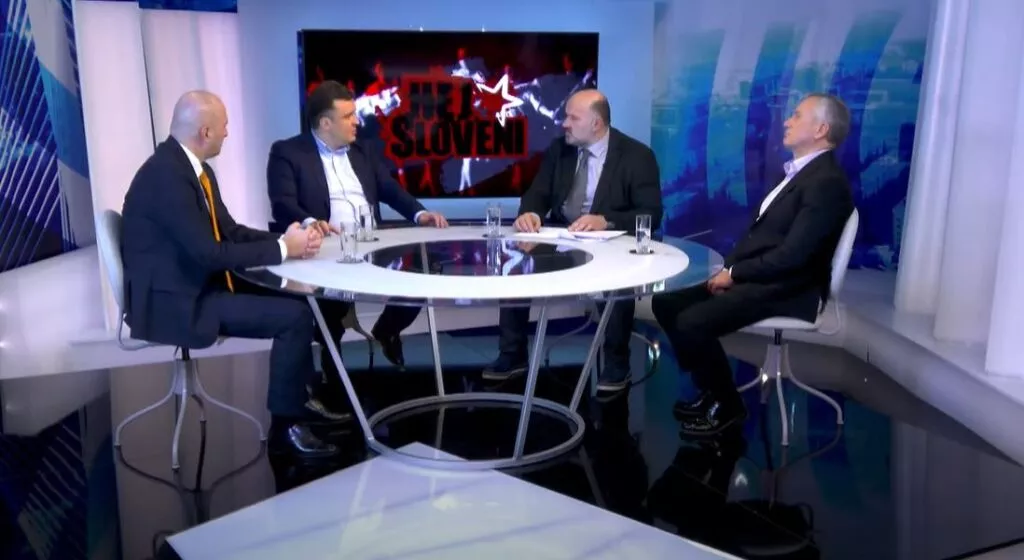
“That is not something unrealistic, a lot has been done. The key obstacles were in chapters 23 and 24. If we have a one-third, or possibly a two-thirds majority, everything can be wrapped up in two years. Montenegro is small, its membership costs the EU nothing. That would be a strong incentive for democratic changes in the countries of the region and a big slap to Vučić, that is, to his policy that they will never become EU members, so there is no need for reforms either,” Vujović assessed in the show “Hey Slavs” on City Television.
The Open Balkan project can only superficially have a perspective in the region and lead to economic integration, assessed historian Živko Andrijašević.
“I think this is a model that has neither functional nor historical footholds here and is unrealistic because it involves different factors that are different in their experiences, political practices, economic parameters, problems they bring into that community, and I think it is a bad idea,” Andrijašević points out.
That the Open Balkan is not needed by Montenegro is also the opinion of one of the founders of GP URA, Žarko Rakčević. He adds that this country should seek its interests in open borders towards everyone, not in reviving, as he says, a kind of ethnocentrism.
“You have a factual situation, where people and the political elite in Serbia, who talk about the Open Balkan and free movement of people, ban and harass members of the Montenegrin parliament at the borders because they voted and said that there was genocide in Srebrenica,” notes Rakčević.
Professor at the Faculty of Criminalistics in Sarajevo, Edina Bećirović, believes that the USA is not enthusiastic about the Open Balkan project, and the latest message from the US administration was that without the complete six, this project will not succeed.
“However, from reliable sources I hear that at closed meetings of US administration representatives, much harsher messages were sent to Albanian Prime Minister Rama and Serbian President Vučić. They allegedly told them that if they intend to use this project for domination, but also for a corrupt economy, they can forget about American support,” Bećirović said.
Journalist Erol Avdović says that in the last 20 years there have been many attempts to present such projects and that he finds this idea unacceptable.
“Because it greatly resembles the construction of three great-state projects, with Bosnia and Herzegovina coming out the worst,” Avdović said.
We recall, the “Open Balkan” project was launched in November 2019 by the leaders of Serbia, Albania, and North Macedonia. The then government in Montenegro held the view that it was political marketing and that integration into the European Union had no alternative.
Minority government to prepare new elections
Vujović believes that Montenegro will, at the beginning of February, bid farewell to the current government because it has long lacked support in parliament.
“The lack of support will result in a vote of no confidence in the government in the Assembly. The actors who initiated the initiative are very persistent in this. It seems to me that we are closest to a minority government, but we do not know what that concept means. It is necessary for every coalition arrangement to be accompanied by a detailed agreement on what is expected from that government,” Vujović stated.
He believes that Montenegro can expect political tensions in the coming period.
“The Democrats came out today with a statement that they will not vote for the dismissal of Abazović, and the DF will act similarly. It is obvious that everyone is frustrated with the position and moves of the Prime Minister. Most likely, the DF would like this government to fall, and to enter into an arrangement with GP URA that would lead to the formation of a new government,” said Vujović.
He believes that the support of the Serbian Church for the Democrats will be active in the coming period.
Andrijašević states that many overlook or do not sufficiently take into account that Montenegro is a member of NATO.
“That guarantees us a certain political direction. It is logical that our membership in NATO entails political decisions and political oversight that is inevitable in such situations. It is impossible for key things in political life to happen without NATO oversight. That is Montenegro's advantage and a guarantee that our political life will move outside traditional inclinations and frameworks,” said Andrijašević.
In the Balkans, he reminds, great powers have always decided.
“That we did not notice that enough is our problem. Whatever the great powers' model for the Balkans will be, that will ultimately be the case,” Andrijašević believes.
Rakčević claims that the programmatic guidelines of that movement are unchanged.
“I am glad that people from URA advocate for the values for which it was founded. Since August 30, 2020, the values favored in the URA program have been threatened. It is difficult to talk about Montenegro of all its citizens if you have that degree of marginalization of its peoples,” Rakčević points out.
He emphasizes that the secular state is absolutely threatened.
“From the very formation of the government under Ostrog, to all the messages of society. The degree of interference of the Serbian Church in what is happening in Montenegro has deeply crossed the line that characterizes secular societies. If we aspire to European values, it is absurd to pursue a policy contrary to the values we aspire to on paper,” said Rakčević.
He states that the concept of a minority government advocated by URA is closest to him.
“I believe things will move in that direction. This should be a kind of technical government with a limited mandate, which should prepare new elections. It would be rational to reach and seek a broader consensus, to combine presidential and parliamentary elections, to arrive at new election laws,” Rakčević concluded.
(Gradski.me)
Komentari (0)
Prijavite se za komentiranje
PrijavaJos nema komentara. Budite prvi!
Minuta
Sve →Iz drugih kategorija

High Representative Not Elected: Germans, French and British Sabotaged Americans, New Attempt at End of June

ČOVIĆ WITHOUT MERCY: How Those Who Brought Ademović to Office Created a Political Hell for Him



Sunny Saturday, quite warm



Tragedy in Albanian resort: Two minors drown












