
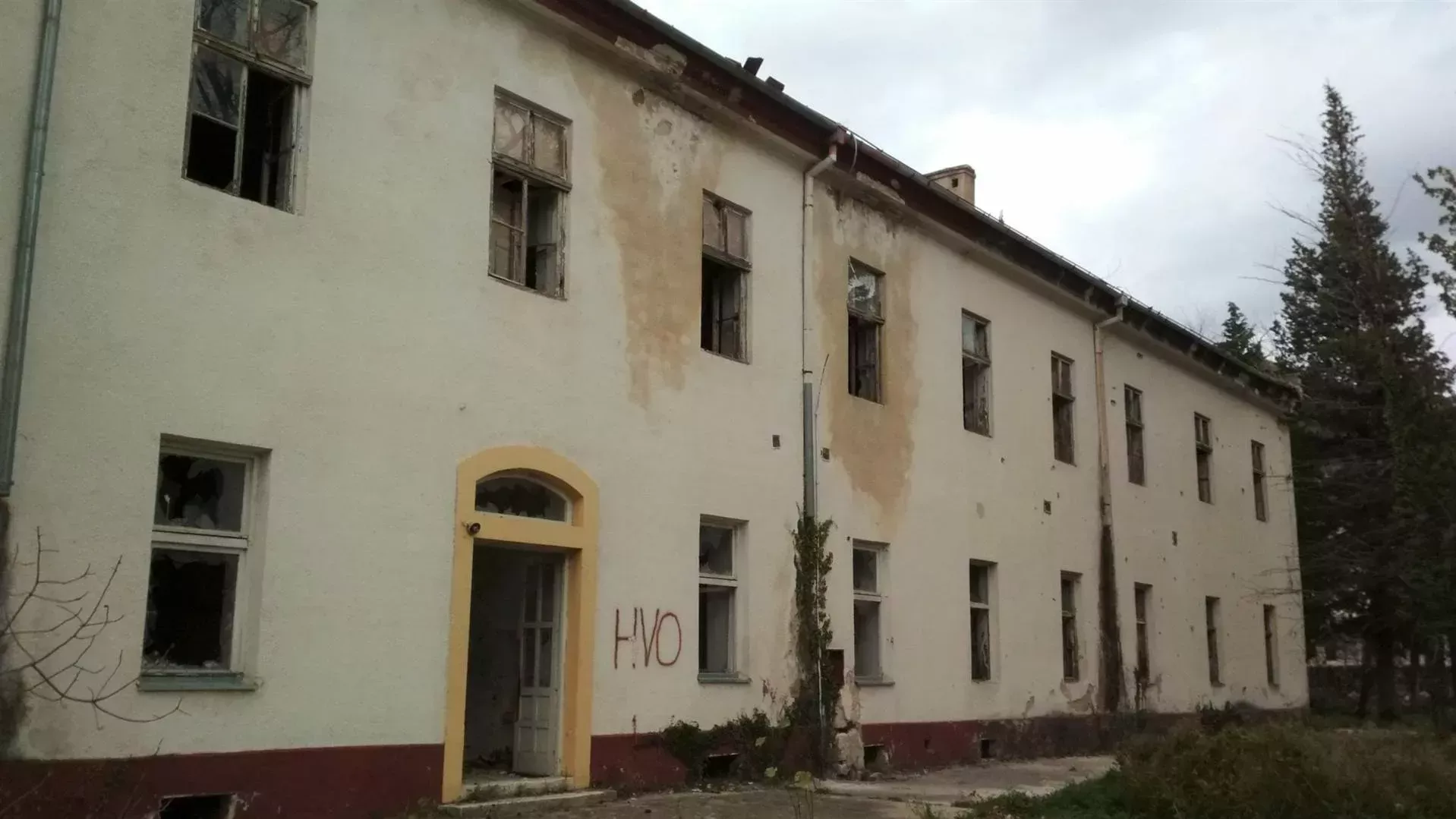
Amer Đulić recalls how, as a 17-year-old, on August 2, 1993, he was separated from his mother and sister, and along with five or six minors from the Đulići neighborhood, taken to the basement rooms of "Koštana bolnica", where there were several people, mostly with the surnames Kaplan and Obradović.
"We were there, first we were searched, our belongings and money were taken, and we were placed downstairs and separated from those fit for military service, but we were not spared mistreatment. For three days and two nights we had nothing to eat, later physical torture began, I went through all of it," says Đulić, president of the Association of Detainees of Stolac municipality.
He told Detektor how on August 3, he was beaten by six members of the Croatian Defence Council (HVO), who were his neighbors.
"I will never forget those three days and two nights in my life. They were harder for me than the other 230 days I spent in the 'Dretelj', 'Gabela' and 'Heliodrom' camps. That 'Koštana', for all of us who were in it and went through it, it is a fear, and whenever I come, my emotions stir," he states.
In the conversation, he explains that the marking of crimes in the Stolac area, organized by the Association of Detainees, began on July 13 and lasts until August 4, when a commemoration will be held at 7 p.m. on the plateau of "Koštana bolnica", attended by detainees, but also children who want to hear about the events of the 1990s.
"'Koštana bolnica' is a place of suffering for Bosniaks from Stolac and Dubrave who went through those tortures in the period of 1993. This is the 32nd anniversary of those events from the war period, where we mark and remember, because on that day the entire Bosniak population was expelled from the area of Stolac municipality, and all those fit for military service, men, even minors and the elderly, were expelled to camps," he says.
According to his words, about 3,000 Bosniaks ended up in HVO camps, including "Dretelj", "Gabela" and "Heliodrom", while the civilian population, including women, children and the elderly, were expelled to the area under the control of the Army of BiH.
"That is something that has become for us as an association a kind of obligation, because we must nurture the culture of remembrance – simply as a people, as a nation, we are such that we quickly forget – so that history does not repeat itself, to warn, to talk, and most importantly, to pass on only the truth through these events," he says.
These events, as he says, began on July 13 with the murder of Sanida Kaplan, the expulsion of the civilian population in the Dubrave area and the imprisonment in the "Branko Šotra Elementary School" camp in Crnići.
Six days later, the closure of that camp and the opening of a new one in Stolac were marked. At the beginning of August, as he explained, the anniversary of the expulsion and ethnic cleansing of the Bosniak population in Dubrave is marked, as well as the anniversary of the murders in "Koštana bolnica", where Vejsil and Salem Đulić, Suad Obradović were killed, while Salko Kaplan succumbed to beatings in "Dretelj".
"On the way to Gabela, Fehim Obradović was also killed, and Ibro Razić succumbed to the consequences of beatings in Gabela. These are the victims of 'Koštana bolnica'," says Đulić.
The Hague Tribunal, in its final judgment for the six, established that crimes were committed in Stolac and at several locations in this municipality, including "Koštana bolnica". By that judgment, Jadranko Prlić, former president of the Government of Herzeg-Bosnia, was sentenced to 25 years in prison, while former Defense Minister Bruno Stojić and former chiefs of the HVO Main Staff, Slobodan Praljak and Milivoj Petković, each received 20 years. Former commander of the Military Police and Minister of the Interior Valentin Ćorić was sentenced to 16 years, and the president of the commission for prisoner exchange, Berislav Pušić, to ten years in prison. Slobodan Praljak committed suicide after the verdict was pronounced.
The Appellate Chamber of the Court of Bosnia and Herzegovina confirmed the first-instance verdict sentencing Mile Pažin to one and a half years in prison for inhumane treatment of a Bosniak civilian in the Stolac area in 1993. He was found guilty of, as a member of the HVO and commander of Civil Protection in Stolac, treating a civilian inhumanely in Kaplan Mahala.
BIRN BiH previously published a Database of Judicially Established Facts, where, among other things, it was established that Bosniaks were arrested and held in "Koštana bolnica", the school in Crnići, and several other facilities in Stolac, after which they were transferred to other detention centers under HVO control and expelled, and their property destroyed.
Komentari (0)
Prijavite se za komentiranje
PrijavaJos nema komentara. Budite prvi!
Minuta
Sve →Iz drugih kategorija

High Representative Not Elected: Germans, French and British Against Americans, New Attempt at End of June

ČOVIĆ WITHOUT MERCY: How Those Who Brought Ademović to Office Created a Political Hell for Him



Sunny Saturday, quite warm



Tragedy in Albanian resort: Two minors drown












