
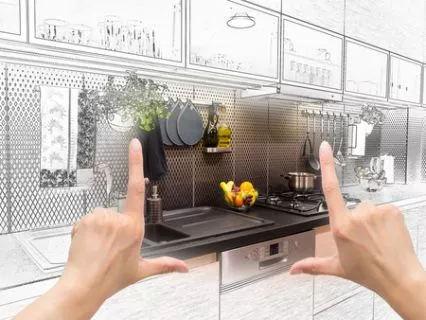
Interior design styles have evolved from architectural styles, historical events and cultural influences, the intended function and needs of the space and the people who live in it, technological achievements, social trends, fashion, and the availability of materials.
A large part of contemporary interior design is based on styles from past eras, which is reflected in motifs, color palettes, furniture proportions, etc.

Design is a process that, among other things, requires planning and organization. We often make the mistake of impulsively buying furniture and accessories, reaching for the first thing we like, only to end up with an oversaturated space whose decoration has not taken into account three leading principles of decoration:
- Function of the space
- Style
- Atmosphere
Function of the space
To take into account the key principle during planning, answer a few (seemingly) simple questions:
- Why am I redecorating this space?
- What are the specific problems in the current arrangement?
- What will the room be used for? Are there multiple functions (e.g., living room – kitchen; bedroom – study)?
- In what aspects do you want to improve/enhance the space?
After answering these questions, you will have a clearer picture of the function and purpose of the space, which the room may not have fully fulfilled until then.
Style
You are surely inclined towards a certain style of space decoration. However, is that style aligned with the intended function of the space? To determine this, try to answer the following questions:
- Where would you classify the existing style and does it match the function/purpose of the space?
- Do you plan to change the existing architectural style, which is evident in windows, doors, edges, during the redecoration process?
- Will the structure and proportions of the space match the intended changes?
- If it is one room, will the space be visually connected with other rooms after redecoration (a flow should be achieved, not allowing the room to appear different, i.e., to 'stand out' from the whole)?
- Will the style be casual or elegant and formal?

Atmosphere
This is the most important item for many of us, and the reason does not require special explanation. Hence the expressions 'home atmosphere', 'home oasis', 'like home', etc. Therefore, in addition to the above principles, we should strive for a good atmosphere, which is again an individual matter, as each of us imagines and experiences it differently. And therefore – do not let others impose their choices on you, because only you know what 'home atmosphere' means to you.
Before you start redecorating, try to observe the space from an emotional distance:
- Is it too bright or too dark?
- Does it feel too cold in winter and warm in summer (in terms of atmosphere, not temperature)?
- Will it be a space for rest and relaxation?
- What atmosphere do you want in the space (relaxing, working, warm family, formal, etc.)?
- Will the room match the overall personality of the house/apartment?

Visualization
After you have struggled to answer all the above questions, even if you don't write down the answers, the vision of the new space will become clearer.
Since design is planning, and you don't want to make a mistake this time, put your ideas on paper, and in a way that we promise will be fun.
Create a popular 'mood board' or, in a free translation from English – an inspirational board (English 'mood' means disposition, and 'board' is a board).
An inspirational board is a collage of images, objects, or texts arranged into a composition to tell a story or inspire creative work. It is used in all branches of design, as well as in everyday life when we want to put ideas on paper or create a visual memory of an event.
You will find enough free templates and photos online for your digital mood board, but you will create the most effective inspirational board by hand, without the help of a computer.

First, get a board – it can be a corkboard with pins, or it can be a larger base made of slightly thicker paper (e.g., an A3 drawing pad) onto which you will glue pictures and samples. While flipping through magazines, you will surely come across interior photos that particularly attract your attention; these could be pieces of furniture, colors, solutions for walls, floors, lighting fixtures, anything related to interiors. If you plan to reupholster the sofa in the living room to match the new style (which is often a good idea), look for fabric samples in stores, and attach/glue them to the board.
Ultimately, your inspirational board will show what you truly want, imagine, and above all, it will reflect the atmosphere you want in the space.

Whether you are redecorating yourself or with the help of a decorator, designer, or architect, an inspirational board is an important step towards your goal. If you are working with a professional, show them your mood board without shame – modern professionals use it as an important communication tool with clients, and you will be able to convey your ideas and desires to them, which is a crucial step towards your goal – your ideal space.
(living.ba)
Komentari (0)
Prijavite se za komentiranje
PrijavaJos nema komentara. Budite prvi!
Minuta
Sve →Iz drugih kategorija

High Representative Not Elected: Germans, French and British Sabotaged Americans, New Attempt at End of June

ČOVIĆ WITHOUT MERCY: How Those Who Brought Ademović to Office Created a Political Hell for Him



Sunny Saturday, quite warm



Tragedy in Albanian resort: Two minors drown












